Banksy’s identity “revealed” — But is the mystery really over?
A fresh investigation has once again stirred the mystery surrounding Banksy—but whether it truly reveals anything new is still up for debate.
Banksy’s identity “revealed” — But is the mystery really over?
A fresh investigation has once again stirred the mystery surrounding Banksy—but whether it truly reveals anything new is still up for debate.
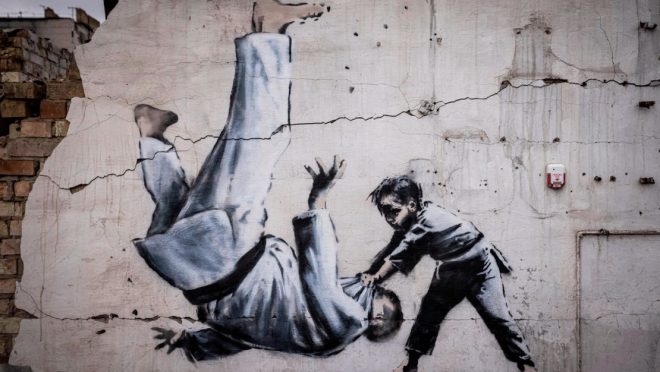
A detailed report by Reuters claims to have identified the elusive street artist as Robin Gunningham, a Bristol-born man long linked to the pseudonym. The conclusion isn’t entirely groundbreaking—it largely reinforces theories that have circulated for nearly two decades—but it adds fresh layers of evidence.
At the center of the investigation is a 2000 incident in New York, where a man caught vandalizing a billboard allegedly signed a confession using Gunningham’s name. Reuters connects this episode to a wider trail of documents, travel records, and personal links that point consistently back to him.
The report also traces a more recent thread to Ukraine, where Banksy-style artworks appeared amid the war. According to Reuters, a man using the name “David Jones”—believed to be an alias adopted by Gunningham—entered the country around the same time, alongside Robert Del Naja, a musician who has frequently been linked to Banksy in past speculation.
Despite the depth of the investigation, the response has been cautious. Banksy’s representatives have disputed aspects of the findings, and the artist himself—true to form—has neither confirmed nor denied the claims.
More importantly, the question lingers: does unmasking Banksy actually matter? For many, the anonymity has always been part of the art—an essential layer that allows the work to exist beyond identity, ego, or biography. Even if the name is now clearer than ever, the myth remains intact: a figure who turned secrecy into one of the most powerful tools in contemporary art.