British Council launches safeguarding toolkit for schools
British Council launches safeguarding toolkit for schools
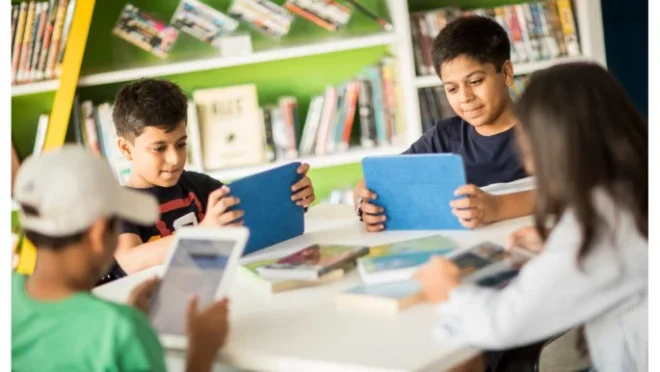
The British Council has launched a global Safeguarding Toolkit—developed in partnership with Unicef—to help schools enhance early risk identification, ensure proportionate action, and standardise safeguarding practice.
School safeguarding now faces rapidly evolving and difficult-to-detect risks, many amplified by digital platforms—including peer-to-peer harm, mental health concerns, and AI-enabled abuse.
The scale of the challenge is considerable. Unicef estimates that approximately 150 million students aged 13 to 15 experience peer-to-peer violence in or around schools globally. According to Unicef and the International Telecommunication Union, one in three internet users worldwide is a child, heightening exposure to online exploitation and manipulation. The World Health Organization reports that one in seven adolescents lives with a mental health condition, frequently intersecting with safeguarding concerns in schools.
The British Council noted that the primary challenge is no longer awareness but implementation, as many schools have policies but day-to-day decision-making remains inconsistent.
Stephen Forbes, Country Director Bangladesh at the British Council, said: “Safeguarding cannot depend on individual instinct or isolated expertise. It operates in context and community. What can help are clear roles, reliable recording, shared thresholds, and consistent escalation routes, so concerns are recognised early and acted on proportionately. This toolkit is designed to help translate safeguarding policy into everyday practice.”
Almudena Olaguibel, Child Protection Officer at Unicef Spain, said: “The Safeguarding Toolkit reflects a shared understanding between the British Council and Unicef that effective protection depends on systems, not improvisation. As safeguarding risks become more complex and less visible, preparation, clarity, and shared responsibility across school communities are essential.”
Designed as a practical, role-based resource for daily use in schools, the toolkit promotes a whole-school approach, clarifies responsibilities, strengthens record-keeping and follow-up, and defines shared thresholds and escalation routes. It also more clearly distinguishes between child safeguarding concerns and adult conduct risks.
The toolkit aims to help schools respond more consistently to risks spanning online and offline contexts—including grooming, harassment, coercion, impersonation, and AI-generated sexual imagery.
The toolkit will be rolled out across more than 2,500 British Council Partner Schools worldwide, reaching nearly 1.7 million students. It is designed for adaptation to local legal contexts, while supporting consistency across the international network.