Govt sets 9am-4pm office hours, orders markets shut by 6pm to save energy
Govt sets 9am-4pm office hours, orders markets shut by 6pm to save energy
Highlights:
- Essential services, including kitchen market, pharmacies, and eateries, remain exempt
- Ministry of Commerce will strictly monitor
- 30% cut in fuel, power, gas spending
- No new govt vehicles or computers for 3 months
- 50% cut in govt officials’ foreign travel and domestic training
- 50% cut in hospitality costs for meetings, seminars
- Ban on decorative lighting at private weddings, events
The government has taken a series of austerity and energy-saving measures, including revising office hours and enforcing early market closures, to address the ongoing energy crisis triggered by the Middle East conflict.
Under the new decision, all government and private offices will operate from 9am to 4pm, while markets, shops, and shopping malls must close by 6pm.
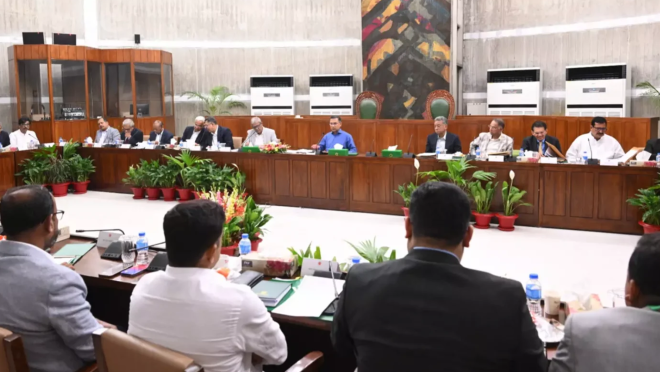
The measures were announced by Cabinet Secretary Nasimul Gani at a press briefing following a cabinet meeting held at parliament on Thursday (2 April), chaired by Prime Minister Tarique Rahman.
“From the next working day, office hours will be reduced by one hour across both public and private sectors. Banks will operate from 9am to 3pm, with transactions closing at 3pm and offices remaining open until 4pm for related work,” he said.
Nasimul Gani also said, “To conserve fuel and electricity, all markets and shopping centres must close after 6pm. However, essential services such as kitchen markets, pharmacies, and food outlets will remain exempt. The Ministry of Commerce will monitor compliance.”
According to the secretary, the Ministry of Education will issue separate instructions for educational institutions, likely to take effect from Sunday (5 April).
To reduce traffic congestion and fuel consumption, the government has decided to allow duty-free imports of electric buses for school transport. Schools participating in the initiative will receive special incentives. For commercial use, import duty on new electric buses has been reduced to 20%, while the import of old buses will not be allowed.
As part of cost-cutting measures, the government has ordered a 30% reduction in spending in the energy, power, and gas sectors. For the next three months, no new government vehicles – whether land, water, or air – and no computer equipment will be purchased.
Additionally, 50% of foreign travel and domestic training for government officials has been suspended. Hospitality expenses for meetings and seminars have also been cut by half.
The government has also banned decorative lighting at private events, including weddings and social programmes, during this period of energy shortage.
Meanwhile, the cabinet approved a draft amendment to the Public Examinations (Offences) Act, 1980, to introduce stricter penalties for crimes related to public examinations.
Highlighting the broader context, the secretary noted that the Middle East conflict has made global oil supply lines somewhat unstable, prompting Bangladesh to seek alternative sources. “Import processes from Malaysia, Indonesia, and Kazakhstan are already underway.”
He added that the government will continue providing subsidies in the energy sector to ease public suffering and is making its utmost efforts to manage the situation.