Mummified cheetahs discovered in northern Saudi Arabia
Scientists have uncovered the remains of seven naturally mummified cheetahs in caves near the northern Saudi city of Arar, a discovery that is reshaping understanding of the species’ historical presence on the Arabian Peninsula and strengthening plans for future reintroduction.
Mummified cheetahs discovered in northern Saudi Arabia
Scientists have uncovered the remains of seven naturally mummified cheetahs in caves near the northern Saudi city of Arar, a discovery that is reshaping understanding of the species’ historical presence on the Arabian Peninsula and strengthening plans for future reintroduction.
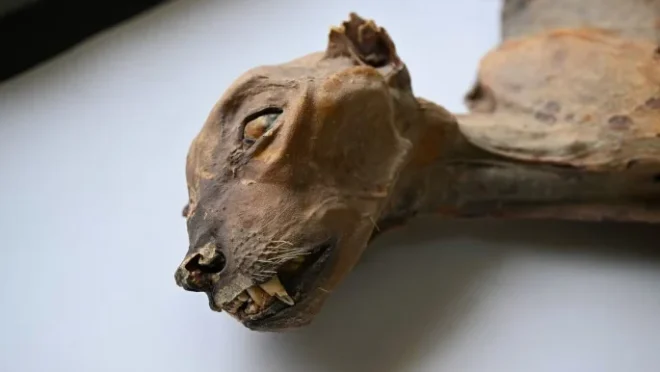
The remains were found during wildlife surveys carried out in 2022 and 2023 by the National Center for Wildlife. Researchers say the cheetahs’ skeletons and preserved soft tissue were exceptionally well maintained due to the caves’ hyper-arid conditions, according to CNN.
Lead author Ahmed Al Boug, an ecologist and deputy CEO of the National Center for Wildlife, said the find marks the first documented case of natural mummification in cheetahs and provides the first physical evidence that cheetah subspecies once lived across the Arabian Peninsula. He added that the discovery was especially surprising because cheetahs are not known to use caves, making both the setting and preservation highly unusual.
DNA analysis of three specimens revealed that two of the oldest cheetahs were genetically closer to the Northwest African cheetah (Acinonyx jubatus hecki), rather than solely to the Asiatic cheetah previously thought to be the only lineage in the region. This suggests that northern Saudi Arabia hosted multiple cheetah lineages over thousands of years.
Wildlife veterinarian Adrian Tordiffe of the University of Pretoria said the findings show the Arabian Peninsula once served as a vital ecological bridge for cheetahs, not an isolated endpoint. Radiocarbon dating indicates some remains are about 100 years old—far more recent than the 1970s, when cheetahs were believed to have become locally extinct—while other bones date back as far as 4,000 years.
The presence of both adult and juvenile animals indicates that cheetahs were breeding in the region for extended periods, rather than merely passing through.
Conservationists say the discovery provides a stronger scientific foundation for cheetah reintroduction efforts. By identifying which lineages historically lived in Arabia, future programs can focus on ecologically suitable populations.
Laurie Marker, founder of the Cheetah Conservation Fund, said the findings confirm cheetahs were a long-standing and important part of Saudi Arabia’s ecosystem. As rewilding efforts expand, she added, the return of top predators like cheetahs could help restore biodiversity and ecological balance to desert landscapes.