A love letter to Shankar
I first came into contact with the city of Calcutta through the writings of Mani Shankar Mukherjee, also known as Shankar.
A love letter to Shankar
I first came into contact with the city of Calcutta through the writings of Mani Shankar Mukherjee, also known as Shankar.
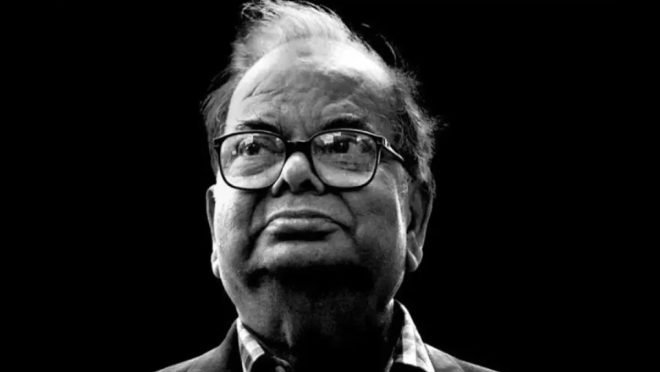
Before the city had a geography for me—before its streets, distances, and directions—he provided something far more personal and disturbing: the darker air of a mythical city, rather than a romantic depiction of it.
Calcutta emerged as a city of ambition, exhaustion, compromise, and subdued moral fatigue through his literature. The city was never really at peace with itself, but it was always moving.
I was initially attracted by the beautiful design of the book cover when I first read Chowringhee. But as I started reading, I was struck by how startlingly urban everything seemed.
The pain was urban, the love was urban, and the conversations were abrasive, rushed, and incomplete, like those heard in hotel lobbies or lifts. I had previously read a lot of Bangla writing that tended toward moral clarity, memory, or villages. It was different in Chowringhee. It was urban, agitated, and morally unstable.
I recall reading that at the time. I was too young to identify the costs of ambition, but I was old enough to feel it while I was in school. It was raining outside my room, the kind of rain that makes the city seem bigger than it actually is. Calcutta came to life from miles apart in Chowringhee‘s pages, not as a romantic setting, but rather as a world of authenticity. Vehicles drove interminably, trams went by, and strangers came into contact but never really met. Pain was not acknowledged by the city. Everything took everything in and went on.
The most striking thing to me was how natural everything felt. Rather than being written, the discussions appeared to have been overheard. Love offered passion, but it did not promise stability. Sadness was commonplace, not unusual. Suffering was not made beautiful by Shankar. It became heavier somehow because he normalised it. The hotel in Chowringhee becomes a miniature version of the city itself, serving as a makeshift residence for desire, ambition, loneliness, and silent defeat. Here, Calcutta is more than just a backdrop; it’s the ultimate bazaar of opportunity and lost hopes.
I came to understand that Chowringhee was just the start of a greater world as I read more of Shankar. His semi-autobiographical debut, Kato Ajanare, shows the city through the perspective of a young guy who is first learning its laws. At Seemabaddha, ethics are evaluated based on quarterly performance, and ambition solidifies into corporate discipline.
Furthermore, survival itself turns into a transaction that affects everyone in Jana Aranya, which is arguably his most devastating piece.
Long after I had finished reading them, I continued to think about these books. They appeared to wait patiently for their cautions to be heeded by adulthood. Shankar reads more like destiny than fiction to many twentysomething Bengali males.
His tales describe professions based on silence, values exchanged for security, and the intolerable price of being “decent” in a society that values flexibility over morality. In Shankar’s reality, dreams gradually deteriorate due to tiny, sensible choices rather than collapsing abruptly.
The men of Shankar are never perfect. They are in the centre, not rebels but negotiators, between morality and ambition, between dignity and hunger. The harshest example of this may be seen in Jana Aranya, where achieving prosperity necessitates a deal that can only be endured.
The novel was so powerful that Ray turned Shankar’s moral claustrophobia into vivid, memorable pictures for Jana Aranya, which is part of the famous Kolkata Trilogy.
In retrospect, I see that Shankar taught me how to read a city and, therefore, how to survive there. He helped me understand that opportunities always come with a price and that the hardest sacrifices are frequently unseen by others. Although his characters are not evil, they are also not helpless.
They are in the middle, constantly balancing achievement and self-respect, hunger and dignity, and want and self-control.
In addition to being a writer, he provided us with mirrors, which are reflections of ourselves in the busy streets, quiet lobbies, and sleepless nights of a city that is constantly doubting and dreaming.