Bangladesh wants full-time teachers, but are their salaries enough?
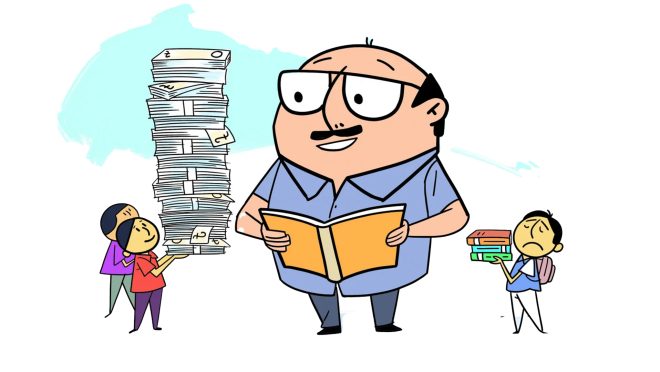
A new directive discouraging teachers from taking additional jobs highlights a longstanding contradiction in Bangladesh’s education system — full-time professional expectations alongside salaries many teachers say cannot sustain a household
Bangladesh wants full-time teachers, but are their salaries enough?
A new directive discouraging teachers from taking additional jobs highlights a longstanding contradiction in Bangladesh’s education system — full-time professional expectations alongside salaries many teachers say cannot sustain a household
Two evenings a week, Rabiul Islam leaves his classroom in Shibganj, Bogura, only to begin another shift elsewhere. As an assistant teacher at Abirampur High School, he says his starting salary at a private secondary school was Tk13,000. After completing a B.Ed, it rose to Tk21,100, followed by a 5% annual increment on the basic.
“Even with these adjustments, it is not possible to run a family in the current market conditions,” he told The Business Standard. The calculations, he implied, leaves little room for choice.
In Dupchanchia upazila, Sabuj Hossain of Kol High School describes a similar connundrum. Various conditions are being imposed, he says, but without corresponding increases in salaries and allowances. “At this stage of life, switching careers is not easy, yet the current salary is insufficient to meet basic needs. No one knows how the future will unfold.”
A teacher from BIAM Laboratory School in Bogura, requesting anonymity, said he has been earning Tk21,000 for years with minimal revision. “With prices constantly rising, supporting a family has become difficult. After eight years in the profession, earning this salary feels embarrassing to mention at home.
After eight years in the profession, earning this salary feels embarrassing to mention at home.”
These accounts frame the context in which Education Minister ANM Ehsanul Hoque Milon recently directed teachers to seek prior approval before engaging in any secondary profession. Administratively and politically, the position is coherent as teaching is not a shift-based occupation. It demands lesson preparation, script evaluation, remedial support for weaker students, parental engagement, reporting compliance, and co-curricular responsibilities—often beyond school hours. In a system where the secondary-level teacher–student ratio still struggles to meet the global benchmark of 1:30, divided attention risks compounding learning deficits for entire classrooms.
The concern is not abstract. According to findings cited from the Bangladesh Institute of Development Studies, a significant proportion of students in grades 2–4 struggle with foundational literacy and numeracy. More than 70% of grade 2 and grade 3 students reportedly exhibit inadequate reading proficiency, while nearly 40% of grade 4 students cannot grasp simple vocabulary. In that context, policy emphasis on classroom focus is understandable.
Yet the directive surfaces a structural paradox. If teaching is to be treated as a full-time professional commitment, remuneration must sustain a full-time life.
Bangladesh teacher salaries (2025-26 reality check)
As of 2025–26, in Bangladesh, government primary teachers start at Tk11,000 basic (with total earnings often between Tk14,000 and 25,000), while head teachers require at least 12 years of service and begin at Tk16,000 – salaries that remain modest despite rising living costs.
Similarly, secondary and MPO-enlisted teachers earn around Tk12,500–16,000 basic, prompting demands to raise the minimum to Tk30,000 as current pay falls far short of sustainable living standards.
While MPO teachers are not government employees in the full sense, as they are partially paid through government orders, the payment they receive does not comply with the decent living standard of Bengali middle-class people.
Many rural government primary school teachers are compelled to take on additional non-teaching work and income-generating activities such as agricultural tasks and community service roles — because their official salaries are insufficient to support their families. Reports show teachers are often assigned duties for other departments, and low pay forces them to seek extra income to sustain livelihoods.
Bangladesh vs the world: A quick salary reality
According to official pay matrices and government salary scales, an entry-level government primary teacher in Bangladesh earns about $103 per month (basic pay).
In India, under the 7th Pay Commission, entry-level government primary teachers start at around $426 per month (basic pay).
Government primary teachers in Nepal make between $295 and $417 a month, depending on their classification and grade.
In Pakistan, government teachers under the BPS-16 scale, which is the Basic Pay Scale for government employees, typically earn around $196–$411 per month, depending on province and experience.
China’s teacher salaries, which vary widely by city and school type, typically range from about $2,200–$3,300 per month in public schools.
As we talk about improving quality education, investing in teachers’ salaries is essential. Examples from China and India, two rising global powers, strengthened their education system by valuing teachers materially. Countries like Pakistan and Nepal, which lag behind Bangladesh in many developmental indicators, offer a higher pay to their educators. We cannot think of building a strong human capital while depriving those who shape it. When teachers are secure, classroom performance will improve. Reform must begin with fair compensation.
Cross-country comparisons must account for purchasing power and fiscal capacity. Even so, the gap suggests that Bangladesh’s teacher compensation remains modest relative to regional peers, including countries with weaker aggregate development indicators.
The policy question, therefore, is less about whether teaching should be full-time—it unequivocally should be—and more about whether current compensation structures make that feasible without informal supplementation. Field reports indicate that some rural primary teachers engage in agricultural work or community service roles to stabilise household income. Such practices may dilute classroom preparedness, but they are often described as necessity-driven rather than preference-driven.
The newly elected government led by the Bangladesh Nationalist Party has pledged in its manifesto a gradual improvement in teachers’ economic and social status. Symbolic measures—such as inviting teachers to National Day events at municipal, upazila and district levels—signal recognition. The more consequential test, however, lies in fiscal reform: rationalising pay scales, adjusting for inflation, and aligning compensation with the professional expectations imposed.
If accountability is to be tightened, the support architecture must be strengthened in parallel. In education policy, regulatory discipline and financial investment are not substitutes; they are complements. The sustainability of classroom focus ultimately depends not only on administrative directives, but on whether the system enables teachers to remain economically secure within the profession they are asked to treat as full time.