Campus hunger games: Inside BRAC’s canteen economy
Contrary to popular belief, university students do eat. However, classes in quick repetition and the desire for sleep often prevent them from catching breakfast at home or lunch at the university cafeteria.
Campus hunger games: Inside BRAC’s canteen economy
Contrary to popular belief, university students do eat. However, classes in quick repetition and the desire for sleep often prevent them from catching breakfast at home or lunch at the university cafeteria.
At the end of a hectic day, after classes, labs, and tight deadlines, sweet, sour, mouth-watering food feels heavenly. But more often than not, to taste heaven, one has to pay.
Recognising the need to ensure budget-friendly meals for students on campus, in researching this article, I decided to portray the budget-friendly meals of BRAC University. But the question always loomed in my mind while writing this: are the places mentioned here truly budget-friendly?
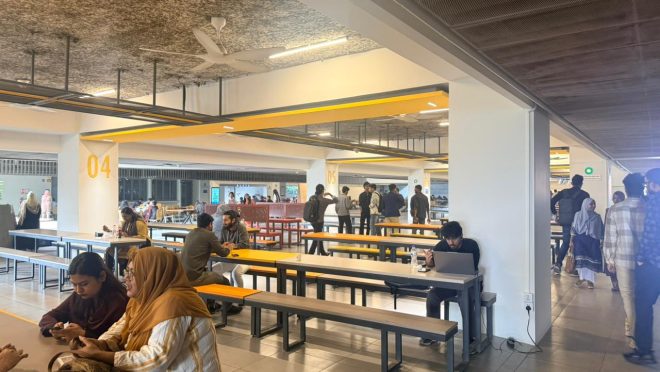
The BRAC Canteen is located on the 6th floor of the campus. The company that provides the food and beverages is Khabar Dabar. There is also a coffee shop in front of the university’s multipurpose hall, where a large number of students usually buy coffee and snacks.
While researching this article, we took an interview with Imdad Islam, an early graduate from the CSE department, Batch 22 Summer, from BRAC University. According to Imdad, the average price of food he enjoys from the BRAC Canteen is approximately Tk60–70 more than that of the food sold outside.
The most expensive item is Beef Tehari, which costs Tk220. Any chicken item ranges from Tk100 to Tk120. A paratha costs Tk15.
Not allowing meat on your plate will save you money. The plain polao usually costs around Tk50. Adding any protein to it, mainly chicken roast, will cost Tk110, while beef receives the highest honour at Tk150.
In Imdad’s view, avoiding protein altogether is the cheapest option, with fried rice costing Tk60 and extra additions costing Tk30.
There is no extra privilege for faculty members. There is only a single queue where both teachers and students line up to buy food. All good, considering the need for equality. However, in busy times, the queues are horrendous.
Breakfast, starting from 8:00/8:20 to 9:30/10:00 am, is comparatively cheap considering outside options. For breakfast, the options are paratha, lentils, and egg, which cost around Tk50.
At lunch, the Tk60 package includes rice, mashed potatoes, lentils, and vegetables. A Tk70 package includes all the items of the Tk60 package, but with one additional item, which is an egg.
In the afternoon, there are usually cakes and pastry items, which cost around Tk50–60.
The interviewee stated, “Each item costs Tk30 more than outside. If a food is sold at Tk50/60 outside, that food becomes Tk80/90 on campus.”
If one wishes to rely on the BRAC Canteen alone, a student approximately needs to spend Tk4,300–4,500 on food on campus in a month. A tall ask, considering the nutritional value is not so different from outside carts.
Considering this, there are also some students who buy food from the food carts located at the pocket gate of the campus. Apart from this, on the premises, there is not much restaurant availability, but there are plenty of shingara and samosa shops, offering a heavy dose of oily food that is common on campuses throughout Bangladesh.
The competition between cravings and savings continues on campus. Many decide to pay the excess price with convenience in mind, while others are inclined to choose the oily, cheap options available.
Again, all eat food at their sweet will. With all this, the rat race of food and its prices continues day after day.