Giant tortoises return to Floreana after 180 years
Giant tortoises have returned to the Galápagos island of Floreana for the first time in more than 180 years, marking what conservationists are calling a major breakthrough in ecological restoration.
Giant tortoises return to Floreana after 180 years
Giant tortoises have returned to the Galápagos island of Floreana for the first time in more than 180 years, marking what conservationists are calling a major breakthrough in ecological restoration.
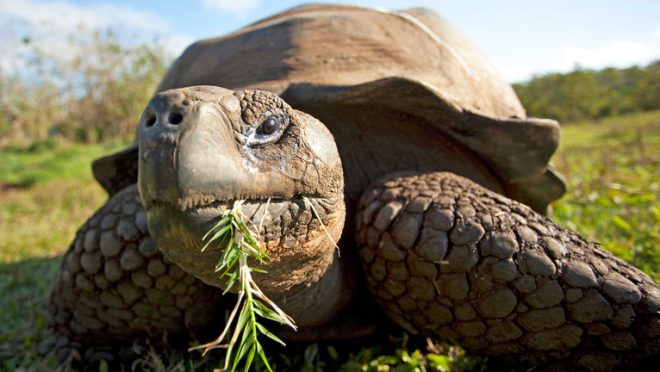
A total of 158 captive-bred juvenile tortoises were released onto Floreana this week under the Floreana Ecological Restoration Project, led by the Galápagos National Park Directorate.
The reintroduction is the result of a long-running “back-breeding” programme launched in 2017, after researchers identified tortoises with Floreana ancestry on the nearby island of Isabela.
Floreana’s native giant tortoise, Chelonoidis niger niger, was wiped out in the 1840s when sailors removed thousands of animals from the island to use as food during long sea voyages.
“The restoration of Floreana has reached a hugely significant milestone, with 158 captive-bred giant tortoises released into the wild this week,” the Galápagos Conservation Trust said in a statement, calling the moment a source of hope for island restoration efforts worldwide.
Dr Jen Jones, the trust’s chief executive, described the release as “truly spine-tingling,” saying it validated more than 20 years of collaboration between scientists, conservation organisations and the local community.
The project became possible after the discovery of tortoises carrying Floreana genetic heritage on Wolf Volcano in 2008. From these, scientists selected 23 hybrids with the closest genetic match to the extinct subspecies and began breeding them in captivity on Santa Cruz.
By 2025, the programme had produced over 600 hatchlings, with several hundred now large enough to survive in the wild.
Conservationists describe giant tortoises as “ecosystem engineers,” noting that their grazing, movement and seed dispersal play a crucial role in reshaping landscapes and restoring degraded island ecosystems.