Polar bears in Svalbard grow fatter despite shrinking sea ice
Scientists studying polar bears in the Norwegian Arctic archipelago of Svalbard have reported an unexpected finding: the bears are becoming fatter and healthier, even as sea ice continues to disappear due to climate change.
Polar bears in Svalbard grow fatter despite shrinking sea ice
Scientists studying polar bears in the Norwegian Arctic archipelago of Svalbard have reported an unexpected finding: the bears are becoming fatter and healthier, even as sea ice continues to disappear due to climate change.
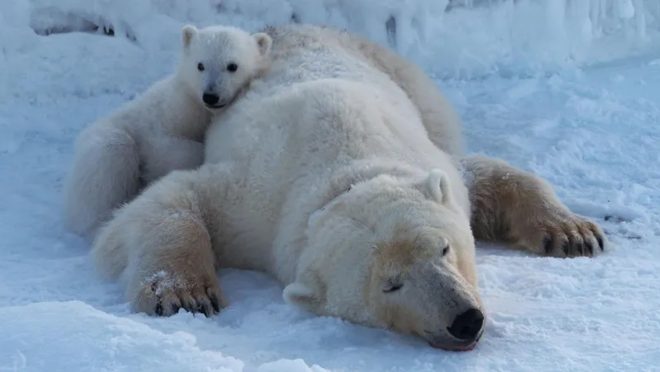
According to research published in Scientific Reports and reported by the BBC, adult polar bears in Svalbard have shown a steady improvement in body condition since the early 1990s. This comes despite a dramatic loss of sea ice, which polar bears traditionally rely on to hunt seals.
Sea ice acts as a vital hunting platform for polar bears, allowing them to catch seals that provide the high-fat diet necessary for energy, insulation and reproduction. Healthier fat reserves are especially important for females, as they need to produce rich milk to nurse their cubs.
Between 1992 and 2019, researchers examined and measured 770 adult polar bears in Svalbard. The results showed that the animals were significantly heavier and carried more fat than in previous decades.
Lead researcher Dr Jon Aars from the Norwegian Polar Institute told the BBC that the findings went against expectations. “The fatter a bear is, the better it is,” he said, adding that he had anticipated a decline in health given the scale of ice loss in the region.
During the study period, rising global temperatures increased the number of ice-free days in Svalbard by nearly 100 per year, at an average rate of four additional ice-free days annually.
Researchers believe the bears may have adapted by changing their diet. With less sea ice available, Svalbard’s polar bears appear to be feeding more on land-based animals, including reindeer and walruses.
Walruses, which were hunted almost to extinction, have been protected in Norway since the 1950s. Their population has since recovered, creating a new, fatty food source for polar bears. “There are a lot more walruses around these days,” Dr Aars explained, also suggesting that seals may now gather in smaller ice areas, making them easier to hunt.
While the findings offer some short-term optimism, scientists warn that the situation is unlikely to last. As sea ice continues to shrink, polar bears will be forced to travel longer distances to find food, burning more energy and reducing their fat reserves.
Polar Bears International noted that Svalbard’s polar bear population was once among the most heavily hunted in the world until international protections were introduced in the 1970s. Experts believe the recent improvement in bear health may partly reflect recovery from past hunting, combined with an increase in walrus and reindeer numbers.
Dr John Whiteman, chief research scientist at Polar Bears International, described the findings as “positive in the short term,” but cautioned against drawing broad conclusions. He pointed out that other studies have shown that longer ice-free periods reduce cub survival and affect younger and older female bears.
Across the wider Arctic, climate change continues to pose a serious threat to polar bears. Of the 20 recognised polar bear sub-populations, several are already in decline. In Canada’s Western Hudson Bay, the world’s southernmost polar bear population has fallen sharply, directly linked to warming temperatures.
“The long-term picture is clear,” Whiteman told the BBC. “Polar bears need sea ice to survive. If ice loss continues, the bears will eventually disappear, even if some regions show temporary resilience.”