Fashion on wheels: The rise of Dhaka’s clothing carts
This Eid, a new retail phenomenon has been quietly transforming the streets of Dhaka. Shopping has now gone mobile, with small street vendors selling quality products.
Fashion on wheels: The rise of Dhaka’s clothing carts
This Eid, a new retail phenomenon has been quietly transforming the streets of Dhaka. Shopping has now gone mobile, with small street vendors selling quality products.
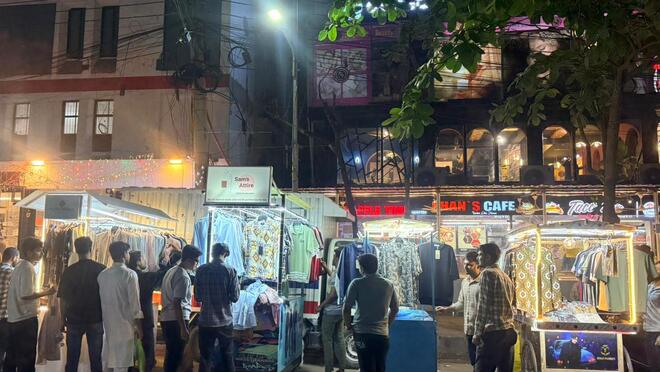
The innovative approach to fashion retail blends mobility, affordability, and urban aesthetics. What began as a small-scale initiative has now evolved into one of the most followed trends in the country’s fashion scene.
From university premises to busy commercial areas, from the surroundings of large shopping malls to bustling roads, these glowing carts filled with stylish apparel are becoming an increasingly popular sight.
At its core, it is a movable clothing stall that is creatively designed and often illuminated with warm lights to attract shoppers, especially in the evening. Unlike traditional street vendors or hawkers, these carts are carefully curated, presenting clothes in a boutique-like arrangement. Long kurtas, panjabis, drop-down T-shirts, denim, trousers, check shirts, and minimalist designs hang neatly from rails like an umbrella, creating a visually appealing display that stands out against the typical hustle and bustle of urban streets.
The aesthetic appearance alone has become a major factor behind the growing hype.
One of the primary reasons behind the rapid rise of this cart trend is affordability. In a country where the majority of the population seeks quality products at reasonable prices, these carts strike a perfect balance.
They eliminate many overhead costs associated with permanent shops, such as high rent and utility expenses, allowing sellers to offer competitive prices. This cost-effectiveness has made trendy fashion accessible to a wider audience.
Another key factor driving the hype is convenience. These carts are strategically placed during evening hours when people are out for leisure or returning home from work. Instead of travelling to crowded markets or shopping malls, customers can simply stop by a cart on the roadside.
This shopping experience has added a new dimension to consumer behaviour. Many buyers admit that they often purchase items impulsively after being drawn in by the cart’s presentation and its variety of collections.
Social media has played a massive role in boosting this trend. Photos and reels often focus on the aesthetic appeal of the illuminated carts showcasing modern yet traditional attire. This digital exposure has fuelled curiosity, attracting even more customers. As more people post their finds online, the hype continues to grow day by day.
Youth culture is at the heart of this movement. Young entrepreneurs, many of whom are university students themselves, are spearheading this initiative. They understand current fashion trends well. By keeping their inventory aligned with modern fashion preferences, vendors ensure repeat customers and steady growth.
Furthermore, these carts reflect a broader shift toward micro-entrepreneurship in Bangladesh. With limited capital, young business owners can start their ventures without the financial risks associated with renting commercial spaces.
This low barrier to entry has encouraged many aspiring entrepreneurs to participate in the business sector.
Customers also appreciate the personalised interaction they receive from vendors. This friendly approach builds trust and fosters customer loyalty.
Word-of-mouth recommendations spread quickly within communities, contributing to the noticeable rise of the trend.
The increasing popularity is evident in how frequently new carts are appearing. What was once a rare sight is now becoming a daily feature in popular urban spots.
However, like any growing trend, it also faces challenges. Issues such as city corporation regulations, space management, and weather conditions can affect operations. Yet, despite these obstacles, the adaptability of vendors keeps the momentum alive.
In essence, these carts represent more than just a fashion trend. They symbolise innovation, youth-driven entrepreneurship, and changing consumer habits in Bangladesh. Their affordability, accessibility, aesthetic appeal, and social media presence have combined to create a powerful wave of hype.
It seems poised to remain a defining feature of Bangladesh’s urban fashion landscape for years to come.
The buzz surrounding these clothing carts shows no signs of slowing down.