From laughter to insight: How adult animation shaped a generation
When I was in school, I used to feel a detachment from my friends, classrooms, and books.
From laughter to insight: How adult animation shaped a generation
When I was in school, I used to feel a detachment from my friends, classrooms, and books.
Often, my ideas didn’t sit well with others. There was this humming always in my ear, asking why things were like they were.
Then I found Family Guy. The narrative style felt relaxing; the irony in every line, the absurdism in it, made me feel represented. So I caught up on it. Although it didn’t explain the world, it normalised my separation from it. It wasn’t until long later that I realised this was a part of a broader social change.
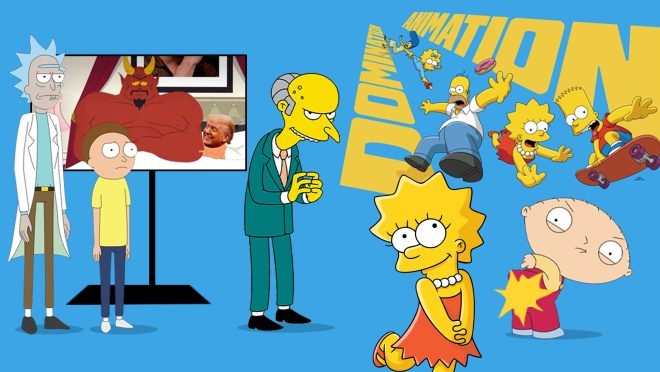
Animation was formerly thought to be harmless since it had easy jokes, vibrant colours, and hilarious moral lessons. The assumption turned out to be false over time. Adult animated series like Rick and Morty, Family Guy, South Park and The Simpsons have subtly emerged as some of the most significant cultural works in modern civilisation during the last thirty years.
They taught us how to think about, doubt, and emotionally distance ourselves, in addition to making us laugh.
The development of adult animation was not a coincidence. It came just when conventional power, whether political, religious, or economic, was starting to lose its legitimacy.
These programmes turned into processing tools, providing satire where there had been certainty. Like other strong instruments, they also changed the people who held them.
The Simpsons and the art of caring scepticism
Satire as civic instruction was perfected by the original powerhouse, The Simpsons. At its height, the programme carefully and methodically analysed suburban decline, media chaos, American capitalism, and governmental incompetence.
Homer Simpson wasn’t mean, but he was stupid. As part of the humour, the audience was just urged to observe the world’s weaknesses rather than to set it on fire.
For the first time, The Simpsons made scepticism seem clever rather than rebellious to many fans. Because it taught people how to question authority without losing their compassion, it appears almost radical in hindsight.
Family Guy and the comfort of detachment
Family Guy followed, carrying with it a shift in tone that seemed like satire served on a bitter cup of coffee.
The show’s constant sarcasm, shock comedy, and cutaway jokes, which existed only because they could, replaced the deeper critique. Nothing required emotional commitment, and everything was satirical.
The outcome was numbing as well as humorous, frequently undeniably so. Meaning becomes optional when all topics are reduced to jokes. Although Family Guy did not create unpleasant comedy, it popularised a kind of humour that needed to be detached in order to endure. Excessive concern turned into embarrassment; authenticity, suspicion.
South Park and the normalisation of cynicism
South Park adopted something more harsh: its cynicism presented as balance, in contrast to The Simpsons’ empathetic scepticism and Family Guy’s tendency toward emotional detachment.
Treating every opinion as equally absurd, every moral standpoint as deceitful, and every kind of earnestness as foolish was its defining act. By doing this, the programme taught viewers to reject conviction itself as well as authority.
In a divided society, the belief that “everyone sucks” developed into a worldview that felt intellectually sophisticated but frequently operated as a lack of concern.
South Park implied that caring too much was the true error, not that nothing mattered. In an enraged media landscape, this stance struck a chord, rewarding viewers who stood above the mayhem rather than inside it.
Rick and Morty and intellectualised despair
If Family Guy taught us to laugh at everything and The Simpsons taught us to challenge authority, then Rick and Morty taught us to intellectualise hopelessness.
The programme is really well-written, depressing, and sensitive to its viewers. Its ability to transform nihilism into an aesthetic decision is what makes it so brilliant. Intelligence becomes a shield.
Vulnerability on an emotional level is viewed as a design defect. According to Rick’s perspective, nothing matters, but at least you can use intelligence. This message didn’t feel alarming to a generation that was accustomed to uncertainty, debt, climate fear, and online comparison; rather, it felt true.
Rick and Morty’s cultural significance stems from its timeliness more than its darkness. It came at a time when caring seemed draining and being intelligent felt isolating. That emotion wasn’t created by the show; rather, it was precisely expressed. Rather than being entertaining, which is far more dangerous and captivating, watching it often feels more like recognition.
After the laughter fades
When combined, these programmes transformed comedy into a major coping strategy. They taught audiences to reduce moral hierarchies, mistrust great narratives, and use irony to deal with discomfort.
This impact is evident everywhere: rage filtered through humour, political debate reduced to memes, and emotional detachment promoted as self-awareness. Irony culture was not created by the modern internet; rather, it was given a language by adult animation.
This is not a critique of these programmes.
When conventional media accepted hypocrisy, they revealed it. When submission seemed natural, they questioned authority. They made difficult philosophical concepts understandable without the need for a reading list. That is important. Healthy communities have traditionally relied heavily on satire.
Perhaps it explains the significance of these shows. When grown-ups had no solutions, when institutions seemed empty, and when hope felt shameful, they were there. Rather than shattering, they allowed us to chuckle. But laughing might eventually become a barrier. Before we learned how to deal with it, we learned how to joke about anything.
Whether these shows went too far is not the topic at hand. The question is whether we can stop hiding behind them.
Because eventually, the world demands more than just a joke. Even when no one laughs, it asks us to care simply, awkwardly, and without irony.