How a viking turned into the internet's favourite giant baby
The screenshot spread faster than any goal highlight. Erling Haaland was sprinting towards a defender, shoulders forward, long legs eating up the pitch, looking less like a footballer and more like a video game character whose speed settings had accidentally been turned up too high.
How a viking turned into the internet's favourite giant baby
The screenshot spread faster than any goal highlight. Erling Haaland was sprinting towards a defender, shoulders forward, long legs eating up the pitch, looking less like a footballer and more like a video game character whose speed settings had accidentally been turned up too high.
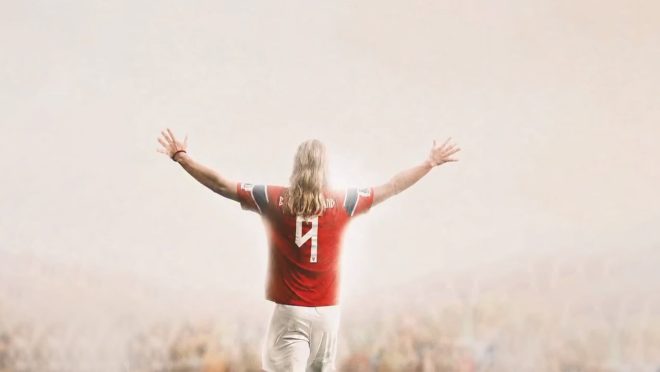
Within hours, the internet had transformed the image into everything from anime villains to prehistoric predators. The actual match result became almost secondary. Once again, Haaland had managed to dominate online conversation without even touching the ball.
That is the strange thing about Haaland. He can score twice against Brazil and still have social media talking about his running style.
On the pitch, he has long been established as one of the world’s elite strikers. The surprise is what happened off it. This tournament turned Haaland from a football superstar into a full-blown internet character. Millions of people who would struggle to name Norway’s midfield suddenly knew exactly what Haaland had posted on Snapchat.
His social media accounts rarely read like carefully managed athlete branding. Instead of motivational quotes and polished sponsorship messages, followers often get awkward selfies, dry jokes and deliberately low-effort posts. When fans tease his running style, he tends to laugh along rather than issue a statement. In an era when many public figures appear permanently media-trained, Haaland’s willingness to look slightly ridiculous has become part of his appeal.
There are blurry selfies. There are Shrek filters, captioned “Selfie with my twin”. There is his cheerful admission that he “raw-dogged” a seven-hour flight without films or entertainment. Last year, when he misspelled Orlando as “Ornaldo” on his way to a tournament in Florida, and someone gently pointed it out, he simply posted back, “Not even allowed to write something wrong now in this perfect world. Sorry to all the perfect brothers and sisters out there.” Most athletes would delete the mistake. Haaland turned it into a joke.
That authenticity, or at least the appearance of it, is becoming increasingly rare. Haaland looks like a Norse warrior from a fantasy film, yet often behaves like someone accidentally given access to a global audience.
Even his hobbies resist expectation. Between terrorising centre-backs and posting low-resolution selfies, he has quietly developed a serious collection of Hermès Birkin bags. The contrast is almost absurd: a Viking-built striker who drinks raw milk, eats steak and appreciates luxury handbags. Yet that contradiction is precisely what makes him memorable.
The football, of course, is the foundation of everything.
Norway’s run to the quarter-finals was the country’s deepest World Cup campaign in modern history, and Haaland was central to it. The defining performance came against Brazil on 5 July. Norway spent long periods without the ball, absorbing pressure from a five-time world champion. Then Haaland produced what elite strikers do best: a powerful header, followed by a low finish that effectively ended Brazil’s tournament. Norway won 2–1, and Haaland moved level with Lionel Messi and Kylian Mbappé in the Golden Boot race.
Asked afterwards what Norway’s tactical masterstroke had been, he offered little analysis. He admitted he had not expected to beat Brazil.
That honesty is part of the appeal. Fans are used to athletes speaking in rehearsed clichés about “taking it one game at a time”. Haaland often sounds as if he has wandered into the interview room slightly surprised by events himself.
Comment sections have responded by giving him a nickname that should not work but somehow does: “Giant Baby”. It captures the unusual gap between his appearance and his personality. On the pitch, he looks capable of running through defenders. He responds to memes with emojis and posts photographs that would never survive a traditional PR review.
Even Norway’s elimination fit the pattern. England beat them 2–1 in the quarter-final on 11 July, with Jude Bellingham scoring late after Haaland had already been substituted, exhausted by the Miami heat. Afterwards, instead of dwelling on defeat, Haaland joked about going on holiday.
Then came the perfect final act.
When he landed back in Oslo, photographers captured him carrying a Dolce & Gabbana tote bag and a taxidermy raccoon holding a tiny whiskey bottle, a novelty item reportedly purchased in Texas during Norway’s stay in Dallas. “It followed me home,” he posted, adding laughing emojis and launching a public poll to name it.
It was impossible to imagine another football superstar ending a World Cup campaign with a stuffed raccoon under his arm. None of this would matter without the goals. But the scale of the reaction points to something larger than football.
Audiences are increasingly tired of athletes who sound interchangeable. Haaland does not appear interested in being relatable, inspirational or brand-safe. He simply behaves like himself, whether that means posting a Shrek selfie, misspelling a city name or carrying a raccoon through an airport.
Paradoxically, that lack of effort has made him one of the most watchable personalities in sport.
For years, football has searched for the next global superstar. It may have found one in a Norwegian striker who scores like a machine, runs like an escaped ostrich and treats social media as if it were a private joke that somehow the entire internet has been invited to join.
And that, more than the goals, is why people cannot stop talking about Erling Haaland.