International Mountains Day: Why our city minds romanticise the hills
International Mountains Day: Why our city minds romanticise the hills
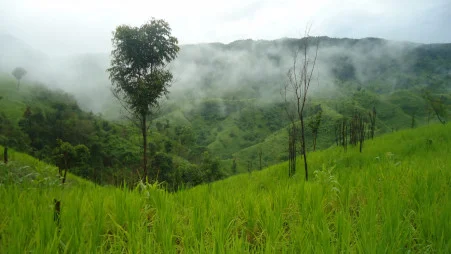
Bangladesh is not a mountain country, and most of us know that from childhood. Our geography lessons taught us about the Himalayas, but they were always shown as something far away, belonging to other nations and other climates.
Yet, if you look at the way urban Bangladesh talks about travel today, mountains appear everywhere. For a country built on rivers and plains, we spend a surprising amount of time dreaming of high mountains.
The reason has less to do with adventure and more to do with how our cities feel. Dhaka, especially, has grown into a place where people live in layers – traffic layered over noise, work layered over stress, and personal time squeezed into whatever remains. You move from one crowded space to another until the idea of space starts to feel foreign. Against this backdrop, mountains look like the exact thing we lack.
For many urban citizens, the mountains represent space more than height. Photos of a ridge or a winding road show something that our eyes rarely get in the city: a long, open view. When you live surrounded by buildings, even a photo of a distant horizon can feel refreshing. We scroll through feeds, see someone standing beside a cliff or leaning on a railing above a valley, and it sparks a simple thought: “I wish I could breathe like that.”
Because we don’t grow up around mountains, we also romanticise them in a way mountain communities often don’t. They are not everyday landscapes to us; they are escape routes. A single holiday to the mountains turns into a story retold for years.
This romanticising is not about being unrealistic. It’s a response to urban life that leaves little room for rest. Many people in the city move through their days in survival mode, dealing with traffic delays, long office hours and the constant pressure to keep up. In such a rhythm, the mind seeks anything that feels calm and wide. Mountains offer that feeling, even from afar. They become a mental counterweight to the density we live in.
Today on International Mountains Day 2025, the message for our cities is clear. The desire to escape to the hills is not a trend or a luxury. It is a sign of the strain our urban environments place on us. If we want healthier cities, we need more green spaces, cleaner air, and better planning. Until then, the mountains will continue to pull people who need a short break from a long routine.