Jamuna char: Where the river shapes childhood
On the shifting chars of the Jamuna River, children grow up learning resilience and survival amid constant uncertainty.
Jamuna char: Where the river shapes childhood
On the shifting chars of the Jamuna River, children grow up learning resilience and survival amid constant uncertainty.
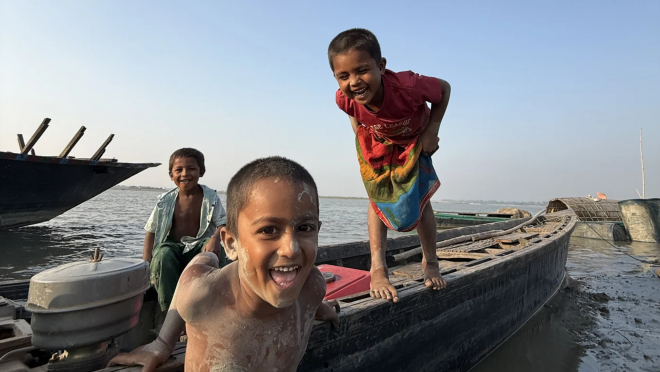
The Jamuna does not just flow — it reshapes lives. On its shifting sandbars, known locally as Chars, childhood is unlike anywhere else. Here, land appears and disappears with the river’s mood, and so do homes, schools, and dreams.
Children grow up learning lessons no classroom can fully teach — lessons of survival, adaptation, and quiet joy amid uncertainty. Interestingly, this uncertainty is simply typical for them. Their playground is vast and open, endless stretches of sandy soil, patches of green crops, and the restless flow of the Jamuna itself.
A day shaped by the river
Life on the Jamuna char starts before the sun rises. Children wake to the sound of water lapping against fragile banks and the calls of birds. Many begin their day helping their parents with chores — carrying water from the river, checking fishing nets, or feeding goats and cows. Morning here is defined by labor; only then, if time allows, do a few find their way to the school or the ‘Maktab’.
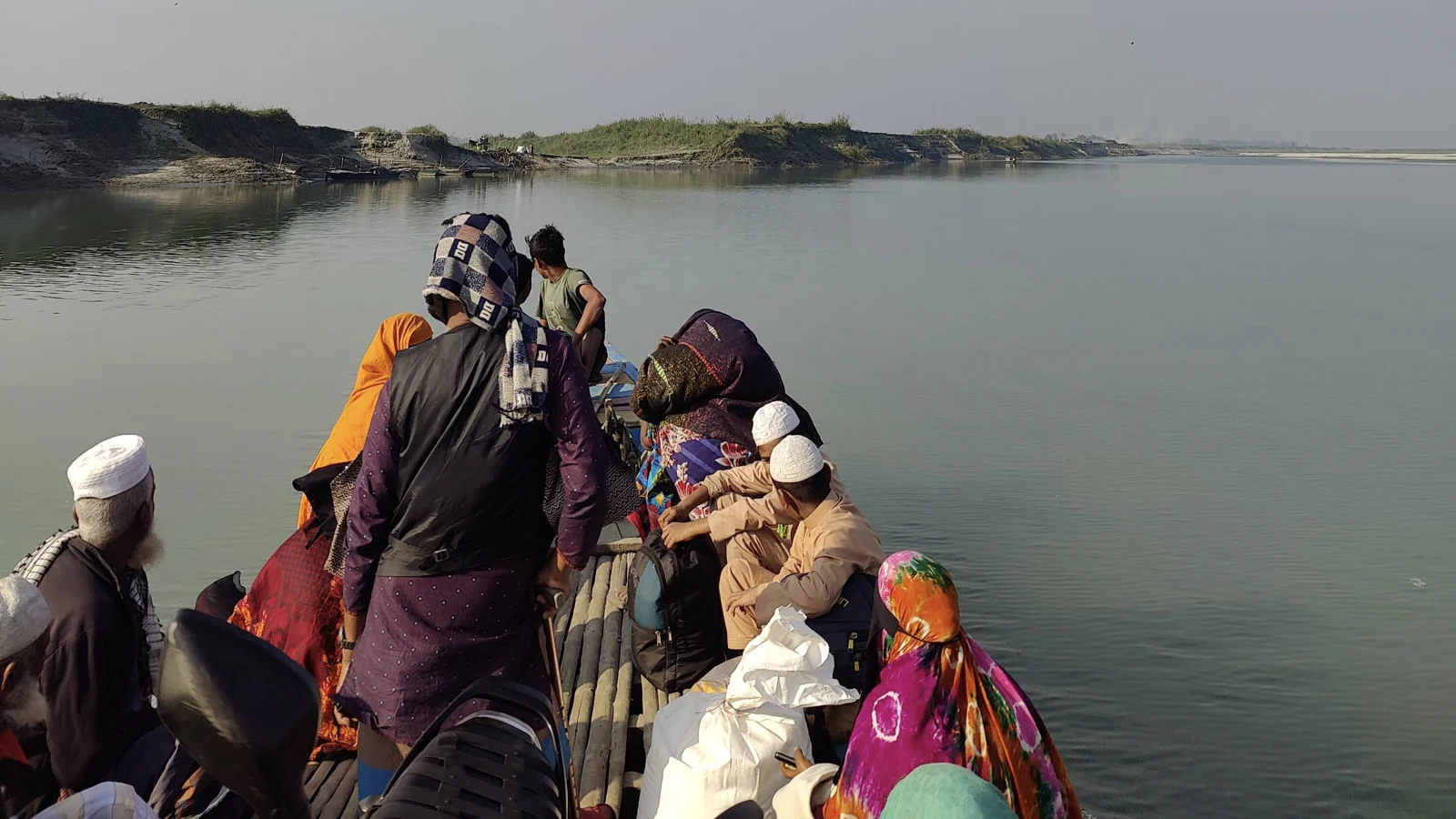
Life on the Jamuna char starts before the sun rises. Photo: Yasin Piash/TBS
“I wake up with the sun,” says twelve-year-old Sadik, balancing a basket of fish on his shoulder. “I used to work until evening with my father.”
By midday, the vast sandy fields turn into both workplace and playground, where chores blend with moments of laughter. Afternoons are often spent collecting firewood, grazing cattle, or assisting in household tasks, leaving little room for rest. As evening falls, families gather under the open sky. With no steady electricity in many areas, children grow up sharing stories instead of screen time, their lives guided not by clocks, but by the rhythm of the river.
“Our evenings are full of tales and family discussion of our future plans, our ongoing life, how to survive and so on,” says Sadik’s mother, Fatima. “The river teaches us more than any book ever could.”
Education on uncertain ground
Education, though slightly valued, is not always easily accessible here. Schools are often located far away, sometimes across water channels that shift with the changing seasons. During the monsoon, attending classes may mean wading through knee-deep water or risking a fragile boat ride. Yet many children persist, driven by hope and the encouragement of parents who dream of a more stable future for them.
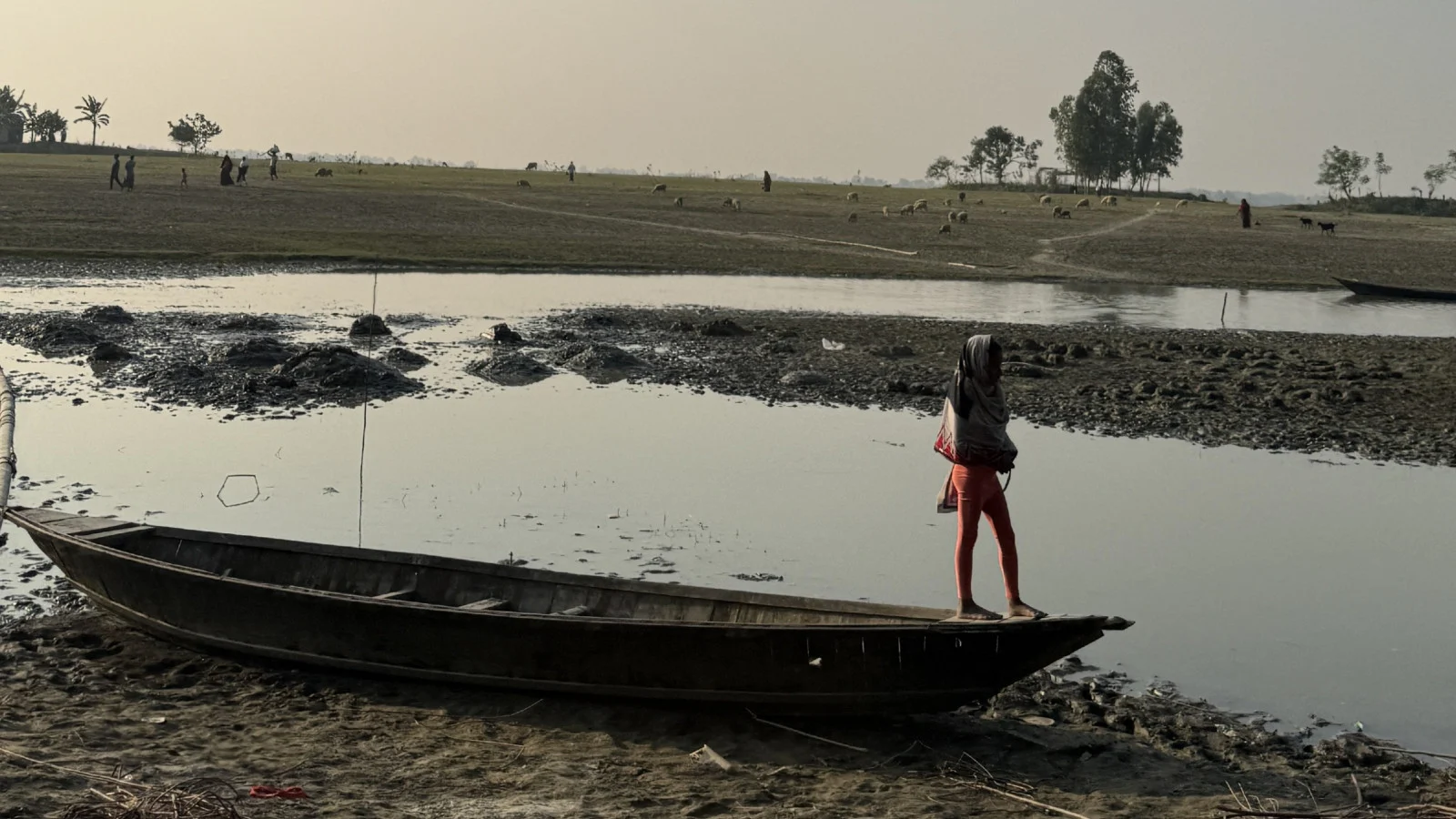
During the monsoon, attending classes may mean wading through knee-deep water or risking a fragile boat ride. Photo: Yasin Piash/TBS
“I want to go to school every day and be a doctor in the future,” says eleven-year-old Sadia, “but when the water rises, the road disappears. And in the dry season, it’s very difficult to pass the sandy road to go to school. Still, I try.”
Most of the children who receive an education primarily attend local madrasas. For many, their first steps into learning begin at ‘maktabs’—an informal institution based in mosques — where they are introduced to basic literacy and religious teachings at an early age.
“Maktab is the place from where I learned my first letters,” recalls Mehedi, 13, “before I ever saw a real school.”
Interestingly, for many children on the Jamuna char, learning does not begin in a classroom — it begins with life itself. They learn to read the river’s changing currents, to predict the weather by watching the sky, and to understand survival through experience rather than textbooks.
“You know the river is angry when the birds fly low,” says Saddam, smiling. “Then we hurry home.”
Practical knowledge shapes their intelligence. While formal education may be limited, their ability to adapt, solve problems, and endure hardship reflects a different kind of learning — one rooted deeply in reality. In the ever-changing landscape of the char, life itself becomes the classroom, and experience is the most enduring lesson.
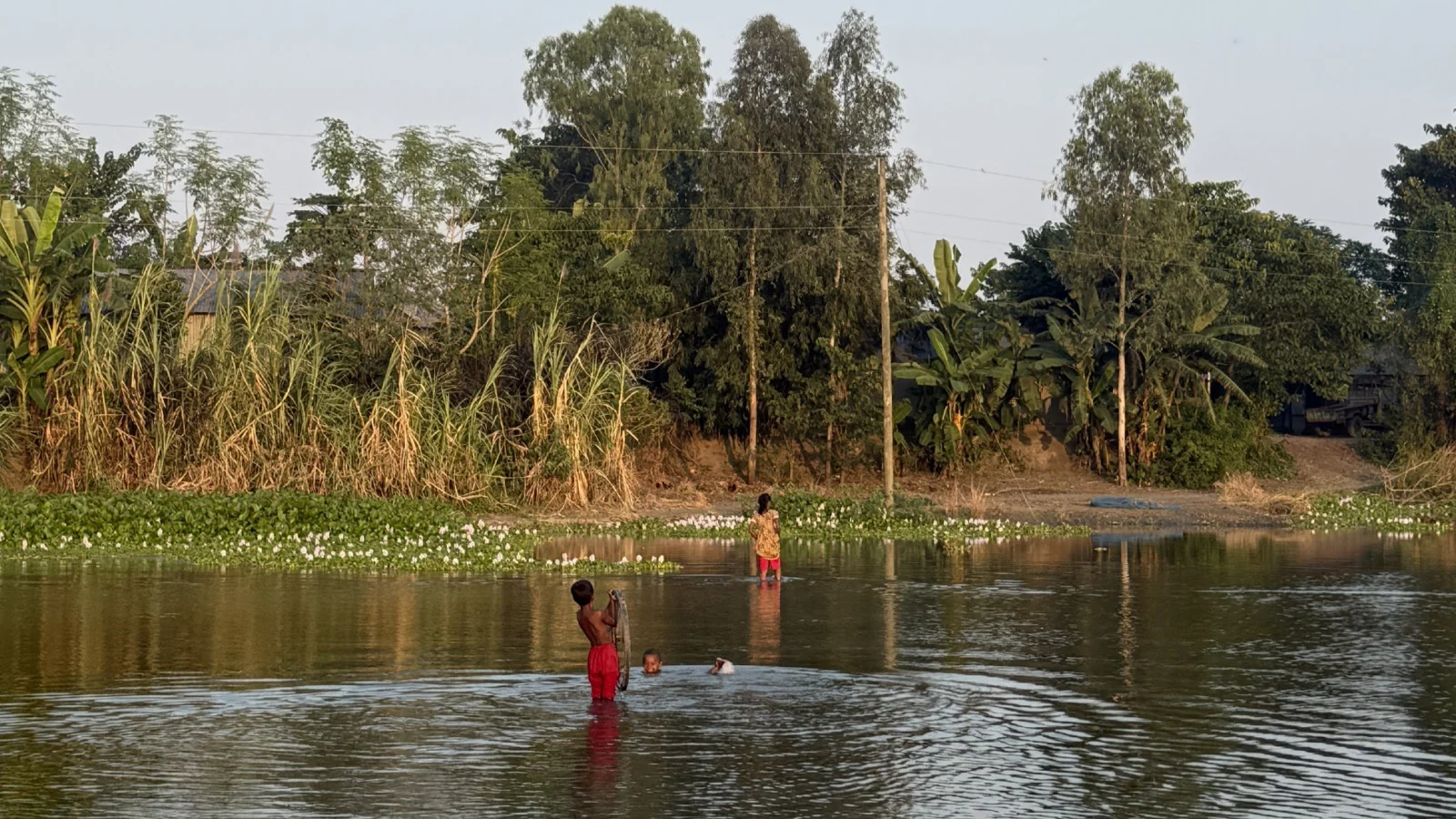
For children growing up on the char, dreams are as fluid as the land beneath their feet. Photo: Yasin Piash/TBS
Dreams that drift, yet endure
For children growing up on the char, dreams are as fluid as the land beneath their feet. Many aspire to become teachers, doctors, or even boatmen like their fathers, but their ambitions are often shaped by the limitations around them. With little access to stable infrastructure or consistent opportunities, their paths forward are uncertain. Yet, there is a quiet resilience in how they imagine their futures.
“I want to be a teacher one day,” says Shiwly, “so I can teach children even if the school is far away.”
A boy may revise his lessons under the dim glow of a kerosene lamp, while a girl balances household chores with her schoolwork, holding tightly to the hope of a different life. Their dreams may drift with the river’s currents, but they rarely disappear.
Life on the Jamuna char teaches children that resilience is not just a response to hardship — it is a way of seeing the world. The river, with its constant ebb and flow, becomes both teacher and companion, showing them that loss and renewal are inseparable.
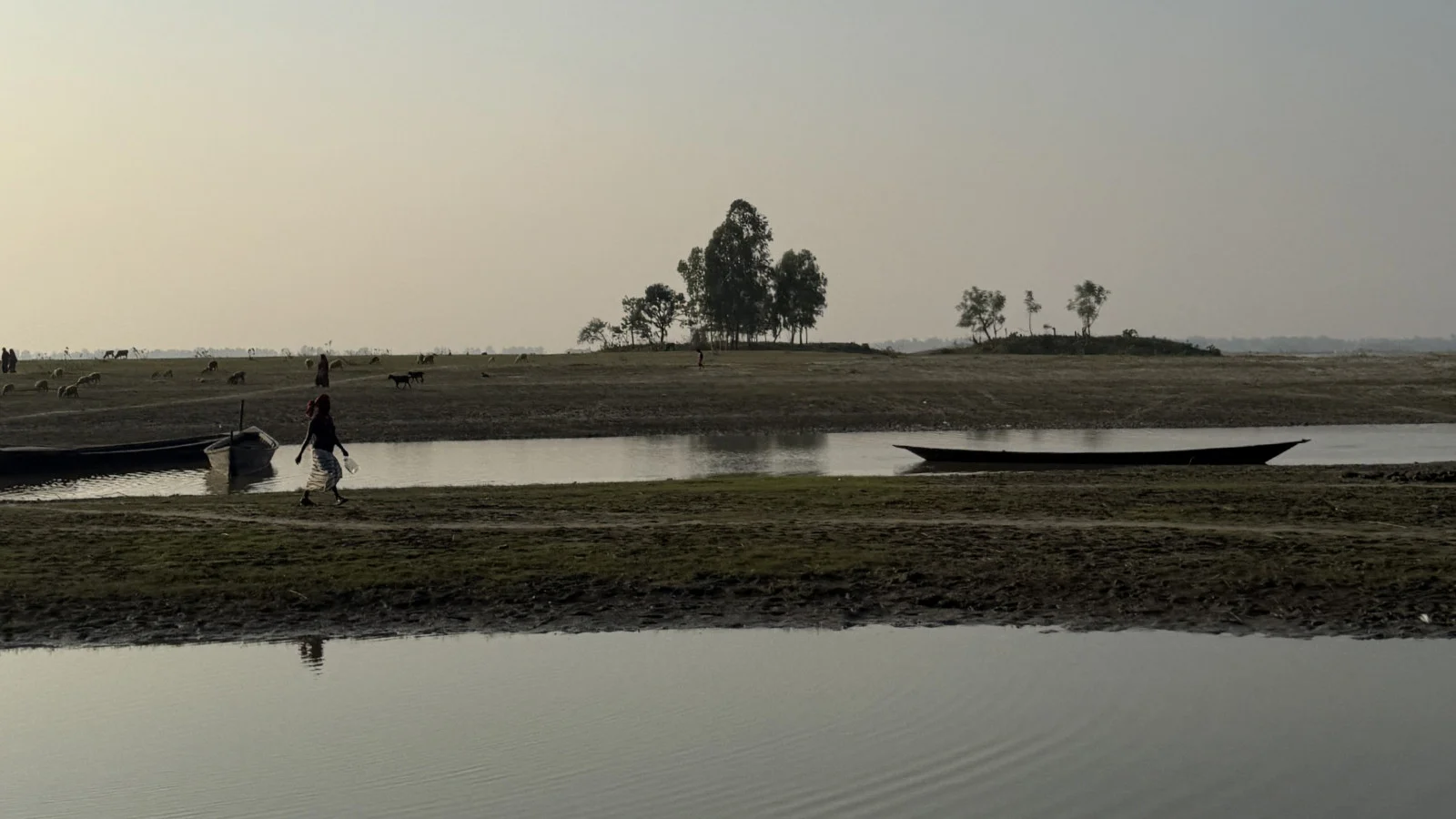
In learning to navigate this ever-changing landscape, they discover the courage to face uncertainty, the creativity to make the most of what they have, and the wisdom to find beauty in impermanence. Photo: Yasin Piash/TBS
“Every time the river takes something, it gives us something new,” says Mehedi. “We just have to keep moving with it.”
In learning to navigate this ever-changing landscape, they discover the courage to face uncertainty, the creativity to make the most of what they have, and the wisdom to find beauty in impermanence. Growing up here, they carry with them a quiet strength that will guide them long after the riverbanks have shifted.