Kisses, dirty socks and a candy bar: The World Cup's weirdest lucky charms
Kisses, dirty socks and a candy bar: The World Cup's weirdest lucky charms
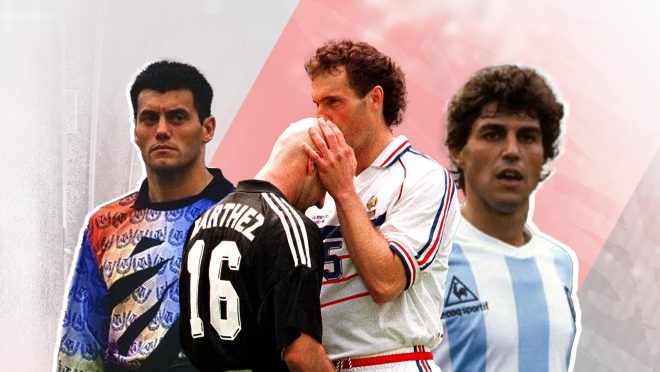
The FIFA World Cup is supposed to be won by tactics, talent, and preparation. Yet throughout history, some of football’s greatest triumphs have been accompanied by rituals so bizarre that they sound more like folklore than sport.
From lucky kisses to forbidden chicken dinners, these superstitions became sacred traditions for teams chasing football immortality.
France’s “Magic Kiss” that ended a 60-year wait
In the summer of 1998, France was hosting its first World Cup since 1938 and carrying the hopes of an entire nation. Amid the pressure, a peculiar ritual emerged inside the French camp.
Before every match, defender Laurent Blanc would kiss goalkeeper Fabien Barthez on his bald head. What began as a playful gesture soon transformed into a team-wide superstition as France continued winning. Players refused to tamper with the routine, convinced it was bringing them luck.
The ritual faced its greatest test before the final against Brazil. Blanc had been sent off in the semi-final and was suspended for the biggest match of his life. Yet moments before kick-off, he walked onto the pitch, found Barthez, and delivered one last “magic kiss.”
Ninety minutes later, France defeated Brazil 3-0 and lifted its first-ever World Cup trophy. To French fans, the image of Blanc kissing Barthez became one of the tournament’s most enduring symbols.
Argentina’s goalkeeper and the most unusual penalty ritual ever
Few World Cup stories are stranger than Sergio Goycochea’s lucky charm during Argentina’s run to the 1990 final.
Before a quarter-final penalty shootout against Yugoslavia, the Argentine goalkeeper found himself unable to leave the field to use the restroom. Forced to improvise, he relieved himself on the pitch. Argentina won the shootout. Most players would have forgotten the incident. Goycochea did the opposite.
When Argentina faced Italy in another penalty shootout in the semi-final, he repeated the ritual. Once again, Argentina emerged victorious. Soon teammates became active participants, forming a protective circle around their goalkeeper before shootouts to shield him from spectators and television cameras. Argentina eventually reached the World Cup final, and Goycochea’s bizarre superstition entered football folklore forever.
Maradona’s Argentina and the candy bar that brought luck
If one player symbolised the 1986 World Cup, it was Diego Maradona. But behind Argentina’s legendary triumph stood a team obsessed with rituals.
Coach Carlos Bilardo believed luck could be controlled. He banned chicken from the players’ diet for five weeks because he considered it unlucky. When Argentina won a match after their team bus broke down and they had to travel by taxi, Bilardo continued sending players to games in taxis whenever possible.
The players had rituals of their own. Defender Ricardo Giusti planted a candy bar at midfield before every match. On the journey to stadiums, the entire squad drank mate at exactly the same time. Every detail mattered. Every routine had to be respected.
Whether it was superstition or coincidence, Argentina kept winning. Led by Maradona’s brilliance, they conquered the world and turned their collection of strange habits into championship legends.
Germany’s dirty socks and a fourth World Cup
By 2014, football had become a game dominated by sports science, data analytics, and cutting-edge preparation. Yet Germany’s World Cup-winning squad still relied on old-fashioned superstition.
Several players admitted they continued wearing the same socks throughout the tournament because they believed changing them would disrupt the team’s momentum. Some pairs were washed, repaired, and stitched back together rather than replaced.
As Germany advanced through the knockout rounds, the superstition only grew stronger. No one wanted to risk changing a formula that was working.
The tournament ended with Mario Götze’s famous extra-time goal against Argentina in the final. Germany became world champions for the fourth time, and the lucky socks quietly earned their place in World Cup history.
None of these rituals scored goals or won matches on their own. France had Zinédine Zidane, Argentina had Maradona, and Germany had one of the most complete squads of the modern era.
But in a tournament where pressure can overwhelm even the greatest players, belief matters. Sometimes that belief comes from tactics. Sometimes it comes from teammates. And sometimes it comes from a kiss on a bald head, a candy bar hidden in the grass, or a pair of socks that should have been thrown away weeks earlier.