Learning while teaching: Young educators making an impact
While for many, student life only means attending classes and returning home, some students go beyond and step into familiar settings not as learners, but as teachers.
Learning while teaching: Young educators making an impact
While for many, student life only means attending classes and returning home, some students go beyond and step into familiar settings not as learners, but as teachers.
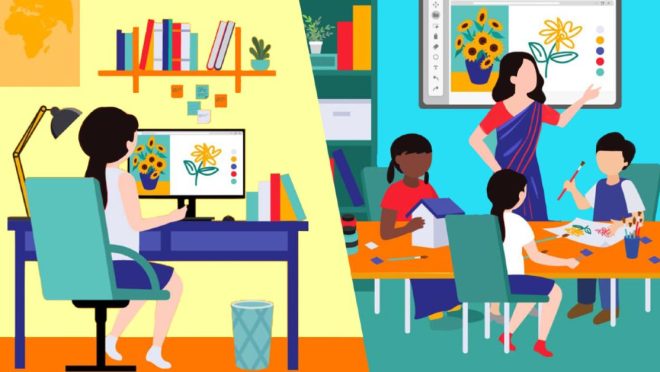
From preparing lessons to supporting learners in their educational journey, they become someone young students rely on. Managing dual roles at the same time is no small feat.
On this year’s International Day of Education, the theme “Youth in Co-Creating Education” celebrates such young educators. We explored how students teach while continuing their own studies, taking on responsibilities far beyond their years.
Where the decision to teach begins
Teaching is more than completing a syllabus. It is about helping students understand and gain confidence. For people like Asadur Rahman Turzo, a finance undergraduate at the University of Dhaka and a teacher at 10 Minute School, teaching is also about sharing knowledge and giving back.
“In my first year, I relied a lot on YouTube to understand topics like statistics, finance, and mathematics. I noticed that not every student has the same access to resources,” shares Asadur.
Through this realisation, Asadur joined teaching and now plays an active role in shaping the lives of young students on a daily basis.
When asked what makes a teacher credible, Turzo says it’s not about age or degrees. “For me, it’s more about connecting with students and making things clear. When you make a hard topic easier to understand, students start to trust you more.”
From his experience, he adds, the key is to keep lessons simple. If students understand why something works, they learn better instead of just memorising facts. It also makes lessons feel more useful and easier to follow.
Earning trust
Being a young teacher comes with its own set of challenges. Often, students see you as a peer rather than someone in charge.
Shafin S Khan, a BBA undergraduate and Teaching Assistant at BRAC University, talks about how he earns credibility in the classroom.
“Universities like BRAC give guidance and resources,” he says, “but how well a tutor does depends a lot on their own effort, confidence, and sense of responsibility.”
For him, building trust isn’t about age or titles. It’s about being prepared, approachable, and actually showing up for the students. He takes time to answer questions, tries to explain concepts in ways that make sense, and adapts his approach depending on how students learn.
Slowly, over time, students start to see him as a teacher—not because he knows more, but because they feel his care and support in every class.
He also notes one of the great advantages of peer-led learning: students often feel more comfortable asking questions when they do not fully grasp a lesson. That comfort makes the classroom a place where people actually want to learn.
Responsibility
For Fatema Akter Mitu, a student at the University of Dhaka and a private tutor, teaching is much more than just completing the syllabus. Every lesson carries the weight of helping students academically and emotionally.
“The role isn’t just about explaining concepts,” Mitu says. “I try to support students when they feel stressed during exams or discouraged. I point out their weak areas, give feedback, and sometimes even teach values and ethics. It all becomes part of the responsibility.”
However, the challenges can be overwhelming. Mitu remembers a student who dreamed of pursuing arts, but whose father insisted on science. The pressure left the student confused and anxious. “We sat down and had a really honest talk,” she recalls. “After discussing it carefully, we finally found a solution that worked for both of them.”
Teaching as a passion for individuals like Mitu is not just about lessons. It often means being a mentor, a guide, and, at times, someone students can trust like a friend.
On this International Day of Education, the journeys of these young educators leave a quiet but powerful message: teaching and learning are not separate things.
When students become learning instructors while still figuring life out themselves, they give their hearts to education. It’s their patience, care, and belief in each student that leave a real and lasting impact.