Redefining lifestyle: The key to climate action
Climate initiatives often shift the burden of sustainability entirely onto individual consumers, framing the crisis as a personal behavioural failure rather than a structural one. To enact real change, we must stop letting governments and corporations off the hook and redefine how we view our way of life
Redefining lifestyle: The key to climate action
Climate initiatives often shift the burden of sustainability entirely onto individual consumers, framing the crisis as a personal behavioural failure rather than a structural one. To enact real change, we must stop letting governments and corporations off the hook and redefine how we view our way of life
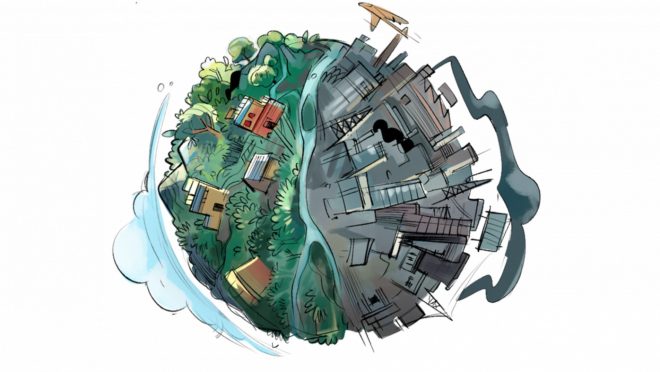
Lifestyle is a profoundly important concept – but is it merely a word? Analysing the term “lifestyle” reveals its vastness and multidimensional nature. Lifestyle is not purely an individual matter; it intersects with social, cultural, commercial, and even innovative domains. In the stark reality of climate change – which we are all increasingly experiencing – understanding lifestyle becomes critically important.
It is widely acknowledged that lifestyle is closely intertwined not only with the individual but also with society, culture, and the environment. Examining various definitions of lifestyle reveals a consistent recognition of behaviour and preferences as its core components. Everyday decisions, consumption patterns, habits, and values are central to all these definitions. Most also recognise that lifestyle is changeable – through education, awareness, and policy intervention – and its links to sustainable development and climate are emphasised. Notably, definitions endorsed by the United Nations and related bodies connect lifestyle with environmental responsibility and intergenerational equity (UNEP, 2011; UN, 2015).
From a psychological and health perspective, lifestyle is often seen as the outcome of individual behaviour, habits, and choices. It is assumed that knowledge or awareness alone can change a person’s way of life. In contrast, sociological and environmental perspectives highlight structural barriers – poverty, social inequality, gender, education, policy, market systems, and environmental risks – that make it impossible for everyone to choose equally healthy or sustainable lifestyles. Individual-centred explanations tend to underestimate these social and structural constraints, creating fundamental inconsistencies.
Another major inconsistency arises between consumer-centred versus sustainability-centred views. Marketing and consumer behaviour perspectives link lifestyle to choices, brands, consumption, and social status, emphasising identity formation through consumption. Conversely, environmental and sustainable development perspectives consider overconsumption a primary driver of climate crises, resource depletion, and environmental damage. Where one approach encourages consumption, the other stresses moderation, responsible use, and ecological restoration (SER, 2019). These differing perspectives reveal fundamental inconsistencies in lifestyle definitions.
Sociology, psychology, public health, marketing and consumer behaviour, and environmental and sustainable development – all offer separate definitions of lifestyle. Analysis shows a convergence in understanding the core elements and importance of lifestyle. Yet, questions remain unresolved: Who holds the responsibility for changing lifestyle? How and to what extent? What defines quality of life, and what constitutes standard living? These ambiguities create key inconsistencies.
This leads to two major consequences. First, a culture of individual blame emerges, where climate crises are framed as moral or behavioural failures rather than structural problems. People may feel discouraged, avoid responsibility, or believe that their individual efforts have little impact. Second, pressure on governments and the corporate sector for necessary policy reforms, investments, and accountability decreases, weakening the large-scale emissions reductions and systemic transitions required.
Another negative impact of this inconsistency is ineffective coordination. When personal behaviour change, policy initiatives, and market systems are not aligned toward the same goals, initiatives become fragmented and short-term. Responsibility is often shifted entirely onto individuals – to consume less, use eco-friendly products, or change habits – while the structural role of the state, corporate sector, and global systems remains comparatively invisible. This imbalance in responsibility undermines the effectiveness, credibility, and longevity of climate action.
Overall, the ambiguity and uneven allocation of responsibility in lifestyle change weaken climate initiatives, as they present the problem in a fragmented way without recognising the joint responsibility of individuals, society, and institutions. Therefore, an integrated, equitable, and responsibility-shared lifestyle framework is urgently needed for effective climate action.
In this context, establishing a proposed integrated definition of lifestyle becomes particularly essential. Existing fragmented perspectives highlight individual, societal, and institutional roles separately but do not clearly show their interconnection or shared responsibility. An integrated definition can help view personal behaviour in relation to social structures, economic systems, policymaking, and environmental constraints. Lifestyle is thus not merely about personal choice or consumption but can be understood as part of a just, environmentally conscious, and structurally transformative process.
Accordingly, a proposed integrated definition could be: Lifestyle is a dynamic way of living shaped through the interaction of individuals and society, influenced by personal values, behaviours, and preferences as well as social structures, cultural contexts, economic realities, and environmental constraints. Whether we talk about quality, standard, or sustainable lifestyles, it is not limited to healthy habits or consumer choices. Rather, it represents a conscious and ethical approach to life that considers responsible and equitable use of natural resources, environmental balance, social justice, and the well-being of future generations. From this perspective, lifestyle transcends individual-centred decisions and becomes an integrated, transformative process connected to collective responsibility, inclusive policymaking, community participation, and ecological restoration.
I believe this integrated definition can provide a practical framework for lifestyle-based policies, education, and social transformation to address environmental crises effectively.

Sketch: TBS
Bidhan Chandra Pal is the founder and managing director of Probha Aurora, national operator of the Foundation for Environmental Education (FEE), Bangladesh, chair of the Make a Difference Week (MADW) Global Committee 2026-27, and member of the Executive Council at the Center for Urban Studies (CUS)
Disclaimer: The views and opinions expressed in this article are those of the author and do not necessarily reflect the opinions and views of The Business Standard