Why Women’s Day must last all year
Every year on 8 March, the world comes together to celebrate International Women’s Day. Social media is filled with tributes to inspiring women, companies publish empowering posters, and different events are organised to recognise women’s achievements.
Why Women’s Day must last all year
Every year on 8 March, the world comes together to celebrate International Women’s Day. Social media is filled with tributes to inspiring women, companies publish empowering posters, and different events are organised to recognise women’s achievements.
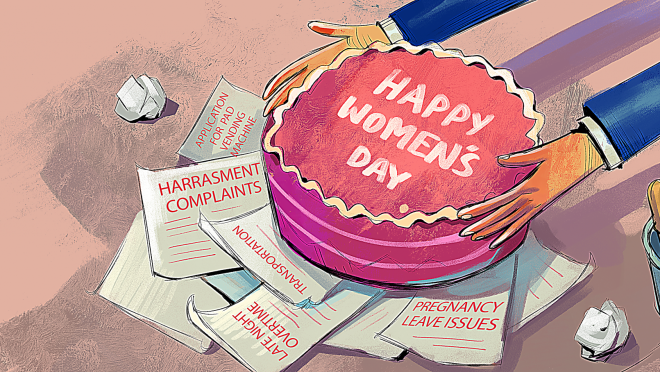
On this day, the spotlight shines brightly on gender equality and the contributions women make to society. Yet as the day fades and the banners come down, an important question remains: is Women’s Day merely a symbolic gesture, or should it be a call for meaningful change for women throughout the entire year?
To truly honour women, 8 March must be more than just a day of recognition. It must serve as a reminder that the pursuit of honouring women requires continuous commitment, not just a single day.
The origins
The roots of International Women’s Day lie in early 20th-century labour and political movements. Women across the world organised protests demanding better working conditions, voting rights, and equal opportunities. One significant milestone occurred during the 1917 Women’s Strike in Petrograd, when Russian women protested for bread and peace, contributing to social changes that eventually granted women the right to vote.
Later, organisations such as the United Nations officially recognised the importance of the day, turning it into a global moment to celebrate women’s achievements.
These historical roots reveal that Women’s Day was never meant to be a mere celebration. It was born out of activism and collective action.
Despite its powerful history, Women’s Day can sometimes feel symbolic rather than transformative. Many institutions celebrate women publicly on 8 March but fail to address deeper systemic issues and respect them throughout the year.
Companies run promotional campaigns featuring inspirational quotes about women while maintaining workplace cultures that lack equal pay or leadership opportunities. Governments host events celebrating women’s empowerment but still struggle to implement policies that ensure safety, education, healthcare, leadership, and economic independence for women.
This phenomenon, sometimes described as performative celebration, risks turning a day rooted in activism into a marketing opportunity.
When recognition becomes symbolic for a day only, the unspoken problems remain unchanged. Barriers persist long after the hashtags fade on 9 March.
Celebrating women through everyday actions
If Women’s Day is to remain meaningful, the spirit of 8 March must extend beyond the calendar. True celebration of women lies not only in public praise but also in everyday actions and structural change.
One important area is education. Ensuring equal access to education empowers women to participate fully in economic and leadership life. Across many parts of the world, education has proven to be one of the most powerful tools for improving women’s independence and social mobility.
Another key factor is workplace equality. Equal pay, maternity and parental leave policies, and opportunities for leadership help create environments where women can thrive professionally. Organisations that prioritise gender equity throughout the year demonstrate that their commitment goes beyond symbolic celebration.
Safety and legal protection are equally essential. Women must be able to live and work without fear of harassment or violence. Addressing these issues requires consistent law enforcement, community awareness, and cultural change.
In short, celebrating women means creating conditions where women’s rights, voices, and opportunities are respected every day.
Beyond policy and economics, cultural representation also plays a powerful role in shaping gender equality. Media, literature, and education influence how societies perceive women’s roles and capabilities.
When girls grow up seeing women represented as leaders, scientists, artists, and innovators, they are more likely to imagine those possibilities for themselves. Representation can challenge long-standing stereotypes and open new paths for future generations.
Equally important is recognising the diversity of women’s experiences. Women are not a single, uniform group. Their lives are shaped by factors such as class, ethnicity, and geography. Celebrating women beyond 8 March means acknowledging and supporting this diversity rather than reducing women’s achievements to a single narrative.
Celebration to commitment
While governments and institutions play major roles, individuals also have a responsibility to ensure women are rightly respected.
Simple actions can make meaningful differences, such as supporting women-owned businesses, fighting for fair treatment in workplaces, encouraging girls’ education, and challenging harmful stereotypes in everyday conversations.
Men, in particular, play a critical role as allies. Gender equality is not solely a women’s issue; rather, it is a societal goal that benefits everyone. When men actively support equality by sharing responsibilities at home, advocating for fair opportunities at work, and listening to women’s perspectives, they contribute to building more inclusive communities.
International Women’s Day is powerful because it captures global attention. For one day, people across countries, societies, and professions reflect on the achievements and struggles of women.
The true value lies in what happens after 8 March.
If the day inspires conversations that lead to policy reforms, social initiatives, and personal reflection, then it catalyses change. If it remains only a ceremonial celebration, its potential is diminished.
The challenge is to transform symbolic recognition into sustained action.
Celebrating women beyond this day means shifting the focus from a single event to an ongoing commitment. Schools can integrate gender equality into education throughout the year. Businesses can measure progress towards equal representation and pay equity. Every community can take initiatives to empower women socially and in all aspects.
Most importantly, societies can continue questioning and addressing the structures that limit women’s opportunities.
8 March should therefore be seen not as the culmination of recognition but as the starting point for continued action.
International Women’s Day reminds the world of the achievements, resilience, contributions, and sacrifices of women across every field of life. Yet its greatest significance lies not in the celebration itself but in the momentum it creates.
When this day becomes a reminder to challenge inequality, support women’s leadership, and promote fairness throughout the year, it transforms from a symbolic event into a powerful call for change.
Ultimately, celebrating women beyond Women’s Day means respecting and becoming a voice for them not in a once-a-year conversation but throughout the year. It is a continuous effort that requires commitment, reflection, and action every single day.