Order, fear, and power: Hobbes was right, and that’s the problem
“Life is solitary, poor, nasty, brutish and short.”
Order, fear, and power: Hobbes was right, and that’s the problem
“Life is solitary, poor, nasty, brutish and short.”
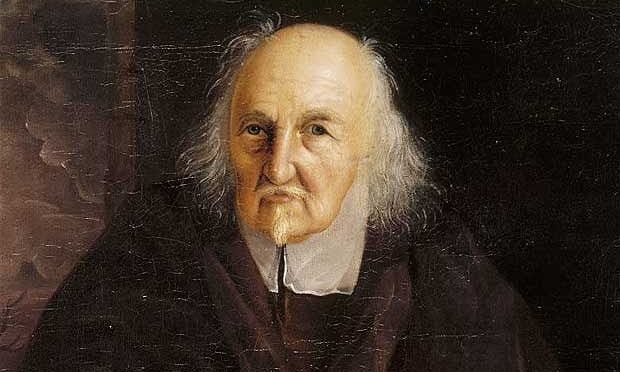
When you first read this quote, it feels too harsh and dark. It talks about a human life that is stripped of comfort, safety and security, but the quote is not simply pessimistic. It does describe what life would become, though, if there were no order, no rules and no authority to protect people from one another.
At the same time, the same protective authority can control our existence and fill it with fear and conflict.
These words were famously said by Thomas Hobbes, one of the most influential political thinkers of his time. And today, on his birthday, we remember him and reflect on these ideas about the “nature of life”.
On this day, Hobbes was born in 1588 in England. His early life was not particularly stable. His father had abandoned his family after a dispute, leaving Hobbes to be raised by relatives. Yet, from a young age, he showed intellectual curiosity. He later studied at Oxford and spent much of his life working for the wealthy Cavendish family and travelling across Europe with scholars and scientists. These experiences exposed him to the world of politics and encouraged him to develop his ideas.
Through his ideas, Hobbes essentially built a complete system of knowledge. His major works include De Cive, De Corpore and De Homine, a trilogy. In these, he connected the physical world, human nature and political perspectives into one structure. However, his masterpiece, Leviathan, is the most widely read of his works. In Leviathan, Hobbes explores the need for government and how human nature is connected to it. He argues that, in a natural state, humans are driven by self-interest, fear and competition. He calls it the natural state of human beings. This state leads to constant conflict, a “war of every man against every man”. According to Hobbes, humans give up their freedom and accept a powerful authority, a sovereign, to escape this war and ensure peace and security.
Hobbes’s own life reflected the instability he wrote about. During the political unrest in England, he feared for his safety and went into exile in Paris. There, he spent more than a decade continuing his work and engaging with intellectual circles to refine his ideas. In his later life, Thomas Hobbes returned to England around 1651, made peace with the new government under Oliver Cromwell and lived a quiet life for some time. After the monarchy was restored in 1660, he regained favour with Charles II, who greatly appreciated his wit and even granted him a pension. However, as his ideas were controversial and Parliament had considered a bill against atheism, Hobbes destroyed much of his writings out of fear of punishment.
Hobbes believed that we do not come together out of love or natural harmony, but out of necessity. When there is no authority, even small disagreements can turn into violence. We can think of situations such as rumours spreading quickly, political tension rising, people losing faith in institutions or even government decisions that do not match our views. In such times, even ordinary individuals may begin to act out of fear rather than reason.
Additionally, Hobbes also pointed out the dangers of power itself. According to him, the sovereign must be strong, but if that power fails to protect people or becomes corrupted, then the very foundation of obedience collapses. People obey not because they love the authority, but because they have no other choice.
If we read Hobbes in today’s world, we are bound to think about the reality of his philosophy. As he explained, we surrender to an all-powerful authority in hopes of safety. However, we can look around in our world and see that it is because of those powerful authorities that we are in a state of war against every man. Hobbes argued that people must live peacefully under a sovereign authority to escape the violence of the natural state of human life, yet in today’s world that very power, meant to protect, is becoming the source of conflict.
So, how much freedom should we give up for security? Can absolute authority ever be justified? And what happens when authority fails?
If fear shapes the world more than we admit, are we ever truly free?