The moment in The Kite Runner I couldn't forgive
It was well past midnight when I turned the last page of The Kite Runner.
The moment in The Kite Runner I couldn't forgive
It was well past midnight when I turned the last page of The Kite Runner.
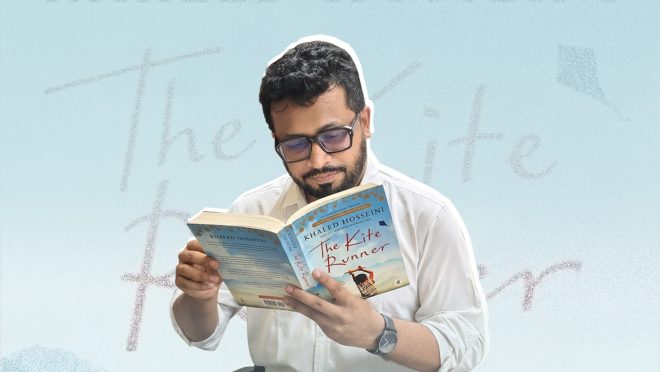
I closed the book, placed it beside my bed, and stared at the ceiling for what felt like an hour. Not reading, not sleeping, just sitting with a strange, heavy feeling in my chest that I could not immediately name.
Some books entertain, some teach. A rare few quietly take a piece of you and refuse to give it back. Khaled Hosseini’s debut novel belongs to that last category. I thought I was reading a story about Afghanistan. Instead, I found myself reading about guilt, friendship, cowardice, and the uncomfortable truth that doing nothing can sometimes be the greatest betrayal of all.
The first thing that struck me was how ordinary the story begins. There are no explosions, no war, no dramatic speeches. Just two boys growing up in Kabul before everything falls apart. The book is full of simple but powerful images. The kites floating in the Kabul sky are beautiful until you notice the razor-sharp strings slicing everything they touch. The pomegranate tree where the boys carved “Amir and Hassan, the sultans of Kabul”. These moments feel warm at first, but as the story moves on, they take on a heavier meaning. That difference is one of the reasons the book stays with so many people.
Amir is the son of a wealthy businessman, while Hassan is the son of the family’s servant. They fly kites, tell stories, and spend endless afternoons together. On the surface, they are best friends. But as I kept reading, I realised their friendship had invisible walls built around it. Amir has privilege. Hassan has loyalty. Amir has choices. Hassan has none.
Then comes the line that has become one of the most famous in modern literature, “For you, a thousand times over.”
It is only five words, yet they carry the emotional weight of the entire novel.
When Hassan says it, he means it without hesitation. His loyalty is pure, unconditional, and almost impossible to imagine in today’s world. At first, I smiled while reading it. By the end of the book, those same words had become heartbreaking. Every time I thought about them, I remembered the alley.
There are scenes in literature that readers never truly forget. The assault on Hassan is one of them. It is difficult to read, not because Hosseini describes it in graphic detail, but because Amir watches from a distance and chooses silence. I kept waiting for him to move, to shout, to intervene, to do anything. Instead, he hides.
That moment frustrated me more than any villain in the novel ever did.
We often imagine that courage appears naturally when the moment arrives. Hosseini challenges that comforting belief. Fear is rarely dramatic. It whispers excuses. It tells us someone else will step in. It convinces us that protecting ourselves is reasonable. Amir becomes a symbol of something deeply inhuman: the terrible cost of looking away.
As I read those pages, I found myself asking an uncomfortable question. Would I have been any braver?
That is what makes The Kite Runner so powerful. It does not allow readers to judge Amir from a safe distance. Instead, it quietly invites us to recognise pieces of ourselves in him. Every person has moments they regret, times when they remained silent, avoided conflict, or failed someone who trusted them. Amir’s mistake is extraordinary, but the emotion behind it is painfully ordinary.
Guilt becomes Amir’s constant companion. It follows him across continents, across decades, and into every important relationship in his life. Even after he leaves Afghanistan for the United States following the Soviet invasion, guilt refuses to stay behind. He builds a new life, finds love, and becomes a writer, yet nothing truly frees him from the boy he once was.
One sentence appears early in the novel and quietly shapes everything that follows: “There is a way to be good again.”
When Rahim Khan says those words, they sound almost hopeful.
But as I continued reading, I realised redemption is never simple. Khaled Hosseini does not offer easy forgiveness. Becoming “good again” is not about saying sorry. It requires sacrifice, pain, and accepting consequences that can never be fully undone.
Perhaps that is why Amir feels so real. He is not a hero. He is not even particularly likeable for much of the novel.
He is insecure, jealous, selfish, and desperate for his father’s approval. Yet these flaws make him believable. Literature often celebrates perfect heroes. Hosseini gives us something much more uncomfortable, a deeply imperfect man trying, far too late, to become decent.
Another theme that stayed with me was the relationship between fathers and sons.
Amir spends his childhood believing he disappoints Baba, his strong, respected father. He thinks bravery is inherited, and he fears he has inherited none of it. Yet the novel slowly reveals that adults are just as flawed as children. Baba, whom Amir almost worships, carries his own secrets, regrets, and failures.
One of my favourite lines in the book comes from Baba: “Children aren’t colouring books. You don’t get to fill them with your favourite colours.” It is a simple sentence, but it speaks to parents everywhere. Baba’s words remind us that love should guide children, not control them.
By the final chapters, when Amir returns to Taliban-controlled Afghanistan to rescue Hassan’s son, Sohrab, the novel transforms from a story of guilt into one of responsibility. Redemption does not erase the past, but it asks whether we are willing to act differently when given another chance.
The ending is hopeful without pretending that trauma disappears overnight. Sohrab’s silence speaks louder than pages of dialogue ever could. Hosseini understands something many stories overlook: surviving is not the same as healing.
When I finally closed the book, I realised I had not simply finished a novel. I had finished an emotional conversation with myself.
I still do not fully forgive Amir.
Perhaps I am not supposed to.
Instead, I understand him.
And that is far more unsettling.
Years from now, I may forget the smaller details of the plot. I may forget secondary characters or the order of events. But I know I will remember three things: a blue kite floating across a Kabul sky, the words “For you, a thousand times over,” and the quiet reminder that there is a way to be good again.
Not because redemption is easy.
But because, like Amir, we spend much of our lives hoping it is still possible.