Witness to Genocide: Lessons from Sum Rithy’s survival
Documenting one of the most tragic periods in Cambodian history, Sum Rithy: Surviving the Genocide in the Land of Angkor is a powerful testimony of brutality and survival.
Witness to Genocide: Lessons from Sum Rithy’s survival
Documenting one of the most tragic periods in Cambodian history, Sum Rithy: Surviving the Genocide in the Land of Angkor is a powerful testimony of brutality and survival.
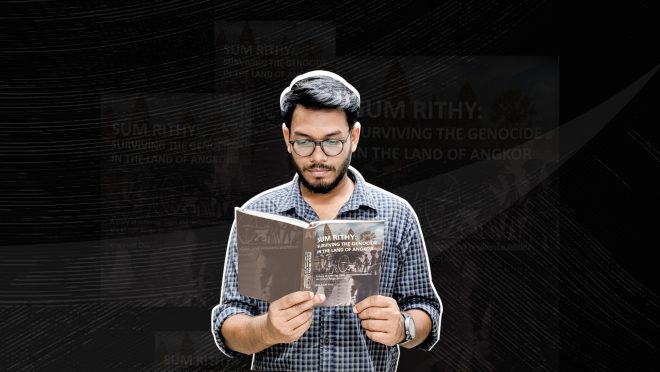
Written by historian Kok Thay Eng, the book tells the impersonal story of Sum Rithy, a Cambodian man who survived imprisonment and brutality during the rule of the Khmer Rouge regime.
The story unfolds during the Cambodian genocide between 1975 and 1979, when the Khmer Rouge attempted to transform Cambodia into an agrarian communist state led by Pol Pot. During these four years, approximately two million people died from starvation. Forced labour, disease, and execution were common scenarios.
Against this grim historical background, the story of Sum Rithy becomes a powerful example of human resilience and moral complexity.
The book is both a personal narrative and a historical document that helps readers understand the devastating consequences of extremist ideology and authoritarian rule.
The regime’s policies ultimately led to the deaths of roughly two million people, nearly a quarter of the country’s population. The narrative follows Sum Rithy, who was arrested and imprisoned and witnessed extreme violence during his captivity. His story is particularly significant because only a handful of prisoners survived such detention centres.
Overview
The narrative begins with a description of life in Cambodia before the rise of the Khmer Rouge. Cambodian society was already affected by political instability and war, but ordinary people still tried to live normal lives.
This situation dramatically changed when the Khmer Rouge took power in 1975. The regime forced people out of cities, abolished money and private property, and attempted to reorganise society according to their ideology.
Sum Rithy eventually became a victim of the regime’s repression. He was arrested and imprisoned in one of the Khmer Rouge detention facilities, where prisoners were subjected to harsh interrogation, torture, and mental and psychological abuse. Many prisoners were accused of being spies and enemies of the revolution, often without evidence.
Inside the prison, Rithy witnessed the constant presence of fear and death, with no alternative. Prisoners lived in extreme conditions with little food, poor sanitation, and constant surveillance. Most detainees did not survive. The narrative describes how Rithy endured interrogations and the psychological terror of knowing that execution was always possible.
Despite these circumstances, Rithy managed to survive. His survival was partly due to luck, endurance, and the occasional moments of humanity that appeared even within a brutal system. The book also includes interviews with former Khmer Rouge members and villagers, offering different perspectives on how ordinary people became involved in the regime. These testimonies reveal how propaganda, fear, and social pressure shaped the actions of many individuals during this period.
One of the most significant aspects of this book is its focus on the human dimension of genocide. Historical discussions of mass violence often rely on statistics and political analysis, but this narrative reminds readers that each victim had their personal story. By focusing on Sum Rithy’s experiences, the book gives a voice to thousands of people who suffered under the Khmer Rouge regime.
Another important element is the exploration of ideology and power. The Khmer Rouge believed they were creating a perfect revolutionary society. However, their extreme ideology led to widespread violence and oppression. The regime attempted to eliminate intellectuals, professionals, and anyone considered a threat to their vision. This demonstrates how political ideology can become dangerous when it is enforced without tolerance, critical thinking, or respect for human rights.
The book also highlights the role of fear in authoritarian systems. Many individuals who participated in the regime did so because they feared either punishment, execution, or both. This reveals how oppressive governments can manipulate ordinary people into committing harmful actions. In such environments, survival often becomes more important than moral judgment. Some perpetrators were not purely evil individuals, but people trapped within a violent system.
Additionally, the narrative explores the psychological impact of trauma. Surviving genocide does not end when physical survival is achieved. Survivors often carry long-term emotional and mental scars. By sharing Rithy’s story, the book contributes to the process of remembrance and healing for Cambodian society. It emphasises the importance of acknowledging past atrocities so that societies can learn from them.
Evaluation
The greatest strength of the book lies in its authenticity. Because the narrative is based on direct testimony, it feels deeply personal and emotionally powerful. The combination of personal memory and historical context helps readers understand both the individual and collective dimensions of the Cambodian genocide.
However, the book also has some limitations. The language and editing are sometimes imperfect, which may affect the reading experience. Additionally, because the book is relatively short, it does not always provide detailed historical analysis of the Khmer Rouge regime. Nevertheless, these limitations do not reduce the importance of the testimony itself.
The central theme of the book is survival. Rithy’s story demonstrates how human beings can endure unimaginable suffering and still preserve hope.
The book serves as an important testimony of the Cambodian genocide. Personal narratives like Rithy’s help ensure that such tragedies are remembered and studied by future generations.
The book highlights the complexity of human behaviour during political violence. Some individuals participated in atrocities out of fear, ideology, or social pressure.
Sum Rithy: Surviving the Genocide in the Land of Angkor contributes to the growing body of literature documenting the Cambodian genocide, similar to memoirs such as First They Killed My Father. Personal testimonies like these are crucial because they preserve the voices of survivors and educate readers about the consequences of political extremism and mass violence.
The book also reminds readers that behind every historical statistic lies a human story of loss, courage, and endurance.
The story of Sum Rithy offers several important lessons for readers and for society as a whole.
History must never be forgotten. Genocides and mass atrocities often occur when societies ignore warning signs or fail to challenge extremist ideologies. Personal testimonies like Rithy’s ensure that future generations understand the consequences of hatred, intolerance, and political fanaticism.
The Khmer Rouge regime shows how menacing unchecked political power can be. When leaders hold absolute authority and suppress dissent, human rights violations become more likely. Democratic institutions, freedom of speech, and accountability are essential safeguards against such abuses.
Despite facing unimaginable suffering, Sum Rithy survived. His story demonstrates the remarkable resilience of the human spirit. Even in the darkest circumstances, individuals can maintain hope and the will to live.
Another lesson concerns the responsibility of individuals within a society. The book encourages readers to reflect on how ordinary people can become involved in systems of violence. It highlights the importance of ethical courage and the need to resist injustice whenever possible.
Finally, the book reminds readers about the value of empathy and respect for human dignity. Genocide becomes possible when certain groups are dehumanised or treated as enemies. Recognising the humanity of others is essential for building peaceful societies.
Sum Rithy: Surviving the Genocide in the Land of Angkor reminds readers that behind every historical tragedy are individual lives, memories, and voices that must be heard.
By preserving the story of Sum Rithy, the author ensures that the horrors of the past are not forgotten and that future generations can learn from them.
In this sense, the book is not only a story of survival but also a warning and a call for humanity to defend justice, dignity, and peace.