Perfect Days and the poetry of everyday life
Perfect Days met me at a strange point in my life. It is one of the most peaceful and bittersweet films that I have ever watched.
Perfect Days and the poetry of everyday life
Perfect Days met me at a strange point in my life. It is one of the most peaceful and bittersweet films that I have ever watched.
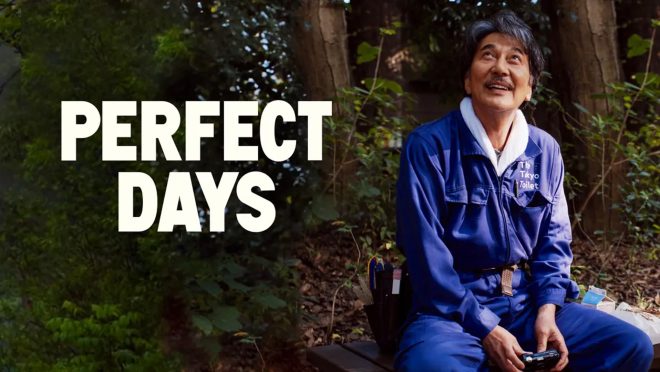
I had never imagined that the daily life chores of a toilet cleaner in Tokyo could resonate with me this deeply. It has magic and is an example of how sometimes less is more.
In times of loud, ambitious, and big Hollywood productions, it is a much-needed break for movie lovers. It beautifully explores how to find contentment in a completely ordinary life.
Through Koji Yakusho’s extraordinary portrayal of Hirayama, it shows that true happiness is not about material things. It lies in the simple moments: the morning light on a bonsai tree, picking up an old game from the trash, the way light dances on walls and through trees, pausing to stare at the sky.
Hirayama talks only on a few occasions, and that too with precise words. He finds joy in the small things, whether it is enjoying a book, taking a photo of a leaf, or listening to music on his way to work. His life may seem mundane, but it is filled with subtle beauty. Hirayama is alone, but never lonely.
Perfect Days is not a conventional story. No arcs to chase. No twists to wait for. And yet the film holds you. Because Yakusho, an actor capable of menace, authority, and chaos, chooses restraint. His life appears monotonous from the outside, but it is not empty. It is attentive. And that attention changes everything. Wenders dares us to find this routine boring, and we cannot. The film watches Hirayama fold his bedding, clean toilets with almost sacred care, buy coffee from a vending machine, and sit quietly with his camera capturing the leaves of trees in a park.
In the film, there is no narrator. We do not hear Hirayama’s inner monologue, and he does not explain his actions or motivations. As an audience, we are left alone, alone with a stoic toilet washer slowly winding his way through a ritualistic life and, resultingly, we are left alone with our own thoughts and judgement. Hirayama prefers immersing himself in his music or a good book rather than going out and interacting with someone because, in his eyes, doing the former makes him more comfortable and at peace.
“Next time is next time. Now is now.”
The line feels simple, almost throwaway. But it becomes the film’s underlying philosophy. Though the title says Perfect Days, no day here is truly perfect. And that is the point. Only the acceptance of imperfection, the willingness to meet life as it comes. That acceptance is fragile. As Hirayama’s routine is disrupted by co-workers, by exhaustion, by the sudden reappearance of family, the film’s rhythm subtly shifts. The camera grows more restless. But his calm remains.
It also works as a quiet critique of technology and modern standards of living. Many people would see Hirayama’s life as boring or insignificant. The reunion with his sister is devastating in its restraint. In a few glances and gestures, we sense a privileged, painful past.
One of Yakusho’s most powerful moments is the contrast between his shame when confronted with his father’s memory and his quiet, defiant dignity when acknowledging his work as a toilet cleaner. There is no embarrassment in the life he has chosen. Whatever he escaped, this life is truer.
Perfect Days is therapeutic without being sentimental. It made me smile. It moved me to tears. It reminded me to enjoy simple pleasures, to find joy in reflections and shadows, in favourite songs, in sunrises, in fleeting connections with strangers you will never meet again. Against this naively sweetened portrait of menial work, Wenders places shadowy abstract black-and-white images that suggest life’s evanescence, which asks the question, “Is Hirayama truly happy?”
If you are an active movie watcher, this 2023 film will make you think for sure. Perfect Days is an ode to the beauty of a simple life, and perhaps also a reminder of how increasingly difficult it is to lead one.
Key takeaways
- Japan might actually have the most beautiful public toilets in the world.
- More films should be shot in 4:3.
- One should romanticise life.