Poetry in a lunchbox: Beauty, mundanity, and Paterson
A mundane life, waking up early in the morning, looking at his clock, eating cereal, walking to work. Followed by writing a few lines of poetry, listening to conversations not meant for him, and coming home to his wife.
Poetry in a lunchbox: Beauty, mundanity, and Paterson
A mundane life, waking up early in the morning, looking at his clock, eating cereal, walking to work. Followed by writing a few lines of poetry, listening to conversations not meant for him, and coming home to his wife.
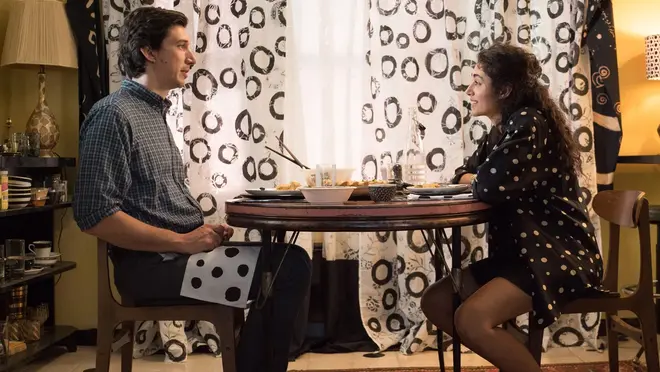
This is the everyday routine of Paterson. It repeats so gently that it often feels like an unweaving wind blowing through itself.
Watching Paterson feels like inhabiting a mood that asks us to slow down a little, look around us, and feel the beauty of the moment.
As someone who finds comfort in serenity and daily mundanity, this film felt like a blanket on a winter night for me. Jim Jarmusch’s Paterson explores not a dramatic arc, but a quiet devotion to the ordinary.
Paterson does not insist that life must be extraordinary to be meaningful. Instead, it softly encourages us to look around and find beauty in repetitive chores, because beauty often resides within repetition.
Days repeat, routes remain the same, conversations echo a familiar rhythm, yet within this sameness, small differences appear. A new line of poetry, an unimportant conversation with strangers, or simply noticing Laura’s newly found passion in life. The film teaches us that routine is not the enemy of creativity, but often its shelter.
Paterson’s poetry emerges from observation. He observes new things every day: a box of matches, a waterfall, twins, and the conversations of passengers on his bus. He listens with care, allowing language to flow through his mind without possession. In this way, he becomes a poet who does not invent, but receives.
His poetry is quiet in nature, subtle in description, much like the work of poet William Carlos Williams, who believed that meaning is not imposed upon the world, but discovered within it. “No ideas but in things.”
The observation of ordinary places firmly places Paterson within a literary tradition shaped by Williams. Paterson’s poems are so transparent that they require no interpretation or extra attention.
The poetry used in the film is deliberately simple, inspired by everyday objects. Paterson, who lives for poetry, shows no interest in publication or recognition. His poems remain in his notebook, which stays beside the lunchbox he carries to work. For Paterson, poetry is not a performance. It is nourishment, something he carries with him through the day.
Another quiet force shaping the film is love.
Paterson’s relationship with Laura is not built on grand gestures or declarations, but on noticing, patience, listening, and shared space. He supports Laura’s ever-changing ambitions without questioning her seriousness.
When she bakes a pie or speaks about her dreams, his response is always calm and nearly silent. His love for Laura is not loud, but present in the time he spends with her, often finding expression through poetry written for her.
The film suggests that love does not always need to be articulated to be real. It lives in tenderness and unspoken affection. The softness of Paterson’s character resists the dramatic expectations we often place on relationships. In Paterson, love often means simply returning home and listening without interruption.
The film’s settings reflect a poetic sensibility, showcasing picturesque New Jersey. Streets, bridges, buses, and local bars are treated with the same care as lines in a poem. And then there is the waterfall, quietly anchoring the film. It flows steadily, indifferent to human routine, yet deeply connected to the city’s rhythm, as if waiting to be noticed.
Perhaps the director uses the waterfall as a symbol of Paterson’s poetry, something that exists without dramatic turning points. Watching Paterson feels like reading a collection of verses where meaning accumulates slowly. In this way, the film becomes a visual form of literature.
After finishing the film, I am left with a sense of affection for the unnoticed small things that give value to our lives, yet are often overlooked. Paterson reminds us that poetry lives quietly in regular lives, in mundane tasks, in notebooks and lunchboxes.
It asks us not to search for beauty elsewhere, but to slow down, take our time, notice the small moments, and find beauty that is already there.