Never Give Up: Reflecting on John Cena’s legacy
Never Give Up: Reflecting on John Cena’s legacy
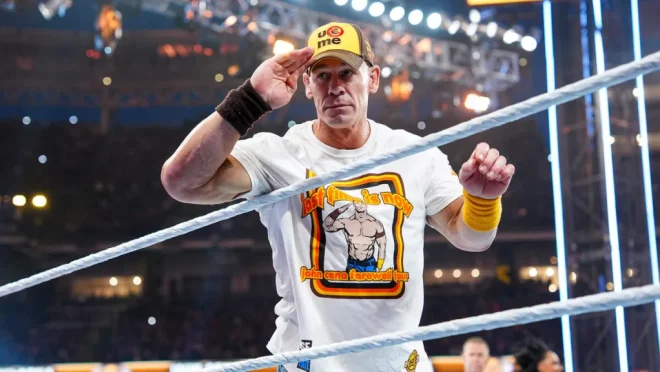
No matter how cheesy it may sound, for any kid growing up in the early 2000s, WWE and its megastar John Cena may have been the ultimate source of joy and entertainment.
Yes, maybe some of us did not want to admit it was all “fake”, maybe most of you reading this will not be admitting to your peers that you loved WWE, but even the most ardent denier of WWE knows the name John Cena, which is a reminder of his greatness that transcended WWE itself.
Sadly, all good things must come to an end, and for a 48-year-old performer, he finally has said no, and with all indications being proven right, it seems unlike most wrestling retirements, John Cena will be calling it quits on 13 December 2025.
In light of this monumental transition of a legend’s career, it may be time to reflect on his contribution to kids of the 2000s throughout the world and the lasting impact he and his character ‘John Cena’ have had for almost three decades.
The Doctor of Thuganomics and early career
If you follow WWE as crazily as I do and fanatically consume insider interviews or documentaries about it, you should know by now that reaching the mountaintop in WWE is not only limited to in-ring moves.
There has to be an “it” factor. Cena did not show off at first, but gradually as his natural talent as a freestyle rapper shone, the audience gradually started to welcome him and he started to gain traction.
On WrestleMania 20, when the main event saw two giants, Brock Lesnar and Goldberg, leaving the company and having an average match, it was Cena in the undercard defeating Big Show for the United States Championship.
The vacuum of top stars was filled very quickly by a new crop of stars and Cena was leading the charge with names such as Edge, Batista, Randy Orton following closely.
However, the “cool” factor of freestyling Cena was about to hit a brick wall. As WWE was preparing to transition to the PG era, it was evident that the edgier storylines and dialogues had to be changed and WWE needed a superman that would cater to a wider audience mainly composed of children. This was the start of the most challenging period of Cena’s career.
Let’s go CENA Vs CENA sucks
It was a transitional period, the big stars such as The Rock, Steve Austin and others had either retired or left. On top of this vacuum, the storylines got more childish due to the new demographically targeted young audience, and times were tough as the Attitude Era audience started to drift off.
This was the time the audience got smart, maybe a little too smart that was prohibiting their own enjoyment of the product. Soon, the internet would see the leaking of storylines and behind-the-scenes issues that started to fully uncover the veil of kayfabe and it became apparent that the WWE machine was pushing Cena hard to be liked and accepted but as a more cookie-cutter version.
Cena would change the colour of his T-shirt 4 or 5 times a year, children would go crazy, merchandising would bring in millions, but at a cost of alienating the hardcore base of WWE. This was the time when the arena around the globe would be split. The younger demographic would chant “let’s go Cena” whilst the older, deep-voiced echoes of “Cena sucks” would often overpower its counterpart.
There was much conversation about turning Cena into a “heel” or bad guy, but this would have made little business sense as a large portion of the audience were tuning in only for Cena and WWE stores everywhere would sell out John Cena merchandise every town they travelled to.
Therefore, much to the annoyance of a more mature fanbase, Cena was being pushed to the moon, and the number of championships being won tallied into double digits. However, this is where John’s pivotal moment came into fruition and two particular feuds brought back the hardcores and it may have increased his stock twofold.
Rock vs John Cena: Once in a lifetime (but happened twice)
A generational epic story was told in the 2010s when it was announced that WrestleMania 27 would see Dwayne ‘The Rock’ Johnson competing against John Cena.
The year was filled with piping hot mic battles blurring the lines between storyline and reality. John Cena was adamantly pushing The Rock in all aspects and questioning his love of the business as he went off to Hollywood leaving the business to fend for itself.
This had an element of truth and The Rock admitted in later interviews that some of the stuff said was actually ad-libbed and was not appreciated by The Rock at that time.
However, the feud once again brought back the lost audience who were longing for something realistic. The back and forth for a whole year made sure that people were tuning in every week, and through this process, many feuds of Cena over the months following WrestleMania also gained valuable attention. This regained fandom helped to elevate people like Zack Ryder, CM Punk, and Daniel Bryan. The initial success of WrestleMania 27 led to WWE booking the match once again for WrestleMania 28 which may have dampened the suspense and speciality of the storyline but it proved wildly successful once again.
Later run and the Nostalgia act
The later part of the 2010s saw WWE crowds realising what they had been missing. As John Cena transitioned to Hollywood and made fewer and fewer appearances, it was evident that something special was no longer a staple of WWE programming.
The crowd who would once chant “YOU CAN’T WRESTLE” were now happily jumping up and down and chanting “WELCOME BACK” or “THANK YOU CENA” whenever they saw him performing.
The nostalgia factor was strong, as the kids who were in their early ages of 5 or 6 were now in their 20s, and it looked like they were losing a part of their childhood as they saw a more ageing Cena coming back more and more infrequently.
Some might say this year was the best performance of Cena’s career yet, even with the botched “heel turn” where a bad guy Cena was cheered everywhere and in every country. Cena’s matches were some of the bests we’ve seen and it was clear John Cena was leaving nothing behind in his last year.
Whatever the booking decisions were, and there is considerable doubt whether we have seen John’s full potential and proper storylines, the performance of Cena as a bad guy cannot be undermined in any way.
The promos he cut, the matches he had, were once again a reminder why he was and maybe is the best, and the greatest of all time.
As time runs out, and as we, the 2000s kids, grow up, it feels extremely unfair to let go of our childhood hero, one may not admit it, but other than The Undertaker, there was no other favourite except Cena.
John’s personal life and the ups and downs may be topics of hot conversations, but this article chooses to only focus on the legacy that actually mattered. That is the legacy of ‘Never Give Up’, that is the legacy of ‘Hustle, Loyalty, and Respect’ and that is the legacy of the greatest of all time, the never-seen 17, John Cena.