AI startup is developing biological computers by training human brain cells to play ‘Doom’
The systems use around 200,000 neurons grown from human stem cells, mounted on arrays of thousands of electrodes
AI startup is developing biological computers by training human brain cells to play ‘Doom’
The systems use around 200,000 neurons grown from human stem cells, mounted on arrays of thousands of electrodes
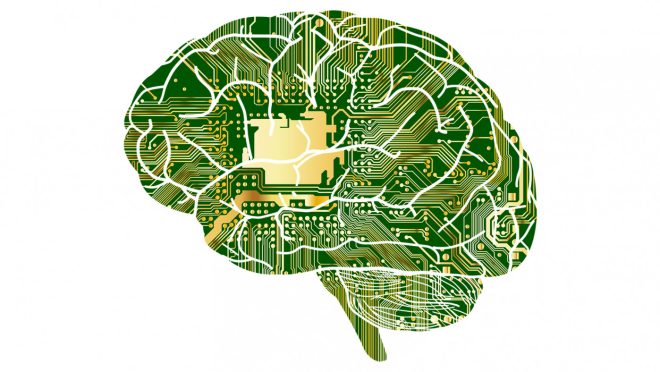
Australian startup Cortical Labs is developing a new form of computing that combines human brain cells with silicon chips, aiming to create so-called biological computers.
The systems use around 200,000 neurons grown from human stem cells, mounted on arrays of thousands of electrodes. These electrodes allow conventional computers to monitor and stimulate the neurons’ electrical activity, forming what the company describes as a biological processing unit that can be integrated into standard data centre server racks, says The Economist.
To keep the living components functional, the systems include hardware that supplies oxygen and nutrients while removing waste, enabling the neurons to remain viable for up to six months.
Interest in biological computing is driven in part by potential gains in energy efficiency. Hon Weng Chong, chief executive of Cortical Labs, said: “Neurons, by contrast, sip power: a typical human brain, made up of almost 90bn of them, consumes something in the region of 20 watts.”
Researchers also point to the complexity of neural behaviour. Unlike binary transistors, neurons operate through varying membrane voltages and signal timing, allowing for more intricate forms of computation. In addition, biological systems integrate data storage and processing, reducing the need to transfer information between separate components, a process that can create inefficiencies in conventional computers.
Scientists say such systems may be better suited to handling real-world inputs. Brett Kagan, a neuroscientist and chief scientific officer at Cortical Labs, said neurons are adapted to interpret “the sort of messy, analogue signals common in the real world.” He added that current artificial intelligence systems still lag in basic physical tasks, noting that “while he cannot do maths like a calculator, modern AI models cannot do something simple like making a cup of tea.”
This aligns with Moravec’s paradox, which observes that while artificial intelligence performs well in abstract tasks, it often struggles with basic physical and sensory activities.
Researchers suggest biological computing could eventually support applications such as autonomous drone navigation or other tasks requiring real-time interaction with complex environments.
However, the technology faces challenges, including difficulties in translating signals between biological and electronic systems, as well as competition from the large-scale investment in conventional semiconductor technologies.
To expand development, Cortical Labs has made its platform available to researchers and the public. Demonstrations have included training the neural systems to play the video game “Doom.” Sean Cole, the programmer behind the experiment, said he created the program “in about a week.” Hon Weng Chong said the demonstration “came out of a hackathon for students at Stanford University.”
The field is also attracting institutional support. The Defense Advanced Research Projects Agency has announced funding for biological computing research, and Cortical Labs has partnered with organizations such as DayOne to deploy bio-computers at the National University of Singapore.
Interest in biological computing is driven in part by potential gains in energy efficiency. Hon Weng Chong, chief executive of Cortical Labs, said: “Neurons, by contrast, sip power: a typical human brain, made up of almost 90bn of them, consumes something in the region of 20 watts.”
Researchers also point to the complexity of neural behaviour. Unlike binary transistors, neurons operate through varying membrane voltages and signal timing, allowing for more intricate forms of computation. In addition, biological systems integrate data storage and processing, reducing the need to transfer information between separate components, a process that can create inefficiencies in conventional computers.
Scientists say such systems may be better suited to handling real-world inputs. Brett Kagan, a neuroscientist and chief scientific officer at Cortical Labs, said neurons are adapted to interpret “the sort of messy, analogue signals common in the real world.” He added that current artificial intelligence systems still lag in basic physical tasks, noting that “while he cannot do maths like a calculator, modern AI models cannot do something simple like making a cup of tea.”
This aligns with Moravec’s paradox, which observes that while artificial intelligence performs well in abstract tasks, it often struggles with basic physical and sensory activities.
Researchers suggest biological computing could eventually support applications such as autonomous drone navigation or other tasks requiring real-time interaction with complex environments.
However, the technology faces challenges, including difficulties in translating signals between biological and electronic systems, as well as competition from the large-scale investment in conventional semiconductor technologies.
To expand development, Cortical Labs has made its platform available to researchers and the public. Demonstrations have included training the neural systems to play the video game “Doom.” Sean Cole, the programmer behind the experiment, said he created the program “in about a week.” Hon Weng Chong said the demonstration “came out of a hackathon for students at Stanford University.”
The field is also attracting institutional support. The Defense Advanced Research Projects Agency has announced funding for biological computing research, and Cortical Labs has partnered with organizations such as DayOne to deploy bio-computers at the National University of Singapore.