Apple’s next frontier: Visual AI hits wearables
Apple is quietly building the future and this time, it’s all about what you see.
Apple’s next frontier: Visual AI hits wearables
Apple is quietly building the future and this time, it’s all about what you see.
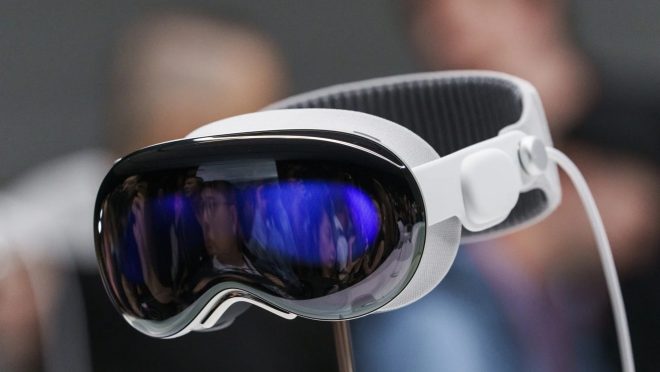
CEO Tim Cook is dropping hints that Visual Intelligence, Apple’s AI that interprets the world around you, will be the centerpiece of the company’s next wave of wearables. Think smarter AirPods, sleek smart glasses, and even a pendant you wear around your neck, all reading and responding to your environment in real time.
Cook has a habit of telegraphing big moves years before the products appear. Back in 2013, he tipped the explosion of sensors; long before the Apple Watch arrived. Today, Apple’s first-generation smartwatches quietly track heart rate, blood pressure and even sleep apnea.
The Vision Pro headset was another teased revolution. AR and VR were hyped long before the device shipped in 2024, and while it hasn’t set sales records, it established Apple’s fingerprint in mixed reality.
Now, Visual Intelligence is the new playground. Introduced on the iPhone 16 Pro in 2024, it lets users snap a photo or screenshot, ask questions about what’s in the image, or run a reverse Google search. The next step: Apple’s own visual AI models, baked into wearables, able to recognize objects, suggest tasks, and guide you with context-aware instructions. Imagine your device spotting a plate of food and breaking it down ingredient by ingredient—or guiding you through directions using landmarks rather than just feet.
Cook’s comments aren’t idle. At a recent all-hands, he said Apple has a “huge advantage” in AI, highlighting Visual Intelligence as central to the strategy. While Apple has leaned on OpenAI and Google for now, the focus is clear: Visual AI is moving front and center.
The race is on. Meta’s AI Ray-Ban glasses may soon identify faces; but Apple is betting on precision, style, and ecosystem dominance. While Meta uses a single adaptive camera, Apple is reportedly designing dedicated lenses for multiple functions, aiming to make its smart glasses feel premium rather than experimental.
And what about pendants? Apple isn’t trying to kill the smartphone like the failed Humane Ai Pin. The pin is a companion device, focused on context, not replacement. The idea: subtle, wearable, and smart enough to add real value.
Apple’s strategy is familiar: tease, test, and slowly redefine an entire category. Visual Intelligence isn’t just a new feature—it’s the lens through which Apple sees the next generation of AI wearables. And if history is any guide, Cook’s hints are the prelude to something big.