Can Bill Gate's fusion reactor harness the sun's power?
The demolition of the twin smokestacks at the Bull Run Fossil Plant on 28 June marked the end of more than six decades of coal-fired power generation. Yet the collapse of those towers was not simply a farewell to an ageing plant. It signalled the beginning of a bold new experiment in how electricity might be produced in the decades ahead.
Can Bill Gate's fusion reactor harness the sun's power?
The demolition of the twin smokestacks at the Bull Run Fossil Plant on 28 June marked the end of more than six decades of coal-fired power generation. Yet the collapse of those towers was not simply a farewell to an ageing plant. It signalled the beginning of a bold new experiment in how electricity might be produced in the decades ahead.
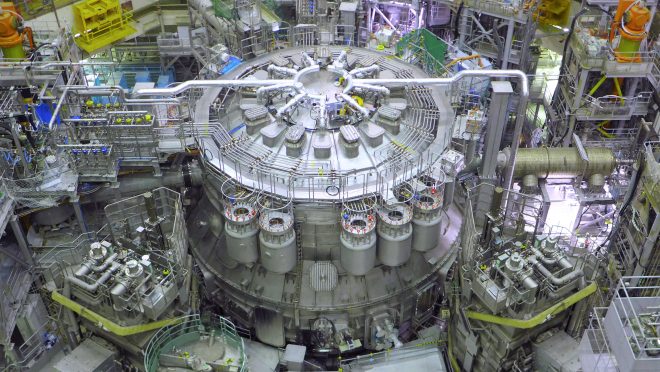
On 29 January 2026, Type One Energy, backed by Bill Gates, submitted its initial licence application to prepare for construction of a next-generation fusion facility at the same site. The proposed reactor, called Infinity One, represents a sophisticated approach to magnetic confinement fusion.
According to Yahoo news, Infinity One is designed as a stellarator, a device that confines superheated plasma in a torus-shaped chamber, similar in principle to a tokamak. However, rather than relying on a simpler magnetic configuration, a stellarator uses an intricate, twisted arrangement of magnetic coils to stabilise plasma heated to around 100 million degrees Celsius. Advocates argue that this design can overcome many of the instability challenges that have long troubled tokamak reactors, although the engineering involved is notoriously demanding.
The company first announced plans in February 2024 to transform the former coal plant into a fusion testbed. Since then, preparations have intensified. Chief executive Christofer Mowry said the firm has worked closely with regulators since early 2024, sharing design data to establish appropriate licensing standards for fusion energy. He described the collaboration as positioning Tennessee as a global example of “safety by design” and transparency in fusion regulation.
The broader vision for the site extends beyond a single prototype. Plans include the Infinity One reactor, a workforce training centre, and eventually the larger 350 MWe Infinity Two commercial fusion plant. Development will unfold in stages, with the company aiming to commission Infinity One by 2029.
Such an ambitious timeline may invite scepticism. Delivering grid-scale fusion power within three years is a formidable challenge. Nonetheless, Type One Energy’s leadership includes scientists who previously worked on advanced stellarator projects, including the Wendelstein 7-X, currently the world’s largest stellarator, and the Helically Symmetric Experiment in the United States.
The choice of a former fossil fuel site reflects a growing movement often described as repurposed energy. Rather than abandoning industrial infrastructure, new clean energy ventures are increasingly building on existing sites and expertise. For example, Form Energy has established large-scale battery production in former industrial regions, while TerraPower is developing an advanced nuclear facility near a retiring coal plant in Wyoming.
Securing a suitable location is only the first hurdle. Demonstrating that a stellarator can reliably deliver the abundant, low-carbon energy long promised by the fusion sector will be a far greater test. Even so, transforming the remnants of the coal era into the foundation of a potential fusion-powered future offers a powerful symbol of energy transition in action.