Shrinking workforce pushes China towards automation
China is increasingly relying on robotics and automation to mitigate the economic strain caused by a shrinking and ageing population, according to analysts.
Shrinking workforce pushes China towards automation
China is increasingly relying on robotics and automation to mitigate the economic strain caused by a shrinking and ageing population, according to analysts.
Official statistics show China’s workforce is contracting as birth rates fall to historic lows and the share of older citizens grows. Despite various government incentives, including tax breaks and cash subsidies to encourage higher birth rates, these measures have so far failed to reverse the trend.
Faced with a tightening labour market and mounting pension pressures, Beijing has placed industrial automation and robotics at the heart of its economic strategy. Figures from the International Federation of Robotics indicate that in 2024 China accounted for more than half of all new industrial robot installations globally, making it the largest market for factory automation.
High levels of automation have helped Chinese manufacturers sustain output in sectors such as electric vehicles and solar panels, even as the pool of available human workers shrinks. Some factories now operate with minimal human oversight, a phenomenon described as “lights-out” production.
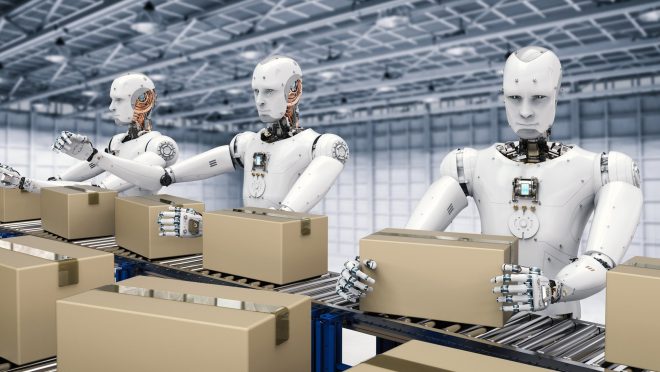
Beyond traditional industrial robots, state and private investment has supported the rapid development of humanoid machines. Dozens of firms are testing these robots in assembly lines, logistics centres and laboratories, with developers asserting that in tasks such as handling and inspection their performance is approaching that of human workers.
Demographic projections underscore the urgency of China’s technological pivot. Citizens aged 60 and over already make up approximately 23 per cent of the population, and the United Nations predicts this could exceed 50 per cent by the end of the century – amplifying the burden on pension systems and social services.
Economists argue that continued advances in productivity, partly driven by automation, will be critical to maintaining economic stability. However, some long-term forecasts suggest that gains in output per worker may struggle to outpace the rate of population decline in the decades ahead.
The shift towards automation also presents social challenges. Studies have warned that up to 70 per cent of manufacturing jobs could be affected by robotics and artificial intelligence, underscoring the need for substantial re-skilling programmes and enhanced social safety nets to support displaced workers.
China’s embrace of robots is therefore not solely a technological ambition, but a response to profound demographic change – one with implications for labour markets, economic planning, and social policy well into the future.