The month that wouldn’t end: How March carried the weight of the world
Usually, January is the month that feels like forever, mainly because it is the first month of the new year. This year, however, the crown of the lengthiest month goes to March.
The month that wouldn’t end: How March carried the weight of the world
Usually, January is the month that feels like forever, mainly because it is the first month of the new year. This year, however, the crown of the lengthiest month goes to March.
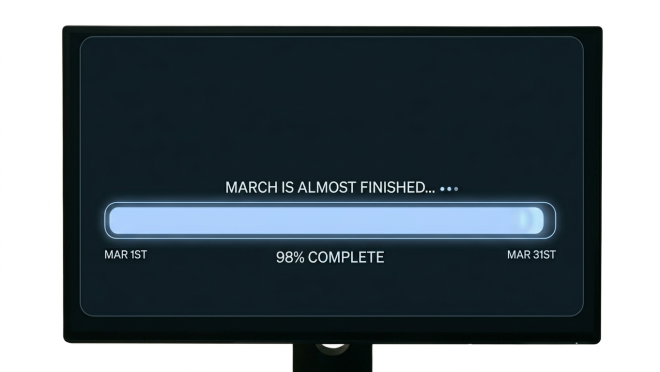
March began with danger and uncertainty: the danger of the world erupting into chaos due to the US–Iran conflict. Every news alert felt heavier than the last, each headline carrying the possibility of something irreversible. Mornings began with scrolling, thumbs moving faster than thoughts, bracing for bad news before the day had even started. Eyes were fixated on screens to get the latest updates regarding the war. Every individual felt uncertainty in their bones.
A bulk of the month was also Ramadan, the holiest month for every Muslim. Days grew longer and quieter, measured not by clocks but by prayers and patience. Hunger and thirst were expected, almost welcomed, yet this year they seemed to echo the larger sense of restraint the world itself was under, everyone holding their breath, waiting.
As the sun set each evening, iftar brought brief moments of relief and togetherness. Tables filled, conversations softened, and for a little while, the weight of the outside world loosened its grip.
But March refused to end there.
Eid arrived, joyful and generous, bringing long holidays in Dhaka. The streets were empty, homes filled with family members, and the city moved at its own unhurried pace. Almost seamlessly, Independence Day followed, extending the pause even further.
Schools remained closed, days turned into weeks, weeks quietly adding up to nearly forty days of stillness. For students, it felt as though time had stopped altogether. For parents, routines dissolved. For the city, March became a blur of closed gates, empty classrooms, and mornings with nowhere to rush to.
People grew accustomed to the empty streets, causing their sense of time to blur. Punctuality took a dip, but it seemed like a problem for almost everyone in the city.
That is how March grew so long—not in calendars, but in feeling. A month crowded with events we never imagined we would witness, standing shoulder to shoulder with the comfort of familiarity. Ramadan returned as it always does: steady, grounding, familiar, offering rhythm in a time that had lost its shape.
Between the shock of the unexpected and the quiet reassurance of what we knew by heart, March stretched itself thin. It asked us to adjust, to pause, to carry uncertainty while holding on to faith, routine, and small moments of calm. And somewhere in that balance between the unfamiliar and the known, the month refused to move on, settling into us long after the days had passed.
When March finally began to loosen its grip, it left us a little more tired than before, a little slower, and a little more aware of how easily the world can tilt. The war was still there, unresolved, sitting quietly in the background of our days, reminding us that peace is fragile and never promised.
But so were the other things: the long fasts that taught patience again, the iftars where food tasted better because it was shared, the empty roads that felt strange at first, then familiar, and the homes that stayed full a little longer than usual. Life did not stop. Instead, it moved carefully, imperfectly, with small acts of faith and care holding it together.
March felt endless because so much was placed onto it. And when it finally passed, it left behind something heavy, but also something gentle: a reminder to slow down, to stay close, and to keep hoping even when the world feels like it is still holding its breath.