The secret life of your mind: Celebrating Freud's 170th birthday
Have you ever said something embarrassing by accident, forgotten something important right before an exam, or had a strange dream that stayed with you all day?
The secret life of your mind: Celebrating Freud's 170th birthday
Have you ever said something embarrassing by accident, forgotten something important right before an exam, or had a strange dream that stayed with you all day?
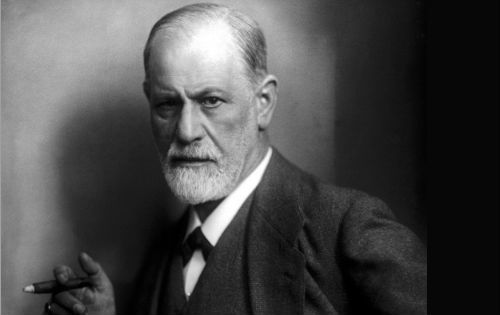
According to Sigmund Freud, these are not random at all. They might be clues from a hidden part of your mind.
On Freud’s birthday, it is incumbent upon us to know more about the father of psychoanalysis.
Freud began studying medicine in 1873 at the University of Vienna. Unlike most students, he took nearly nine years to graduate, driven by curiosity rather than speed. He explored diverse topics, from the nervous system of fish to the anatomy of eels, while also studying philosophy with Franz Brentano, which encouraged him to think deeply about human thoughts and behaviour.
In his early career, Freud focused on neurology, the study of the brain and nerves. He researched aphasia (difficulty in speaking or understanding language) and introduced agnosia (inability to recognise familiar objects or people). He also studied cerebral palsy (a disorder affecting movement and posture) and challenged existing ideas about its causes. At this point, Freud was a serious scientist working with the physical brain.
But things became more interesting when he started treating patients whose problems had no clear physical cause. These were called “nervous disorders” (mental conditions without visible injury). One famous case, handled with Josef Breuer, involved a young woman called Anna O. She found relief simply by talking about her thoughts and experiences. She even called it the “talking cure.”
Think about that for a moment. Have you ever felt better after venting to a friend? That is exactly the idea Freud built on.
He developed psychoanalysis (a method of understanding and treating the mind through conversation). One of his techniques was free association (saying whatever comes to mind without filtering). It sounds simple, but Freud believed this could reveal hidden thoughts. He also studied dreams, arguing that they reflect our secret wishes and fears rather than random images.
At the centre of Freud’s theory is the unconscious mind (a hidden part of the mind that stores thoughts, memories, and desires we are not aware of). Imagine your mind like an iceberg. The small part above the water is what you know. The much larger part below is your unconscious.
To explain how this works, Freud described the id, ego, and superego. The id (your impulsive side that wants instant pleasure, like scrolling your phone instead of studying) pushes you towards what feels good. The ego (the practical decision-maker) tries to balance your desires with reality. The superego (your inner moral voice shaped by family and society) tells you what is right or wrong. Every time you feel torn between doing something fun and doing something responsible, you are experiencing this internal struggle.
Freud also believed that childhood experiences shape who we become. His idea of psychosexual development (stages of growth linked to early desires and experiences) suggests that early life leaves lasting marks. One of his most debated ideas is the Oedipus complex (a child’s unconscious emotional conflict involving parents), which remains controversial even today.
Freud did not always get things right. He once believed cocaine could be used as medicine, which later proved harmful. He also proposed the seduction theory (the idea that childhood abuse caused mental illness) but later changed his view, realising that imagination and inner conflict also play a role. This shows that even great thinkers revise their ideas.
So why should this matter to you?
Because Freud’s biggest lesson is simple but powerful. We are not always aware of why we feel or act in a certain way. Stress before exams, random mood swings, overthinking at night, or even small habits might have deeper reasons.
Freud turned everyday experiences into meaningful clues. He made people realise that the mind is not just what we see on the surface. It is layered, complex, and sometimes surprising.
So the next time you forget something important or have a weird dream, instead of ignoring it, ask yourself one question.
What might my mind be trying to tell me?