When nature calls, HR answers: China's bathroom break that went to court
When nature calls, HR answers: China's bathroom break that went to court
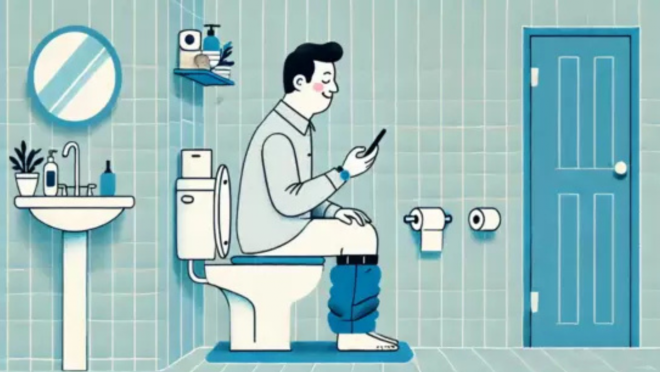
Office disputes usually revolve around deadlines, salaries or promotions. In Jiangsu province, one argument took a more biological turn – and ended up in court.
Li, an engineer, was fired by his employer after repeatedly taking unusually long bathroom breaks, says the South China Morning Post.
According to the company, between April and May 2024 Li took 14 restroom breaks that stretched far beyond the ordinary, some lasting more than an hour and one reportedly extending to four hours.
The employer said these absences disrupted work and violated company rules.
Li told a different story. He said the extended breaks were caused by haemorrhoids, a painful medical condition. After losing his job, he sued the company for wrongful dismissal, seeking 320,000 yuan (about US$45,000) in compensation.
To support his claim, Li submitted hospital records showing he had undergone surgery in January, as well as documentation of haemorrhoid medication purchased by his partner.
The company came prepared too. It submitted surveillance footage tracking Li’s lengthy restroom visits and pointed to a clause in his employment contract.
The contract, renewed in 2014 after Li joined the firm in 2010, stated that unapproved absences totaling three working days within 180 days could lead to termination.
The employer also emphasized that it had sought approval from the labour union before dismissing him, following required procedures.
After two rounds of trial, the court stopped short of issuing a clear-cut ruling. Instead, it mediated a settlement. The company agreed to pay Li 30,000 yuan (around US$4,200), citing his past contributions and the difficulties he faced after losing his job. The sum was far below what Li had sought, but it closed the case.
The dispute has reignited debate in China over workplace rights and medical accommodations. Under China’s Labour Law, employees are entitled to basic sanitation and health protections.
At the same time, employers are allowed to enforce discipline and maintain productivity. Courts often find themselves walking a fine line between compassion and compliance.
Li’s case is not unique. In 2023, another worker in Jiangsu was dismissed after a single toilet break that reportedly lasted up to six hours, a decision that the court ultimately supported. In a much shorter but equally consequential episode in 2016, a driver lost his job and was ordered to pay 2,000 yuan in compensation after missing customer calls during a six-minute bathroom break.
Together, these cases highlight an uncomfortable question for modern workplaces: when health issues collide with strict rules and surveillance, how much time is too much time away from the desk? In China’s courts, the answer appears to depend not just on the clock, but on contracts, cameras – and compromise.