Why Portugal may be the team to beat in 2026
For decades, international football has revolved around two emotional giants of the footballing world: Argentina and Brazil. Their history, trophies, and passionate global fan bases make them natural favourites whenever a major tournament arrives, especially during the FIFA World Cup season.
Why Portugal may be the team to beat in 2026
For decades, international football has revolved around two emotional giants of the footballing world: Argentina and Brazil. Their history, trophies, and passionate global fan bases make them natural favourites whenever a major tournament arrives, especially during the FIFA World Cup season.
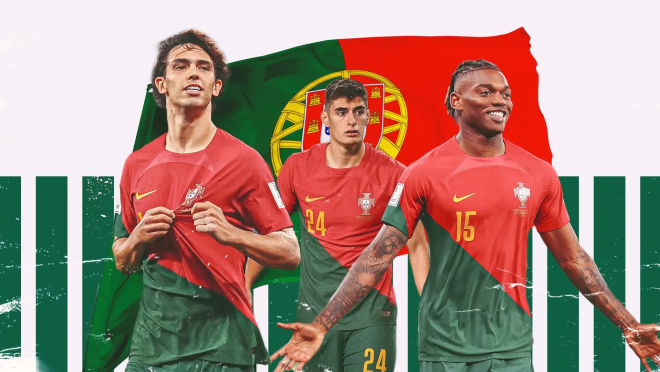
However, a different name has consistently appeared among the top contenders since 2025: Portugal. When Portugal revealed their squad for the FIFA World Cup 2026, the team instantly became one of everyone’s favourites. Amid the debate over whether Argentina or Brazil will win the FIFA World Cup 2026, many fans secretly want Portugal to finally give it a shot.
What makes this particularly fascinating is that Portugal does not possess the World Cup pedigree of Brazil or Argentina. Brazil won five World Cups, while Argentina are the reigning world champions. Portugal, meanwhile, have never won a FIFA World Cup.
So why are analysts, bookmakers, football experts, and even rival fans increasingly placing Portugal among the strongest candidates to win major tournaments? The answer lies in a combination of elite talent, squad depth, tactical maturity, recent success, a perfect blend of experience and youth, and the enduring presence of Cristiano Ronaldo.
A team built for the present, not the past
Many nations rely heavily on their history. Portugal’s current reputation, however, is based on what they are today. Portugal are currently ranked among the world’s elite national teams, sitting fifth in the FIFA Men’s World Ranking.
Unlike previous generations, when Portugal depended almost entirely on one or two superstars, today’s squad is arguably the most complete in the country’s history.
The squad includes Cristiano Ronaldo, Bruno Fernandes, Bernardo Silva, Vitinha, João Neves, Rafael Leão, Nuno Mendes, Rúben Dias, and Diogo Costa, among others. Many of these players are starters for Europe’s biggest clubs and have won major trophies at club level.
Portugal’s midfield is arguably the best in international football. Modern football is often won in midfield, and Portugal possess one of the strongest midfield units on the planet.
Bruno Fernandes is one of the most productive attacking midfielders in world football. He consistently delivers through both goals and assists.
Bernardo Silva is renowned for his intelligence, work rate, ball retention, and ability to control the tempo of matches.
Vitinha is widely regarded as one of Europe’s most technically gifted midfielders and a key figure in PSG’s rise.
João Neves is a young sensation whose maturity and tactical intelligence have made him one of the most sought-after midfielders in football.
Together, they provide creativity, pressing ability, ball progression, and defensive stability. By any footballing definition, these are the qualities that a championship-winning team requires.
The CR7 factor
At 40, Cristiano Ronaldo is no longer the explosive winger who terrorised defenders a decade ago. However, his influence remains enormous.
Beyond goals, Ronaldo brings leadership, a winning mentality, big-match experience, and even a psychological advantage.
Few players in football history have participated in as many high-pressure matches as Ronaldo. For younger players, his presence creates belief. For opponents, it creates pressure. Even when he is not the team’s primary attacking weapon, his influence on Portugal’s mentality remains invaluable.
Historically, Portugal’s weakness was often defensive inconsistency. That is no longer the case.
This backline combines elite pace, technical quality, tactical intelligence, and experience in top European competitions. Meanwhile, goalkeeper Diogo Costa has emerged as one of Europe’s best goalkeepers, capable of winning matches through crucial saves and penalty heroics.
One criticism often directed at Portugal is their lack of major trophies compared to football’s traditional giants. That argument is becoming increasingly outdated, as Portugal proved their critics wrong by winning UEFA Euro 2016, the UEFA Nations League in 2019, and again in 2025.
In fact, Portugal became the first nation to win the UEFA Nations League twice after defeating Spain in the 2025 final.
Winning breeds confidence.
Unlike many talented teams that struggle under pressure, Portugal have demonstrated that they can navigate knockout football and lift trophies.
Perhaps Portugal’s greatest advantage is depth. Many nations possess a strong starting XI. Portugal possess quality across the entire squad.
This depth allows Portugal to maintain quality even when injuries or suspensions occur.
Why do some experts rate Portugal above Brazil?
The answer lies in balance.
Brazil remains football’s most successful nation. However, recent years have raised concerns regarding tactical consistency, defensive balance, and dependence on individual brilliance.
Portugal, by contrast, often appears more structurally balanced. The team presses collectively, defends cohesively, and possesses multiple creators rather than relying on one superstar.
Current FIFA rankings even place Portugal slightly ahead of Brazil.
While rankings do not determine champions, they reflect sustained performance.
Why is Portugal mentioned alongside Argentina?
Argentina remains one of football’s benchmark teams and continues to rank among the world’s best.
However, Portugal’s appeal lies in their profile as a complete team. While Argentina’s identity has often been centred around generational stars, Portugal’s current strength is distributed across every position.
Elite goalkeeper. Elite defenders. Elite midfielders. Elite attackers.
That balance is exactly what analysts look for when identifying tournament favourites.
The global craze for Argentina and Brazil will never disappear. Their histories are simply too powerful.
But football is not played on history alone. Nor is a team judged indefinitely based on its golden era.
Portugal have quietly assembled one of the most talented and balanced squads in modern international football. Combining the leadership of Cristiano Ronaldo with a golden generation of players, they are entering their prime.
That is why, whenever conversations begin about the next major champion, Portugal is no longer considered a dark horse.
They are considered a genuine favourite.