World Health Day feels hollow when children are still dying
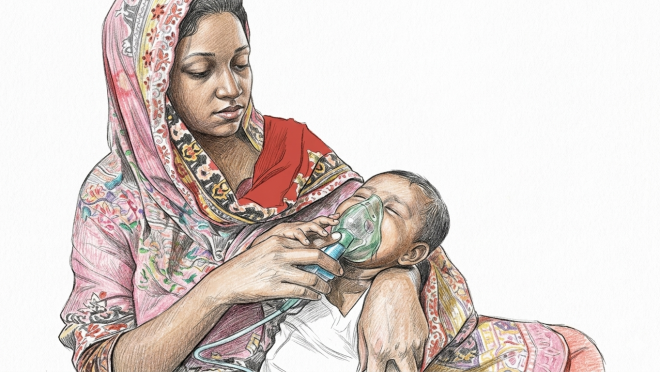
At the time of writing, 429 patients with measles symptoms have been admitted to hospitals across the country, of whom more than 100 have died. It is in that context that this year’s World Health Day is being celebrated in Bangladesh today.
World Health Day feels hollow when children are still dying
At the time of writing, 429 patients with measles symptoms have been admitted to hospitals across the country, of whom more than 100 have died. It is in that context that this year’s World Health Day is being celebrated in Bangladesh today.
This year’s theme for World Health Day is “Together for health. Stand with science”, a reminder of the recent mistrust people have developed since the pandemic. However, in Bangladesh, mistrust in vaccines is the least of our problems.
At the end of March, when measles suddenly made its return, none could have imagined it would become so deadly in such a rapid succession. Horrifying news from Rajshahi Medical College and Hospital was being reported day after day, as innocent children, who haven’t even reached the age for vaccination, were being affected, and due to a lack of preparedness, most of them suffered the ultimate price. .
Many articles have been written as to why such an outbreak occurred, and central to all those investigations was one common theme: a lack of conscious effort when it mattered the most.
In 2025, preparations for the Fifth Sector Programmes for vaccination had been stopped; chief among the reasons was the decreasing trend of all measles-related infections, and a general sense of bodacious optimism.
The effects of such a policy are now being felt heavily, despite the fact that international consensus is clear that continued vaccination is crucial if such outbreaks are to be prevented.
There is still no explanation as to why such “optimistic” policies were chosen.
Bangladesh’s misplaced “optimistic” culture in terms of health is reflected in other cases as well. When it comes to air pollution, Dhaka regularly tops the world’s worst air quality index.
A recent study monitored indoor air quality across a few dozen homes in Dhaka and found that indoor air can be significantly more polluted than the air outside. The average pollution level recorded in the sampled homes was 75.69 µg/m³, nearly five times higher than World Health Organization guideline levels, and in some homes it exceeded 200 µg/m³.
The study identified outdoor air intrusion as a major driver of indoor pollution, while prolonged cooking, especially sessions lasting more than 1.5 hours, sharply increased fine particulate (PM2.5) levels.
The lasting impacts are being felt in our lungs and in the rise of cancerous symptoms.
Even in our diet, a dangerous ratio of caloric deficit is felt, especially among the female population. A study conducted by ICDDR,B and James P. Grant School of Public Health, BRAC University, revealed that the prevalence of underweight (weight-for-age z-score < -2) among children aged less than five years is still high (41%). Nearly one-third of women are undernourished, with a body mass index of <18.5 kg/m². The prevalence of anaemia among young infants, adolescent girls, and pregnant women remains at unacceptable levels.
Another study conducted between 2011 and 2018 showed that diabetes prevalence among adults aged ≥35 years increased from 10.95% (880) to 13.75% (922), with the largest relative increase (90%) among obese individuals.
All this data raise an obvious question: what are we doing about it?
The answer, sadly, is also obvious: nothing!
There is no government initiative towards ensuring better air quality, reducing the market for sugary drinks, or regulating unhealthy, marketable snacks targeted at children.
The health minister, on 5 April, admitted in parliament that almost Tk 600 crore from the health budget allocated in the 2024–25 fiscal year remains unused, but it was not clear how this fund is to be used now as the Ministry of Health did not provide a clear strategy or objective set to tackle specific issues.
The most concerning fact still remains that we, the citizens, are not aware of what is killing us. Policymakers seem to divert any meaningful responsibility towards us by singling out personal choices and general consciousness as deterrents for such issues.
Even the least informed among us can understand that these “personal responsibility” gestures are not enough to combat the enormous health catastrophes we navigate through on a daily basis.
World Health Day, therefore, is just another occasion to remind ourselves of the burden of death this generation bears, for we cannot blame those children, who were not responsible for their “unhealthy” life choices, chief among those “choices” is the curse of being born in Bangladesh.