When education no longer guarantees opportunity
Though education was seen as Bangladesh’s clearest route to dignity and upward mobility in the past, today, rising unemployment, politicised access to opportunity, and the fading link between effort and reward are undermining young people’s faith in education.
When education no longer guarantees opportunity
Though education was seen as Bangladesh’s clearest route to dignity and upward mobility in the past, today, rising unemployment, politicised access to opportunity, and the fading link between effort and reward are undermining young people’s faith in education.
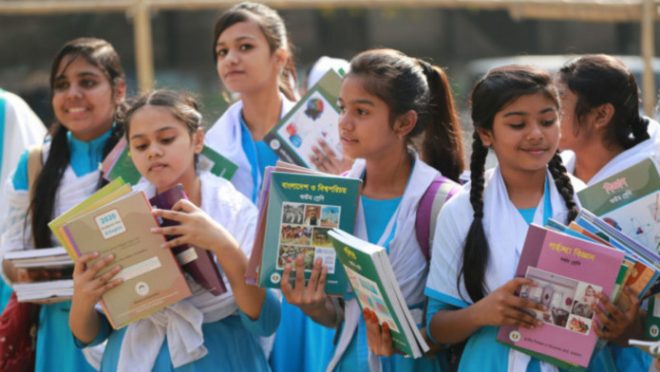
For decades, education was Bangladesh’s most reliable promise to its young citizens: study hard, stay honest, and opportunity will follow. That promise is now under strain.
Today, many young Bangladeshis—especially those from modest families—are discovering that degrees do not guarantee dignity, effort does not ensure fairness, and patience often goes unrewarded. This growing disconnect between education and opportunity is quietly reshaping how a generation thinks about work, integrity, and its future in this country.
This is not a crisis of ambition. It is a crisis of faith.
I grew up in a modest family, where education was a conscious investment and integrity was treated as a form of capital. Progress was slow and uncertain, but the belief was firm: if one studied sincerely, worked hard, and remained honest, society would eventually reward that effort with opportunity. That belief sustained families like mine for decades.
Today, when I engage with students, job seekers, and first-generation graduates from similar backgrounds, I sense a profound change. The dream is still alive, but confidence in the fairness of the system has been deeply undermined. This psychological erosion is more damaging than unemployment itself.
Statistics from the Bangladesh Bureau of Statistics (BBS) explain why this disillusionment is growing. The national unemployment rate rose to 3.66% in 2024, the highest in three years. While this figure appears manageable on the surface, it conceals a far harsher reality for young people.
Labour Force Survey data show that in 2023, around 1.94 million people aged 15–29 were unemployed, accounting for nearly 79% of the country’s total unemployed population. In effect, unemployment in Bangladesh has become overwhelmingly a youth phenomenon.
The burden falls disproportionately on the educated. About 31.5% of unemployed youth have completed tertiary education, while many others hold HSC or SSC qualifications. This highlights a persistent mismatch between education and employability.
Even more concerning, Bangladesh had approximately 885,000 unemployed university graduates in 2024, pushing the graduate unemployment rate to 13.5%—several times higher than the national average. For families that financed education through borrowing, land sales, or years of sacrifice, this outcome feels like a promise unfulfilled.
Yet the erosion of youth motivation cannot be explained by economic pressure alone. What disappoints young people most is not hardship, but inconsistency—the growing perception that outcomes are no longer linked to effort.
Many young people routinely observe that political affiliation outweighs competence, informal recommendations override transparent recruitment processes, and bribery accelerates outcomes that merit cannot. When such patterns repeat, shortcuts stop being exceptions and gradually become the perceived rule.
For young people from affluent households, delays and inefficiencies are frustrating but tolerable. For those from modest families, they are existential. Once fairness becomes uncertain, integrity begins to feel less like a virtue and more like a risk.
As a result, many capable young people disengage, lower their expectations, or search for alternatives elsewhere.
This loss of confidence is reflected in migration trends. Bangladesh now sends more than one million workers abroad each year, with an increasing share being young and educated. While migration has long supported the economy through remittances, this shift in composition signals something deeper: a declining belief that patience and honesty will pay off at home.
This is not merely a labour issue; it is a trust issue.
The government that assumed office in February faces not only financial and administrative challenges, but a fundamental test of credibility. Youth motivation cannot be restored through slogans, ceremonies, or campaigns. It returns only when fairness becomes visible in everyday governance.
Young citizens do not expect perfection. They expect predictability—clear rules, transparency, and equal treatment.
First, the rule of law must be applied visibly and impartially. Selective enforcement destroys trust far more than weak but consistent enforcement.
Second, access to opportunity must be depoliticised. Public recruitment, university admissions, and promotions must be transparently merit-based, supported by technology and independent oversight.
Third, petty corruption must be confronted decisively. For many young citizens, corruption at land offices, police stations, and service desks defines the state. Reform must begin there.
Fourth, education must reconnect with labour demand. The disconnect between degrees and employable skills has become structural. Expanded apprenticeships, industry-linked training, and vocational pathways are essential.
Finally, ethical success must regain social prestige. Societies shape aspiration by what they reward. When integrity is respected, motivation follows.
Bangladesh’s youth have not turned their backs on hard work. They are questioning whether honesty still has a future. Restoring that belief is not idealism; it is an economic and social necessity.
A country does not lose its future only when its young leave physically. It loses far more when they stay—but stop believing.
Md Nazrul Islam is a retired Major General of the Bangladesh Army, former chairman of Bangladesh Export Processing Zones Authority (BEPZA), and currently serves as Executive Member (Planning & Development) of the Bangladesh Economic Zones Authority (BEZA)
Disclaimer: The views and opinions expressed in this article are those of the author and do not necessarily reflect the opinions and views of The Business Standard.