Modern slavery in plain sight: The cost of normalising child domestic work
The nation was astonished and outraged when it came to light that the Managing Director of Biman Bangladesh Airlines and members of his household had been arrested over allegedly assaulting an eleven-year-old domestic servant. The specifics of long-term detention, physical abuse, and neglect were particularly unsettling.
Modern slavery in plain sight: The cost of normalising child domestic work
The nation was astonished and outraged when it came to light that the Managing Director of Biman Bangladesh Airlines and members of his household had been arrested over allegedly assaulting an eleven-year-old domestic servant. The specifics of long-term detention, physical abuse, and neglect were particularly unsettling.
The anger is justified. However, it is also inadequate.
What shocked us was not that a child was working inside someone else’s home, but the extent of the violence exerted upon her. Meanwhile, the presence of an 11-year-old girl as a live-in domestic worker barely registered as abnormal, and this apathy towards such an obvious injustice should trouble us far more.
The benevolent tradition of slavery
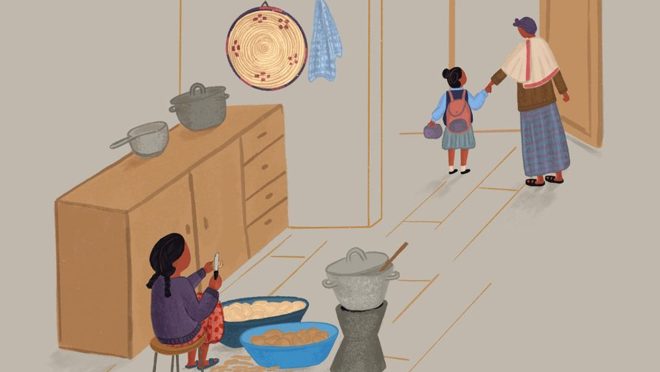
Children, mostly girls, continue to live and work as permanent domestic workers across Bangladesh, particularly in urban middle-class households. They take care of other people’s children, cook, clean, and sleep in the little corners of their master’s quarters.
Seldom is their presence questioned, often referred to as “kajer meye”.
This arrangement is so familiar that it rarely provokes discomfort. Many households justify it easily, claiming the child is “better off” here than at home, fed properly, treated kindly, and sometimes “like family”. They argue that her parents agreed.
But familiarity does not make something ethical. It only makes it easier to ignore.
Furthermore, in most cases, families are ready to get rid of the “kajer meye” when she begins to enter her teenage years. This “family-like” figure quickly becomes a burden as she ages, and further queries about her health and marriage seem to be the tipping point. Most families let her go, and the child’s family, often poor and uneducated, pushes her to marry as soon as possible.
While investigating the severe impact this unethical practice has on a child, we contacted Mst. Swampa, a clinical psychologist with over 15 years of experience dealing with child psychological trauma.
“Abuse of these teens (child house maids) is self-explanatory. Their predicament in itself falls under severe trauma, anxiety and fear in their lives,” she explained.
She further highlighted the risks of employing such child maids for babysitting. “If there is evidence of that babysitter coming from a family where they were abused or mistreated, there is a significant chance that that babysitter will abuse the child as well.”
How this became normal
Child domestic labour in Bangladesh did not appear overnight. It is rooted in a long history of inequality – economic, social, and gendered.
During the colonial era, wealthy households frequently employed domestic servants. While political power shifted after independence, the notion that some people live for the benefit of others remained intact.
Over time, children entered private families due to urban demand for inexpensive household labour. Rural poverty, lack of education, and climate shocks exacerbated these issues, fuelling the continuation of this benevolent “slave trade”.
The Bangladesh Bureau of Statistics estimates that 1.78 million adolescents are working as minors (BBS, 2022). Because domestic work is done behind closed doors, it remains one of the least visible sectors.
Nearly 80% of the 400,000 child domestic workers, according to BBS–UNICEF (2006), are females. These statistics represent real children, modern-day slaves, who grow up without the protections most urban citizens take for granted, who wake up in houses that are not theirs, and report to adults who are not their guardians.
Why “Treating her well” is insufficient
A child who works as a domestic worker full-time has little control over her day. She cannot decide when to study, nap, or go home. Her survival is solely dependent on the kindness of those in charge.
Something essential—the essence of being a child living freely—is taken away, even in homes where there is no physical abuse.
Education is often postponed or stopped completely. Friendships, play, and privacy are distant concepts. Dependency on employers replaces family attachment, critically hampering healthy growth.
According to Mst. Swampa, long-term mental damage can result from extended family separation, ongoing anxiety, and lack of autonomy.
It is imperative for the privileged to understand that bruises are not the only indication of trauma. The very practice of this benevolent employment of child labour is the reason for its social acceptability, silence, and cumulative damage.
An inevitable conclusion
There is a painfully recognisable pattern in the life history of many child domestic servants.
When they are 10 or 11, the girls are sent away. Education stops soon after. By 15 or 16, they are sent back—not because they are ready for independence, but because they are no longer considered useful as child labour. Many are then married off quickly.
Bangladesh has policies. Basic rights are outlined in the Domestic Workers Protection and Welfare Policy (2015), which recognises domestic work. But enforcement inside private homes is minimal. Child domestic workers, in particular, remain legally and socially invisible.
As long as this work is framed as informal help rather than labour, children will continue to fall through the cracks. A system that relies on employer kindness rather than enforceable rights is not a system of protection.
This is not a call for better contracts or kinder employers. It is a call to recognise a simple truth: no child should grow up working full-time in someone else’s home.
Poverty explains why families make desperate choices. It does not excuse a society that accepts those choices as normal. Nor does it justify removing children, especially girls, from education and development in exchange for household convenience.
There is also a rarely discussed cost. The future workforce, productivity, and social mobility of a nation are harmed when society silently accepts the loss of millions of females from schools. This goes beyond moral failings.
The Biman case horrified us because of its brutality. But it should also force a more uncomfortable question: how many similar children are living in homes like ours, without bruises, without headlines, without escape?
Abuse thrives most easily where silence feels normal.
This story is not about one powerful man or one household. It is about a culture that has learned to look away and brand that looking away as “kindness”. And that is the violence we need to confront.