Why is Bangladesh’s education allocation the lowest in South Asia?
Bangladesh once hosted one of South Asia’s great centres of learning at Somapura Mahavihara, yet today its universities face declining standards, limited funding and structural challenges that demand urgent reform
Why is Bangladesh’s education allocation the lowest in South Asia?
Bangladesh once hosted one of South Asia’s great centres of learning at Somapura Mahavihara, yet today its universities face declining standards, limited funding and structural challenges that demand urgent reform
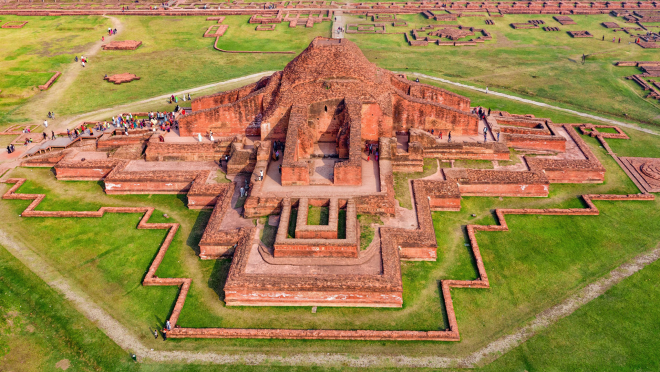
One of the courses I teach is the cultural heritage of Bangladesh. While teaching this course, I have to cover many topics from the distant past of the Bengal valley. While studying and creating PowerPoint slides to prepare for class, I have often been amazed at how rich and diverse our Ganga–Brahmaputra–Meghna basin is.
As a social science student, I have been trying for many years to find out when human settlement began in the Bengal valley. However, I have not yet been able to answer many questions. Exactly when, how, and why people settled in our region — this question alone requires extensive research to be conducted in universities.
Some idea of the period of urban culture can apparently be obtained from the archaeological sites of Wari-Bateshwar and Mahasthangarh.
However, intensive research is needed to investigate the origins of rural culture. Why? One answer is that to move forward in the future, we must have a clear understanding of the history, traditions, and culture of the past.
A student who knows the names of Harvard or Oxford as among the best universities of the present time should also have a clear idea about our ancient educational institution, Somapura Mahavihara. In addition, from an anthropological perspective, it is also necessary to research when and why certain ethnic groups migrated to our region.
Somapura Mahavihara was founded around the 8th century and is believed to have become a renowned institution of higher learning in South and Southeast Asia at that time. Our famous scholar Srigyan Atish Dipankar was a student of this educational institution and later taught there.
Since no researcher has been able to refute this claim so far, we can assume that renowned higher education institutions were established in this small delta about 1,200 years ago.
It is very unfortunate but true that although world-renowned educational institutions were built in this region 1,200 years ago, the quality of current educational institutions is constantly deteriorating. Even after five decades of independent Bangladesh, why are we unable to place even one university among the world’s top 500 universities?
Many people may blame the lack of qualified teachers for this. If that is the case, then the process of hiring qualified teachers must begin. A salary structure similar to the incentives offered to teachers in universities across South Asia should be established.
Statistically, Bangladesh has had the lowest government allocation to the education sector in South Asia for the past 22 years in terms of the GDP (gross domestic product) ratio. According to the guidelines of the United Nations Educational, Scientific and Cultural Organization (UNESCO), at least 6% of GDP should be allocated to the education sector. However, in this country the allocation has remained around 2% of GDP year after year.
According to World Bank data, Bangladesh is one of the ten countries that allocate the least to the education sector relative to the size of its economy among 189 member countries. According to a report by the Daily Ittefaq, education has received less attention in the budget than other sectors in recent years. In the 2009–10 fiscal year, the education sector was allocated about 2% of GDP.
In the 2016–17 fiscal year, the government allocated a maximum of 2.49% of GDP to the education sector. Since then, this allocation has gradually decreased over the last nine years. In the 2022–23 fiscal year, 1.83% of GDP was allocated to the education sector; in the 2023–24 fiscal year, 11.57% of the total budget, or 1.76% of GDP, was allocated to the education sector; and in the 2024–25 fiscal year, 11.88% of the total budget, or 1.69% of GDP, was allocated to the education sector.
Almost every year, many students from this country go abroad for higher education. Many of them study at universities ranked among the top 100 in the QS rankings and later return to join public universities in this country as lecturers, earning a salary of thirty to thirty-five thousand taka under the government’s ninth-grade pay scale. Is this what a teacher deserves considering the current market prices? The most surprising thing is that university teachers are paid according to government grades. Why?
University teaching is called a noble profession, yet teachers are identified as ninth-grade employees. Public university teachers have been placed in a strange cage. Another narrative has also taken root in society, claiming that all teachers are of poor quality.
However, teachers at public universities in many remote areas of this country are conducting fairly high-quality research on their own initiative.
It is true that increasing teachers’ salaries will not change everything overnight. But if those in power put maximum effort into ensuring quality education, they will certainly succeed, and the impact of that success will spread among the people.
However, there is no denying that there are many obstacles. For example, in our small country, more than 150 universities have already been established, both public and private. It is certainly difficult to maintain high standards across so many institutions so easily. Therefore, it is important to formulate a large-scale plan in this regard.
There are thousands of crises in universities located in remote areas. For example, the university where I teach was founded in the name of the world-famous Nobel laureate poet Rabindranath Tagore, yet the university has not received permanent land even after nine years. A well-planned and far-reaching strategy must be formulated for all these institutions.
It is impossible for us to move forward without increasing investment in the education sector. Incentives should be provided to encourage research alongside teaching in all universities. Opportunities should be created for teachers to receive training at universities in developed countries.
Exchange programmes should also be introduced so that students can complete at least one semester of their undergraduate studies at a quality university. We may not be able to become Harvard or Oxford, but we have enough opportunities to achieve a level of quality comparable to Somapura Mahavihara.

Sketch: TBS
Md Rifat-Ur-Rahman is an Assistant Professor at the Department of Sociology, Rabindra University, Bangladesh. Email: [email protected]
Disclaimer: The views and opinions expressed in this article are those of the author and do not necessarily reflect the opinions and views of The Business Standard or TBS Graduates.