Eid Natok: Rediscovering the joy of watching together
On Eid evenings, Bangladeshi households slowly settle into a familiar rhythm. The long day of visiting relatives and sharing meals comes to an end. Plates are cleared from the dining table, conversations drift into the living room, and someone eventually reaches for the remote.
Eid Natok: Rediscovering the joy of watching together
On Eid evenings, Bangladeshi households slowly settle into a familiar rhythm. The long day of visiting relatives and sharing meals comes to an end. Plates are cleared from the dining table, conversations drift into the living room, and someone eventually reaches for the remote.
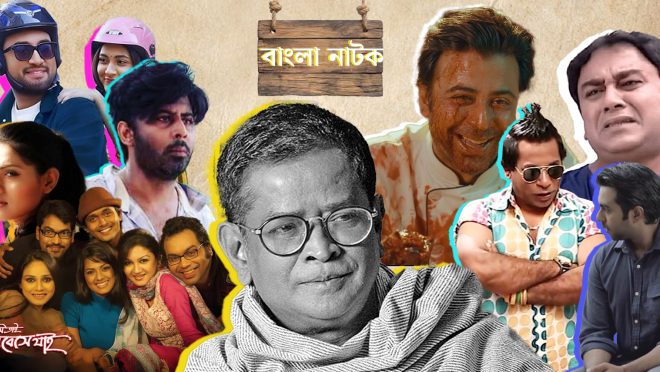
For decades, that small gesture marked the beginning of another Eid ritual: watching the Eid natok.
No matter how much celebrations evolved over the years, Eid dramas remained a quiet constant in the middle of the festivities.
Television channels traditionally prepared for Eid long before the holiday arrived. Special programming schedules were carefully arranged, with new dramas, comedy series, and celebrity shows broadcast throughout the seven days of Eid. The productions often featured popular actors and ambitious storytelling, designed specifically to capture the festive mood.
But while the tradition of Eid natok continues, the way audiences experience it has changed dramatically over time.
To understand its cultural importance, one has to go back to the era when Bangladeshi television itself was still young.
During the early years of Bangladesh Television, or BTV, dramas quickly became one of the most beloved forms of entertainment in the country. With limited channels and shared viewing spaces, television had the power to gather entire families around a single screen.
Writers such as Humayun Ahmed played a significant role in shaping this culture. His dramas introduced a style of storytelling that felt deeply rooted in everyday life. Instead of grand spectacle, the focus was often on ordinary people, subtle humour, and emotional realism.
This approach helped define the identity of Bangla natok.
By the 1990s and early 2000s, Eid dramas had already become a central part of the holiday tradition. Families would plan their evenings around specific broadcasts. Missing an episode was simply not an option.
Series such as Sikandar Box and Arman Bhai turned this anticipation into an event of its own. These productions unfolded across several days of Eid, with each episode airing one after another throughout the holiday week.
In many ways, the excitement resembled the modern experience of waiting for a new streaming series to drop. Viewers eagerly anticipated the next episode, discussing the storyline with friends and relatives until the following evening.
Alongside these widely popular series, Eid television also delivered standalone dramas that quietly became classics.
Stories such as Monshuba Junction, Monforinger Golpo, Bhalobashi Tai Bhalobeshe Jai, Uposhonghar, Landphoner Dingulote Prem, Tomar Amar Prem, and many more captured something simple yet powerful. These dramas explored romance, relationships, and nostalgia with subtle storytelling.
Love stories were often portrayed through small details rather than dramatic gestures. A phone call, a shared moment of silence, or a brief misunderstanding could carry an entire narrative. This emotional authenticity helped Bangla natok connect deeply with audiences.
Over time, another phase of storytelling emerged. Dramas began exploring heavier themes, focusing on relationships, sacrifice, and personal struggles. Productions such as Boro Chele, Buker Ba Pashe, and Best Friend resonated strongly with viewers who found their own experiences reflected in the characters.
For many people, these stories felt intensely personal.
The strength of Bangla natok has always been its ability to mirror society. Viewers do not simply watch the stories unfold. They see fragments of their own lives within them.
At those times, the living room used to be a kind of theatre. Not a grand one, just a room with a television and people who had nowhere else to be. The laughter was collective, the reactions unfiltered. If someone found something funny, you felt it beside you. If a scene turned sad, the silence had company.
But the social environment around Eid entertainment gradually began to change.
With the expansion of urban life, Eid celebrations started to move outside the home. Families spent more time visiting restaurants, going on day outings, or travelling during the holiday.
Television no longer held the same monopoly over entertainment that it once did.
Then another shift arrived with the rise of digital platforms.
After the pandemic in particular, Bangladeshi drama began experimenting with darker and more suspense-driven narratives. Thrillers gained significant popularity, attracting younger audiences who were accustomed to fast-paced storytelling.
Productions such as Chirokal Aaj, Tithidor, and The Punorjonmo series introduced cinematic visuals, intense plots, and complex characters. These dramas demonstrated how the industry was adapting to changing audience tastes.
Romantic and light-hearted Eid dramas still continue to be produced every year. A new season of Bachelor Point remains one of the most anticipated releases during the holiday.
But something about the viewing experience has subtly changed.
Today, many viewers watch these dramas individually on their mobile screens through YouTube rather than gathering in front of a television set. The story remains the same, but the collective experience has become less common. The living room theatre has slowly turned into a personal viewing habit, and yet, the nostalgia surrounding Eid natok continues to persist.
For many Bangladeshis, Eid evenings still carry the memory of sitting together with family members, waiting for the drama to begin. The laughter that filled the room, the shared reactions, and the excitement of watching a story unfold at the same time created something more than simple entertainment.
It created a shared cultural moment.
Perhaps that is why the tradition of Eid natok continues to survive even in the age of streaming platforms and social media.
Because beyond the actors and the storylines, these dramas once brought people together.
In a time when entertainment is increasingly consumed alone on small screens, revisiting that tradition might be worth considering.
Maybe this Eid evening, instead of scrolling through another episode on a phone, families could gather again in the living room.
Turn on a natok.
And rediscover the simple joy of watching a story together.