Why does 60 minutes make an hour?
Why does 60 minutes make an hour?
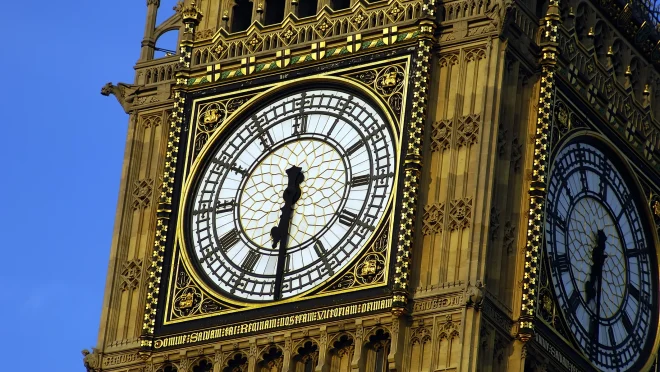
Time feels fixed and scientific, but the way we measure it is anything but inevitable. In fact, the structure of hours, minutes and seconds can be traced back to decisions made thousands of years ago.
One of the boldest attempts to change this came during the French Revolution. In 1793, revolutionary leaders tried to redesign time itself. They divided the day into 10 hours, each hour into 100 minutes, and each minute into 100 seconds. It was part of a wider effort to rationalise society, including a new calendar and even a 10-day week.
The experiment failed quickly. Clocks were difficult to redesign, people resisted the loss of a regular weekly rest day, and France became out of sync with the rest of the world. Within just over a year, decimal time was abandoned.
Yet the familiar system we still use today is far older and far stranger.
The origin of 60
To understand why an hour has 60 minutes, we must go back to the Sumerians, one of the earliest urban civilisations. Alongside writing and agriculture, they developed a number system based on 60 rather than 10.
Why 60? No one knows for certain. One popular idea is that it relates to counting using finger joints. Another is simply practicality. Sixty is highly flexible. It can be divided evenly by many numbers such as 2, 3, 4, 5, 6, 10, 12 and more. This made calculations easier for trade, land measurement and record-keeping.
Later, the Babylonians adopted this base-60 system and expanded it, especially in astronomy. Their calculations of planetary motion required precision, and dividing numbers into smaller and smaller units became useful. This is where the foundations of minutes and seconds began to take shape, even if they were not yet used in daily life.
How hours were born
The idea of dividing the day into hours came from the ancient Egyptians. As early as 2500 BC, they split the night into 12 parts based on star movements. Eventually, this system expanded into a full 24-hour day.
Why 12? Again, the exact reason is unclear. It may relate to star patterns, counting methods, or cultural habits. Whatever the cause, the combination of Egyptian hours and Babylonian mathematics slowly merged.
Later, during the Hellenistic period, scholars brought together ideas from different civilisations. The Greeks adopted Babylonian calculations and preserved them. This ensured the system survived and spread.
From theory to daily life
For most of history, minutes and seconds were not important for everyday living. People measured time in broad chunks such as morning, afternoon or work shifts. Precision simply was not necessary.
That changed with technology. Mechanical clocks appeared in medieval Europe, but they were not very accurate. Over time, improvements such as pendulum clocks and later quartz and atomic clocks transformed timekeeping.
By the modern era, minutes and seconds became essential, not just for science but for daily schedules, transport, and communication.
Today, atomic clocks define time with extreme precision, using the behaviour of atoms rather than the movement of the Sun. This level of accuracy supports everything from GPS systems to the internet.
A system that refused to change
Despite its ancient and somewhat awkward structure, the 60-based system has endured. Attempts to replace it, like decimal time in revolutionary France, have consistently failed.
The reason is simple. The system works well enough, and it is deeply embedded in global life. Changing it would create more confusion than benefit.
In the end, time is not just a scientific measurement. It is a human invention shaped by history, culture and practicality. The way we count it today is less about logic and more about legacy.
And that legacy stretches back nearly 5,000 years.