Women’s sport in Bangladesh: Progress overshadowed by harassment
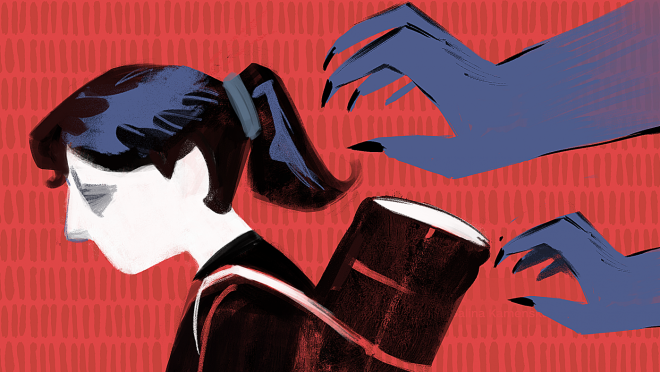
Many women athletes in Bangladesh continue to chase success in environments where sexual harassment, abuse of power, and psychological mistreatment remain serious risks
Women’s sport in Bangladesh: Progress overshadowed by harassment
Many women athletes in Bangladesh continue to chase success in environments where sexual harassment, abuse of power, and psychological mistreatment remain serious risks
Women’s sport in Bangladesh has entered a new era. National teams are earning international recognition, and women athletes are increasingly celebrated as symbols of national pride.
But this progress has come at a cost.
National cricketer Jahanara Alam recently brought allegations of sexual harassment against her coach Monjurul Islam, which drew widespread attention to institutional responses within the sport. In women’s football, national team players publicly accused a foreign coach of abusive conduct. In shooting, allegations by female shooters led to the removal of a senior federation official. In tennis, a teenage athlete’s complaint resulted in the temporary suspension of a senior federation figure.
From cricket to football, shooting, and tennis, repeated allegations indicate that many women athletes continue to chase success in environments where sexual harassment, abuse of power, and psychological mistreatment remain serious risks.
In each of these cases, action followed public controversy or formal complaints. Equally striking, however, was what preceded those responses: the absence of effective safeguarding systems and delays in institutional action.
The high cost of silence
In many sporting environments, athletes depend heavily on coaches, selectors, and administrators for opportunities, team selection, access to training, and career progression. This dependence creates significant power imbalances, within which the risk of harassment and exploitation becomes deeply embedded.
For many athletes, speaking out carries serious consequences. Complaints may lead to exclusion from teams, loss of opportunities, reputational damage, or social pressure. As seen in some football controversies, athletes who raise concerns may find themselves marginalised rather than protected. These realities create an environment in which silence often becomes the safest option.
As a result, many incidents go unreported, allowing harmful behaviour to persist within sporting institutions.
Existing laws, missing enforcement
From a legal perspective, Bangladesh’s framework already establishes clear obligations for protection.
The Constitution guarantees equality and dignity for all citizens, making safe environments a fundamental institutional responsibility. The High Court’s 2009 directives on preventing sexual harassment in workplaces require organisations to set up complaint committees and clear procedures—principles that apply equally to sports institutions. The Labour Act 2006 further reinforces the duty of institutions to provide safe and non-discriminatory working environments.
Additional laws strengthen these obligations. The Penal Code 1860 provides the legal basis for prosecuting sexual offences, while the Women and Children Repression Prevention Act 2000 establishes specific criminal liability and procedural safeguards for sexual violence and abuse against women and minors. The Children Act 2013 imposes further responsibilities on institutions to protect minors, including young athletes.
Recent initiatives to enact separate laws addressing sexual harassment in workplaces and educational institutions underline that protection from harassment is not optional—it is a mandatory, enforceable duty for all institutions.
The governance vacuum
Despite these legal obligations, gaps remain within the governance of sports institutions in Bangladesh.
The country’s main sports administration involves several key bodies, including the Bangladesh Football Federation, the Bangladesh Cricket Board, the Bangladesh Olympic Association, the National Sports Council, and the Ministry of Youth and Sports. Yet a review of their official websites reveals a striking absence of publicly accessible information on safeguarding policies, sexual harassment prevention, or formal complaint mechanisms.
This lack of transparency points to a deeper institutional weakness. When safeguarding policies are unclear or inaccessible, athletes—particularly women and young players—may not know where to report abuse or how to seek justice.
Bangladesh’s National Sports Council Act 2018 also does not explicitly address athlete safeguarding or sexual harassment prevention. While the National Sports Council has issued administrative directives encouraging federations to establish harassment prevention committees, such measures rely on administrative guidance rather than legally binding guarantees. In modern sports governance, safeguarding should be treated as a core responsibility, not an optional policy.
A mandate for accountability
International sports organisations have long recognised that harassment and abuse in sport are a global safeguarding challenge. The International Olympic Committee identifies sexual harassment and abuse in sport as a worldwide issue and urges federations to adopt comprehensive protection policies.
Similarly, the International Cricket Council states that everyone involved in cricket has the right to participate free from harassment and harm. FIFA emphasises that players, coaches, officials, and staff must be protected from all forms of abuse and exploitation, with particular attention to women and young athletes, who may face heightened vulnerability.
Yet global experience shows that policy alone is insufficient. Safeguarding systems must be practical, enforceable, and accessible. In this context, the United Nations framework on Protection from Sexual Exploitation and Abuse (PSEA) offers a valuable reference. Originally developed for humanitarian settings, the framework addresses abuse within institutional power hierarchies and establishes zero tolerance for exploitation. It emphasises safe reporting channels, survivor-centred investigation procedures, and protection from retaliation.
These principles underscore an essential point: sexual exploitation and harassment are not merely matters of individual misconduct—they are questions of institutional accountability. For Bangladesh’s sports sector, building a credible safeguarding system requires several practical steps:
Awareness and training: Mandatory for athletes, coaches, administrators, and support staff, ensuring that professional boundaries and reporting obligations are clearly understood.
Independent digital reporting channels: Secure and confidential platforms should allow athletes to report allegations without fear of internal interference.
Transparent resolution: Investigation procedures must be impartial, with clearly defined timeframes and disciplinary measures for those found in violation.
Ultimately, the progress of women’s sport in Bangladesh represents a profound social transformation. But that progress will remain fragile unless athletes can compete in environments that are safe, fair, and accountable. Women’s sport advances through talent, dedication, and courage—but its sustainability ultimately depends on trust: trust that institutions will protect athletes from sexual exploitation and harassment, and act decisively when those protections are breached.

Sketch:TBS
Badrul Hassan is a development and humanitarian professional. He can be reached at [email protected].
Disclaimer: The views and opinions expressed in this article are those of the author and do not necessarily reflect the opinions and views of The Business Standard.