Game theory and psychohistory: Decoding the Chinese Nostradamus Dr Xueqin Jiang
From historical analogies to game theory models, Dr Xueqin Jiang has built a global following by arguing that geopolitics follows patterns that can be studied, modelled, and, to some extent, predicted
Game theory and psychohistory: Decoding the Chinese Nostradamus Dr Xueqin Jiang
From historical analogies to game theory models, Dr Xueqin Jiang has built a global following by arguing that geopolitics follows patterns that can be studied, modelled, and, to some extent, predicted
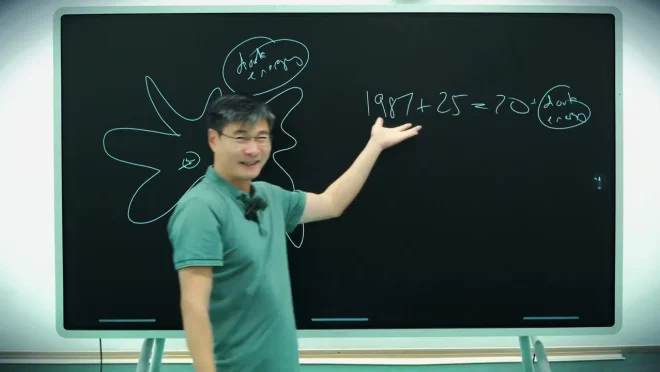
I first heard the name ‘Dr Jiang’ on Facebook, where one of my friends was talking about how a Chinese psychohistory YouTuber had successfully predicted that Donald Trump would become president again and start a war in the Middle East.
He was referring to Dr Jiang’s video The Iran Trap, where he used a combination of historical patterns and game theory to argue that the United States was heading towards a strategic blunder in the Middle East. Soon, the name spread across social media.
Dr Xueqin Jiang, a relatively obscure academic until recently, has become known as ‘the Chinese Nostradamus’. He has become famous for three predictions: that Donald Trump would become US president again, that he would start a war in the Middle East, and that it would end in a catastrophic defeat. Drawing on sweeping historical analogies, strategic modelling, and an almost literary imagination of power, Jiang has built a following that includes policymakers, analysts, and an online audience hungry for clarity in an increasingly chaotic geopolitical landscape.
Jiang runs a YouTube channel called Predictive History. His early work attracted limited attention and was often dismissed as overly speculative. That changed as global tensions sharpened, particularly with the escalation of conflict scenarios involving the United States, China, and Iran. He soon gained international attention as “Professor Jiang” through his YouTube channel Predictive History, where he uses concepts such as psychohistory and game theory to forecast geopolitical events.
Who is Dr Jiang?
Not much of his private life can be found online. Born in 1976 in Guangdong, China, Dr Jiang Xueqin experienced a childhood marked by significant transition and financial hardship. His family immigrated to Canada when he was six years old and settled in Toronto following the end of the Cultural Revolution. In Canada, his parents worked demanding jobs to support the family.
Despite these early struggles, Jiang excelled academically and later earned a scholarship to Yale University after being rejected by other Ivy League institutions. He graduated in 1999 with a BA in English Literature. However, his transition into adulthood was personally difficult. In 2000, he moved to Beijing while battling severe depression, a condition he has said persisted for roughly five years as he began his career as a freelance journalist. He is now based in Beijing as a history and philosophy teacher at Moonshot Academy, although he remains a Canadian citizen.
How does Dr Jiang predict geopolitical events?
Much of Jiang’s appeal lies in his method, which he describes as “predictive history”. At its core is the belief that history is not merely a record of the past but a structural guide to the future. He frequently invokes episodes such as the Peloponnesian War, and more specifically the ill-fated Sicilian Expedition, to draw parallels with modern military overreach.
This historical lens is paired with a more technical framework, game theory. Jiang maps geopolitical crises as strategic games, identifying actors, incentives, and possible moves in a way that resembles a chessboard rather than a battlefield. In his analysis of a potential US-Iran confrontation, for instance, he outlines not only the immediate military options but also the psychological and political constraints shaping each decision. War, in his view, is not chaos; it is structured interaction, governed by logic as much as by emotion.
Yet what sets Jiang apart from traditional strategists is his embrace of something more speculative, what he loosely terms “psychohistory”. Borrowed from Isaac Asimov’s Foundation series, the concept imagines a science capable of predicting the behaviour of large populations over time. Jiang does not claim to have perfected such a science, but he gestures towards it, arguing that collective human behaviour, when viewed across centuries, follows discernible patterns. Empires rise and fall, leaders make predictable miscalculations, and societies respond to crises in ways that echo the past.
It is this blend of rigour and imagination that has fuelled his reputation. Part of this appeal lies in timing. The world is navigating a period of profound uncertainty, with shifting alliances, escalating conflicts, and a growing sense that the old rules no longer apply. Traditional expertise, rooted in linear projections and institutional frameworks, often struggles to keep pace. Jiang’s approach, with its emphasis on cycles and structural forces, offers an alternative way of making sense of the moment.
Yet there is also a deeper psychological dimension to his popularity. In times of crisis, there is a natural human desire for prediction, for a sense that the future, however uncertain, can be understood. By framing geopolitics as a series of patterns rather than random incidents, Jiang taps into that desire. He offers not just analysis, but narrative, a story in which the present is part of a larger, comprehensible arc.
More controversially, Jiang has at times ventured into the realm of conspiracy. While he stops short of endorsing specific conspiracy theories, his openness to such narratives complicates his credibility.
With all the online buzz aside, what cannot be denied, however, is his impact, despite not doing anything ground-breaking in the field of geopolitical analysis.
At one level, Dr Xueqin Jiang is not doing anything entirely alien to the discipline of history or strategic studies. His use of historical analogy, drawing from events like the Peloponnesian War, has long been a staple of policymaking. From Cold War containment strategies to post-9/11 interventions, leaders and analysts have repeatedly looked to the past for guidance. Even the comparison between modern overreach and the Sicilian Expedition is not inherently flawed; it highlights a genuine and recurring risk in great power behaviour, the tendency to overestimate capability and underestimate resistance.
Similarly, his use of game theory sits firmly within established academic practice. Strategic modelling, mapping incentives, payoffs, and likely responses, is widely used in defence analysis and international relations. In this sense, a portion of Jiang’s framework is not only real but recognisably rigorous. When he breaks down conflicts into structured interactions, he is operating within a credible intellectual tradition.
In the end, Jiang’s significance may lie less in the accuracy of his predictions than in the questions he raises. How much of history is repeatable? To what extent can human behaviour be modelled? In a world of increasing complexity, what does it mean to understand the future?
These are not questions with easy answers. But in forcing them into the public conversation, Dr Xueqin Jiang has carved out a distinctive space, somewhere between historian and futurist, analyst and storyteller.
Whether he ultimately proves to be a visionary or a curiosity remains to be seen. For now, he stands as a reflection of our moment, a world searching for patterns in chaos, and perhaps for someone who can make sense of what comes next.