Rakkhosh: Bangladeshi cinema’s misguided Tarantino moment
If the film Rakkhosh had to be renamed, it could be called ‘Nani-r Prem’, and to be honest, it wouldn’t even be far off.
Rakkhosh: Bangladeshi cinema’s misguided Tarantino moment
If the film Rakkhosh had to be renamed, it could be called ‘Nani-r Prem’, and to be honest, it wouldn’t even be far off.
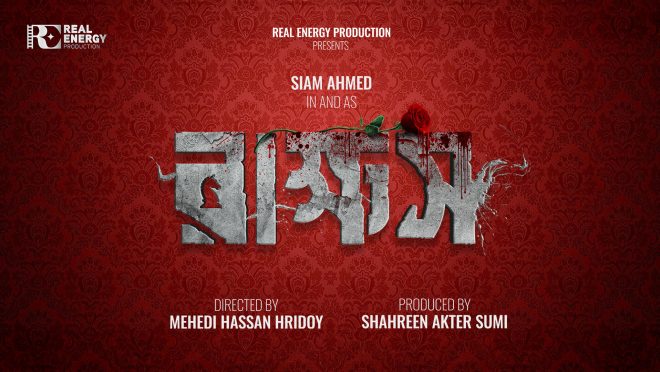
The movie keeps you glued to your seat and demands attention, which you cannot help but give. The movie also asks for the use of the brain, though not always for the best reasons. It moves back and forth between past and present without any disclaimer, leaving it to the viewer to figure out what is happening when.
The high of the film lasts only for the first half. In the second half, it feels like a basic one-sided revenge story that risks making the viewer sleepy. It would be unjustified to call the film a copy, but it reminded me of the Malayalam film Marco, albeit on a much smaller scale.
Jillu is back—but his return feels unnecessary. The film does not do justice to his character and instead diminishes his previous stature. The phone call to his father and the dialogues during this segment feel rushed and forced. Jillu became a big deal through Borbaad, but Rakkhosh kills that aura.
The film uses various beautiful settings to show scale. Students of United International University will have quite a ride watching the film. It features a sea plane in the first half, with a takeoff scene that might remind viewers of Hatirjheel.
Realistically, it feels off when a regular university student in Dhaka lives alone with a friend in a two-storey duplex house with a huge lawn. While the action sequences are enjoyable, these real-life irregularities break immersion.
Speaking of realism, the Nani and Dadis of our families ought to watch this film, especially the stricter ones. The film captures the shades of our elders in a way nobody could replicate, though it is over-the-top at times.
The acting
Among the public, Siam Ahmed’s acting is often criticised, and Rakkhosh is no exception. His howls were noted, with some claiming loud acting isn’t suited for him. I have a different opinion. Every actor has unique qualities. What matters is how they utilise these qualities, and Siam Ahmed succeeds in making the role his own. Could someone else have done it better? Perhaps. Did he give his best? Definitely.
Susmita Chatterjee, however, does not convincingly portray a university student. The casting feels off, and her acting is average at best.
Shohel Mondol seems to have found a breakthrough character. His larger-than-life performance strengthens his acting portfolio considerably.
The extras
The colour grading is arguably the film’s strongest asset. The moody monochromatic filters are stunning, and director Mehedi Hasan Hridoy seems to have found a unique style.
The VFX work is decent, though Dhallywood still has room to grow. The tiger VFX feels obviously fake, but the gunshots are passable. The weakest VFX moment is the background blur when Jillu enters, which raises questions about the final cut.
The songs are mediocre overall. ‘Bilet Raja’ has gone viral online, probably due to personal taste. The romantic song ‘Suddhotar Prem’ has a spectacular location but fails to leave a lasting impression. The rap in the climax, however, is arguably the worst part of the soundtrack. The first lines are promising, but it ends with repetitive phrases like ‘khaiya de’ and ‘maira de’, which feel jarring and unfinished.
The end
In conclusion, Rakkhosh is a good attempt. Had it been made three years earlier, it might have been a landmark film. Apart from the impressive colour palette, the film lacks lasting impact.
If asked what the worst part is, it would be the post-credit scene. Bangladeshi cinemas are experimenting with shared universes and film franchises, and this attempt feels unnecessary. A good story can be told within three hours; it doesn’t require ten films.
The post-credit scene gives you a sneak peek to the future. What happens in the post-credit scene is being left for the viewers to enjoy. It just feels, remembering the scene, that the director might have felt like Quentin Tarantino in that part. Maybe he felt like he revolutionized the film industry. In reality, it only felt bad.
With an eccentric first half, a dull second half, and a poor post-credit scene, Rakkhosh aims to elevate Bangladeshi cinema but only partially succeeds. Still, it leaves a ray of hope for cinema lovers across the country.