A developing nation with an undeveloped mentality
We often talk about development through numbers, categorising progress into familiar pillars: economic growth measured by GDP and industrial output; human development reflected in health and literacy; social advancement tied to equality and justice; political stability defined by effective governance; and sustainable development driven by environmental balance.
A developing nation with an undeveloped mentality
We often talk about development through numbers, categorising progress into familiar pillars: economic growth measured by GDP and industrial output; human development reflected in health and literacy; social advancement tied to equality and justice; political stability defined by effective governance; and sustainable development driven by environmental balance.
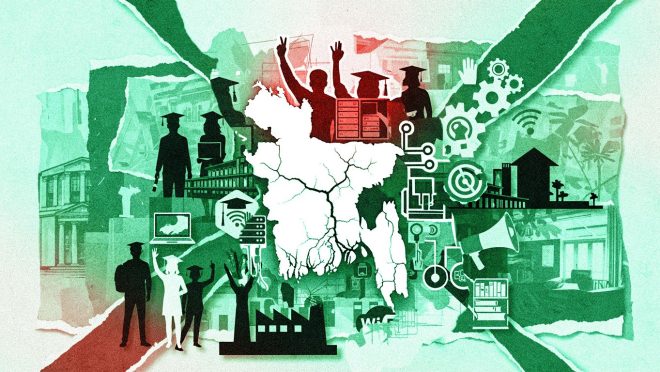
One dimension remains largely overlooked in discussions surrounding development, a form of development that cannot be plotted on charts or quantified in percentages: the development of our collective mindset.
Economic indicators may track growth, productivity, or rising literacy, but they reveal little about our ethical maturity, civic sense, empathy, or discipline. Quite frankly, a significant portion of Bangladesh’s population continues to operate with an outdated, self-interested, and often apathetic outlook towards public life. While we push to transition from “developing” to “developed” on paper, our everyday behaviours and collective mentality often remain anchored in a primitive past.
The harsh truth is, until we collectively improve our mindset, learning to respect rules, care for others, and uphold responsibilities that extend beyond personal convenience, this country will never develop. True development is not just geographic or infrastructural, it is psychological and behavioural. True progress begins not with megaprojects or policy reforms, but with the quiet everyday discipline of a society determined to evolve.
A foreigner walking the streets of Dhaka for the first time would be shocked by scenes that are entirely ordinary to us but would appear bewilderingly primitive to them. They would see people holding smartphones and using high-speed internet, yet casually throwing garbage onto the street, too indifferent to find a trash can or carry it until they can.
They would witness men urinating in public, or smoking in crowded spaces without the slightest regard for others. They would see walls plastered with ugly paper advertisements posted without permission, stripping the city of its visual dignity. Nowhere is this absence of civic sense more visible than on our roads. Our traffic is a chaotic theatre of selfishness. The problem isn’t simply insufficient infrastructure, it is a profound lack of respect.
We ignore lanes and overtaking rules, then justify our recklessness by blaming the driver in front of us as slow or foolish. We prioritise our own time above everyone else’s, as if only we are in a hurry to reach home or get to work. We routinely drive on the wrong side of the road to avoid an extra three minutes required to take a proper u-turn. Buses stop in the middle of the road to pick up and drop off passengers. Even the so-called educated and “civilised” private car owners are no different; parking or stopping wherever they please, creating bottlenecks and forcing countless others into gridlock, all for their personal convenience.
Our mindset has become so distorted that we no longer even recognise these actions as wrong. They have become so deeply normalised that we justify them almost automatically. We tell ourselves, “Everyone else does it, so why shouldn’t I?” or “What else am I supposed to do?” We deflect responsibility by blaming the authorities, “If it’s really wrong, why don’t they stop us?” or reassure ourselves that “the cleaners will take care of it in the morning anyway.”
This quiet, subconscious acceptance is the most alarming part. Behaviours that should provoke shame or discomfort have instead become routine. What ought to feel like civic violations now feel like harmless habits, and as long as we continue to rationalise these actions as normal simply because they are common, meaningful change will remain out of reach.
Equally corrosive is our culture of instant moral policing. We have become a society of judges. In casual conversations, the moment someone’s name is mentioned, our instinct is to list their flaws. We criticise a friend’s past mistakes, mock someone’s clothing, or belittle their life choices, yet almost never turn that same critical lens inward. Compassion and empathy are rarely our first responses.
This reflex to judge and condemn without reflection erodes social trust and undermines cooperation, the very foundations of social development. We do the same with public figures.
We fixate on their every move, scrutinising their choices while rarely pausing to acknowledge their achievements. We judge their character harshly without knowing them at all, and even their charitable acts are often dismissed as show-offs or tax strategies rather than genuine goodwill. We look down on the lower class while cursing the upper class, operating under an unspoken philosophy: “I am the angel; everyone else is at fault.” With empathy so low and self-interest so high, we view society through a narrow, self-centred lens.
We often dismiss these behaviours as “small things”. They are not. These tiny habits form the DNA of a much larger, more corrosive national mentality. When we subconsciously decide that our 30 seconds of convenience matters more than the collective order of a city, we reveal that we still do not grasp what it means to belong to a truly civilised society. Once these small violations become normal, they cultivate a mindset that naturally extends to bigger wrongs, including the acceptance of corruption as routine.
They shape public spaces, disrupt civic order, and influence how others perceive us. More importantly, they expose a collective mentality that tolerates disrespect, disorder, and a lack of responsibility, and the costs are real. When individuals behave as though shared norms don’t matter, society pays the price: health risks from unhygienic environments, higher public clean-up expenses, reduced road safety, and reputational damage on the world stage. Small habits, repeated daily, leave large scars.
Take, for example, the recent downgrade of Bangladeshi student visas by Australia, a shift from Level 1 (low risk) to Level 3 (high risk). This was not an arbitrary political gesture; it was a direct response to a surge of falsified bank statements and fraudulent applications originating from Bangladesh. When agencies and individuals choose and encourage “shortcuts” over honesty, they are not merely bending the rules, they are actively damaging the country’s global reputation. We often complain about being treated unfairly abroad, yet we ourselves export the very mindset that leads others to mistrust us.
The implications of this downgrade are severe. Genuine students now face a far heavier documentary burden, at least three months of bank statements, detailed source-of-funds explanations, and authenticated academic transcripts. Visa processing times have ballooned from a 14-day median to more than 10 weeks, disrupting academic intakes and driving up costs. All of this because a small number of individuals chose to misrepresent facts. Their actions have tarnished the image of an entire nation. It is a stark reminder that you can take a person out of an underdeveloped context, but you cannot easily take the underdevelopment out of the person.
Perhaps the most insidious aspect of our mentality is our deep hypocrisy. We are quick to blame the government for everything; the government didn’t do this, the authorities failed at that. We demand to know why officials don’t enforce cleanliness, discipline, or public order, but we rarely ask the more uncomfortable question:
Why should the government need to teach us basic morality?
Why do we need a law to tell us not to litter or to follow basic traffic rules?
Why must a government instruct a grown adult not to spit on the street?
Why is the simplest civic decency treated as something that must be policed?
The truth is that many of the moral actions that make a society liveable, cleanliness, courtesy, honest documentation, responsible road behaviour, require no act of Parliament of Bangladesh. They require personal responsibility. If we wait for government directives to teach us how to stand in line, dispose of waste properly, or refrain from publicly shaming a neighbour, we will be waiting forever.
The hard truth is this: Bangladesh will not develop until we develop our mentality. Our mindset, not our infrastructure, not our GDP, not our slogans, is the real frontier of national progress. A nation is not defined merely by its geographic boundaries or its flyovers. A country is its people, their habits, their sense of fairness, their willingness to help a neighbour.
No amount of infrastructure can produce lasting progress if the citizens using that infrastructure treat it with indifference or contempt. Without the development of human character, there is no meaningful development of the country.
So how do we address a problem this deeply rooted?
It begins with a fundamental overhaul of our education system. We cannot continue teaching physics and mathematics while sidelining civics, ethics, and emotional intelligence. As Dr. Kamrul Hassan Mamun frequently notes in his op-eds, high-quality teachers create high-quality citizens. Funding should not only build classrooms but also reward, train, and professionalise the adults who shape young minds.
A well-supported teacher is the most effective long-term investment in civic repair. We must introduce moral education, social etiquette, and courtesy starting at the primary level. Schools must teach etiquette, civic responsibility, and ethics alongside reading and arithmetic. These lessons should be practical, how to dispose of waste, why queuing matters, what honest behaviour looks like in everyday life, not abstract platitudes.
We must also build community norms through public campaigns that respect citizens rather than shame them. Positive social pressure, neighbours who remind each other, community clean-up days, recognition for good behaviour, change habits far more reliably than punishment alone. Compliance should be simple and rewarding.
Public spaces must be designed so that doing the right thing is the easiest option: accessible trash bins, safe sidewalks, adequate bus stops. Enforcement has its place, but good design and convenience often achieve more. We must call out reputation-damaging practices wherever they occur. Fraud, bribery, and deliberate misrepresentation, whether in visa applications, daily bureaucracy, or institutional processes, should be treated as community concerns, not just bureaucratic failures. A society willing to confront such behaviours collectively is a society serious about development.
But most importantly, we must firstly address our own selves. There is a well-known saying: “When you point one finger at someone else, three point back at you.” It is time we turn that finger towards ourselves. The truth is, we are all guilty of these habits in one way or another, myself included. Yet we rarely try to correct them, sometimes we don’t even acknowledge them.
We brush them off as normal, harmless, or not worth thinking about, hiding behind excuses instead of confronting the need for change. Unless we start changing our own ways, blaming ourselves, no change will happen. Unless we change our own habits and hold ourselves accountable, nothing will truly change. We don’t need one hero to transform society; we need individuals who are willing to improve themselves so that, together, we can elevate our collective mindset. We must learn to examine and hold our own character accountable. True progress begins with people, not projects.
This is, however, easier said than done. It is far simpler to build a bridge than to build character, but until we acknowledge that our own mentality, beginning at the individual level, is our biggest obstacle, until we start blaming ourselves instead of others, we will remain a nation of first-world infrastructure inhabited by third-world mindsets.
Real development begins when we stop looking at the person beside us with judgement and start looking at them with the intent to help.
Development is not just about what we build; it is about how we behave. If we aspire to a first-class country, we can no longer afford to carry a third-class mentality. We love to discuss “development” through numbers, budgets, and megaprojects.
The deepest development, however, begins in the mind, and it is there that our next national transformation must take root. If we want a nation that honours its citizens at home and earns respect abroad, the project starts with each of us. Look after the person next to you; chances are, that person will look after the next. That is how a mindset changes. That is how a country changes.
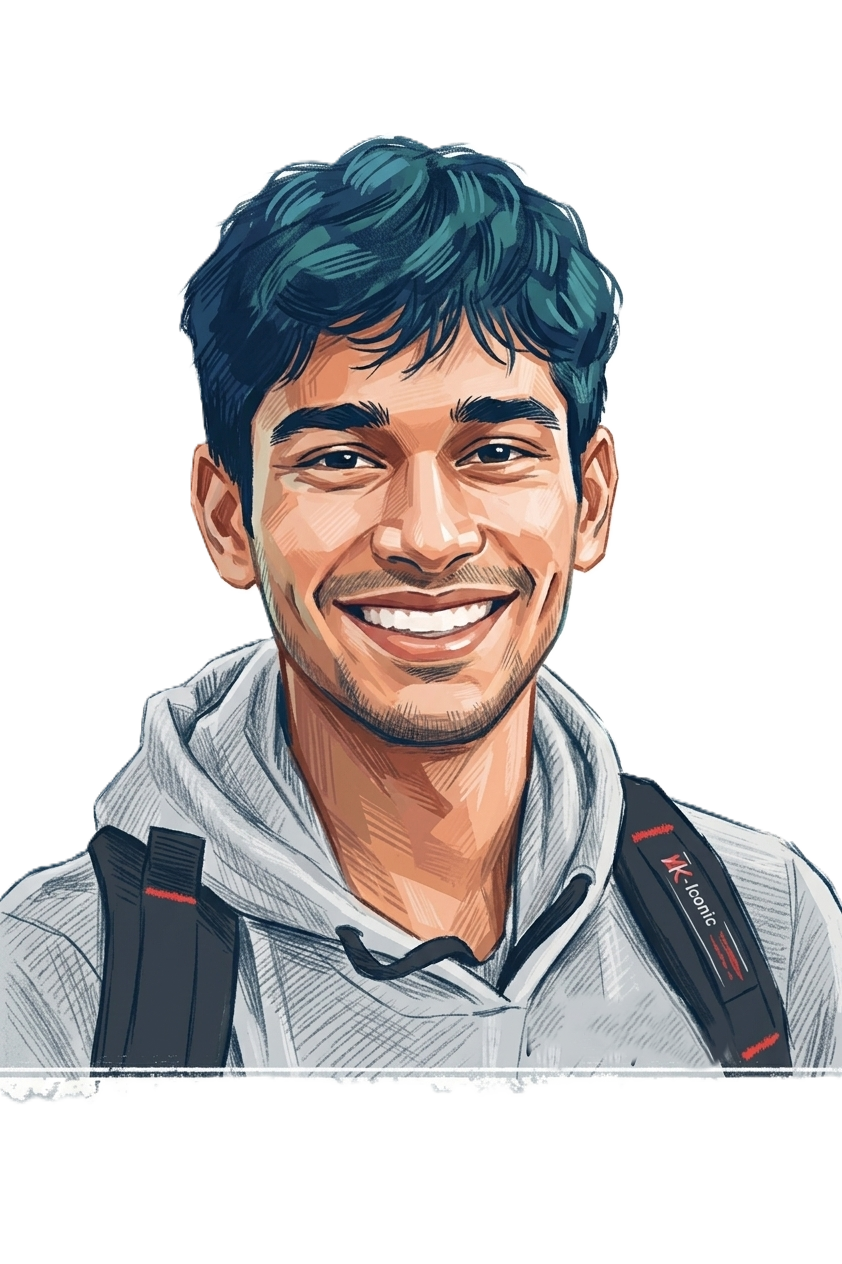
Asim Abrar is a development practitioner and he is currently teaching as a lecturer at the Department of Coastal Studies and Disaster Management, Barishal University
Disclaimer: The views and opinions expressed in this article are those of the author and do not necessarily reflect the opinions and views of TBS Graduates.