Saikat's eco-friendly vision: Reviving bamboo for a sustainable future
In a world struggling with plastic pollution, Saikat’s Ecoeen offers a breath of fresh air
Saikat's eco-friendly vision: Reviving bamboo for a sustainable future
In a world struggling with plastic pollution, Saikat’s Ecoeen offers a breath of fresh air
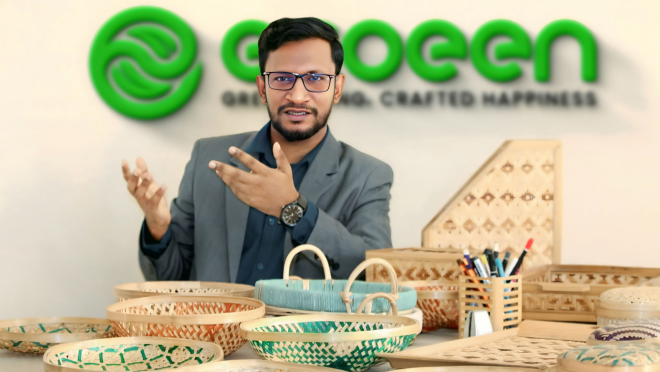
Walking through the bustling streets of Dhaka, Shohel Hossen Saikat found himself staring at piles of plastic bottles, food wrappers and broken chairs discarded by the roadside. It is a common sight, yet it sparked a profound question in his mind: can something used for a single moment truly be a permanent solution for our lives?
This reflection drew him back to his childhood village. He remembered the bamboo sieves in the courtyard, the baskets brought from the market, and the cane stools in the corner of the room. These were durable, eco-friendly items that lasted for years.
When they finally broke, they served as fuel or decomposed naturally into the soil, leaving no burden on the environment. This memory inspired the birth of his venture, “Ecoeen”, an initiative dedicated to rebuilding a sustainable lifestyle through the versatility of bamboo.
Born in the Bhandaria municipality of Pirojpur district, Saikat could have easily pursued a traditional corporate career after graduating in Textile Engineering. However, his desire to merge education and creativity with sustainable development led him down a different path. He believes that young entrepreneurs should serve as an inspiration not just for business, but for society and the environment.
The statistics are sobering. Bangladesh generates approximately 4,00,000 tons of plastic waste annually, with only 20 percent being recycled. The remainder is discarded into rivers and soil, posing a severe threat to biodiversity. Globally, 30 million tons of plastic enter the oceans every year, endangering marine life.
Bamboo was once an integral part of rural life, but its popularity waned due to vulnerability to pests and a lack of modern design. To address this, Saikat spent two years researching treatment technologies that now extend the lifespan of bamboo products to seven years or longer. By infusing modern aesthetics into traditional craftsmanship, he has made these products highly attractive to the younger generation.
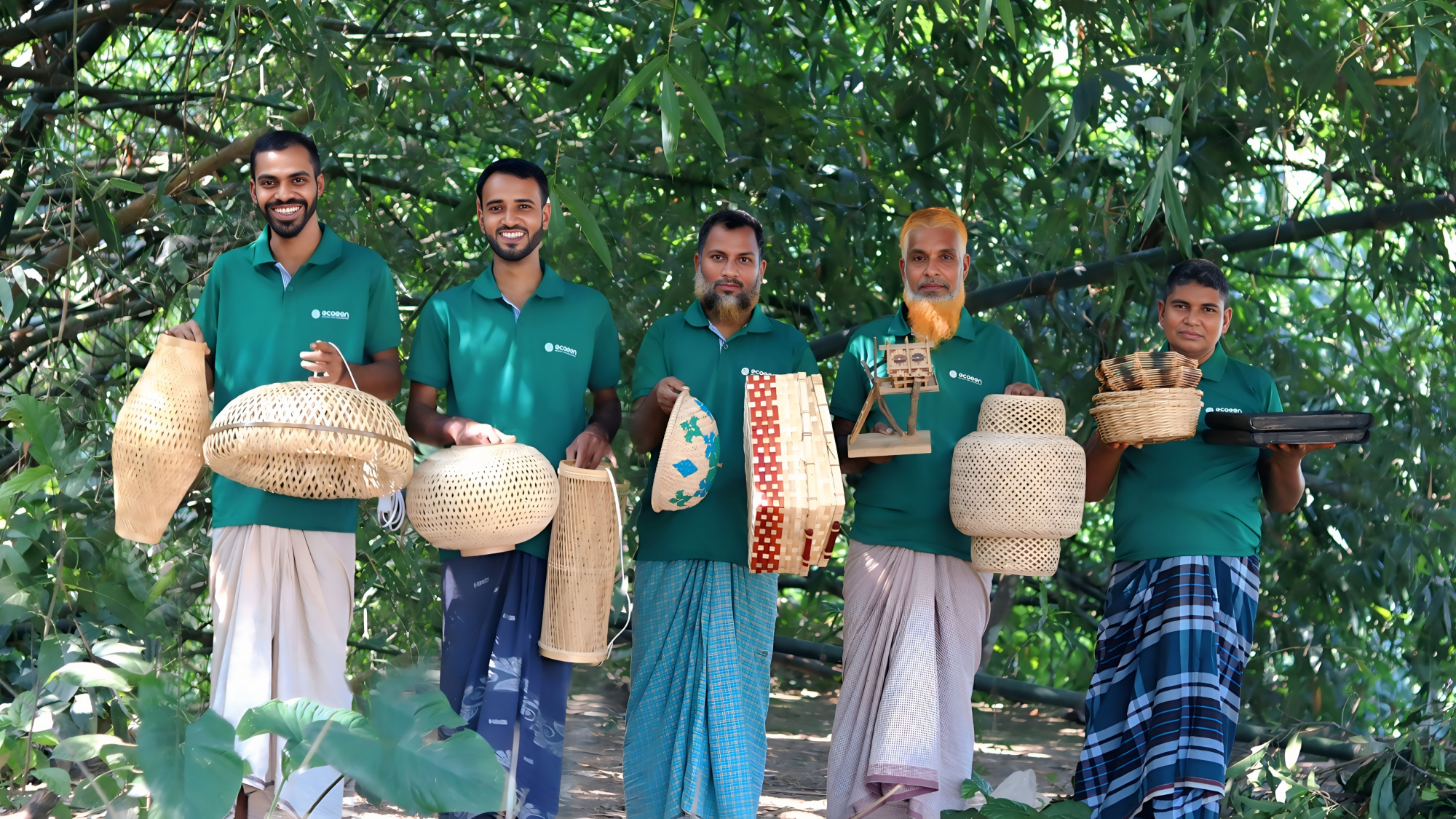
Photo: TBS
Currently, the Ecoeen team produces nearly 30 types of bamboo products, ranging from home decor and kitchenware to office supplies. These items preserve the heritage of local handicrafts while creating new market potential. “We want every product to be plastic-free and durable,” Saikat explained. “At the same time, we aim to improve the livelihoods of our local artisans.”
The success of Ecoeen relies on the skilled hands of local craftsmen like Faruk Mia, who previously struggled with financial instability. Now, with increasing demand, he can support his family comfortably. Quality remains their primary capital, as artisan Shah Alam Mia noted that high standards ensure that customers return.
In a world struggling with plastic pollution, Saikat’s Ecoeen offers a breath of fresh air. He dreams of introducing Bangladeshi bamboo products to the global market, confident that indigenous raw materials and skilled craftsmanship can compete internationally. “My dream is to see our products reach every corner of the globe, carrying the ‘Made in Bangladesh’ tag with pride”, Saikat said.