An award-winning journalist with a fully funded PhD spot: The story of Nur Hossain
Nur Hossain did not have the perfect profile. His CGPA was 3.31. He had no research papers while applying for a PhD. In Bangladesh, his bachelor’s and master’s degrees were in sociology, not journalism. And yet, in 2024, he received a congratulatory email from a New York Times journalist informing him he had placed in the top ten of the SAJA Award, one of the most competitive journalism honours in the United States.
An award-winning journalist with a fully funded PhD spot: The story of Nur Hossain
Nur Hossain did not have the perfect profile. His CGPA was 3.31. He had no research papers while applying for a PhD. In Bangladesh, his bachelor’s and master’s degrees were in sociology, not journalism. And yet, in 2024, he received a congratulatory email from a New York Times journalist informing him he had placed in the top ten of the SAJA Award, one of the most competitive journalism honours in the United States.
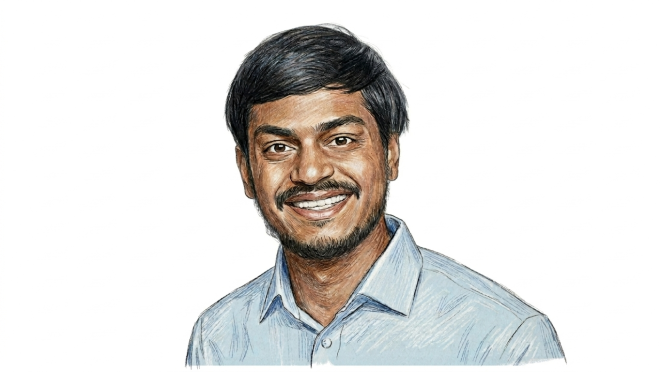
Today, Nur is pursuing a fully funded PhD in Journalism and Mass Communication at the University of Iowa, one of the top programmes in the country. He has worked as a stringer for the Associated Press to cover the US presidential election.
His story is not about being exceptional from the start. It is about being persistent, staying connected to your passion, and knowing how to present yourself. Here is what students can take from his journey.
When your degree is not your passion
Nur’s dream was always journalism. But when he could not meet the admission criteria, he ended up in the Sociology department at Dhaka University. For many students, that would have been the end of the dream. For him, it was not. “I never stopped writing,” he says.
He started by writing for local newspapers in Chittagong. From his first year at DU, he worked as a campus correspondent for the Daily Sun and later wrote editorials for the English department of Prothom Alo under the name NH Sajjad. By the time he applied for the 2019 CCI Program, a competitive US State Department-funded exchange at Northampton Community College, his argument to the selection committee was simple and direct: “I have practical experience. Now I need educational backup to improve my skills.”
Nur connected the two disciplines through a simple observation: both sociology and journalism investigate how people perceive the world, and both demand neutrality. That connection became the core of his Statement of Purpose.
For students stuck in a degree they do not feel close to, his advice is: “Connect your passion with the discipline you are studying right now, find the link, and start building your experience.”
Challenges
Financially, because Nur was fully funded, there was no pressure. As a student on a visa, working off campus is completely illegal in the US. On-campus work is capped at 20 hours a week. The funding he received from his institution was sufficient, and it allowed him to focus entirely on his studies.
He wants students to take that point seriously and opt for fully funded opportunities. “Even with partial funding, you have to work 40 hours off campus illegally,” he cautions. The education itself is very rigorous, and maintaining a balance becomes highly challenging in such situations.
Academically, the shift was significant. The reading load is much heavier in the US than in Bangladesh. “You have to read an excessive amount and write less,” mentions Nur. As a student, one needs to use their own critical thinking instead of relying on others’ lenses. Students must focus on skills like skimming, scanning, skipping, and finding the gaps in an article efficiently, rather than reading and memorising every word.
The biggest cultural challenge, Nur says, was individualism. “Individual lifestyle was, is, and will always be the biggest challenge as a Bangladeshi.” However, he adds that people in the US are much more appreciative, which definitely helps with coping.
Earning the funds
Nur points out multiple times, “You do not need to be an expert to apply for funding, because you are applying to learn.” When he applied for his PhD, he had no research papers and no conference publications. He applied to ten universities and was accepted by three renowned ones, including the University of Iowa, Louisiana State University’s Manship School of Journalism, and the University of Oklahoma, Norman.
For this reason, Nur calls writing a strong Statement of Purpose the most important part of any application. The universities are looking for people with a clear vision, a passion to learn, and an honest understanding of themselves. “You have to link your passion with your vision,” he continues. Students must show the committee exactly how their faculty and programme will help them get there.
Building one’s extracurriculars is also crucial. Engaging with student societies, research associations, journalism clubs, and different departments will develop one’s skills. He shares, “The universities look for cooperative people who are eager to learn, and who have a vision for the future. These are not qualities you can develop overnight; it may take years. You have to be active.”
Even though CGPA is not always the most important factor, Nur suggests keeping a decent CGPA, at least above 3.30. Below 3.0 makes things significantly harder.
Another very emphasised piece of advice from him is to show everything one has, properly. Even small achievements count. A campus article, a short video, or a community project, present them clearly and confidently. Students should not undersell themselves because something feels too small.
Skills
When Nur received the South Asian Journalists Association (SAJA) Award recognition, a board member at a conference in Texas told him directly why he was chosen: “You are active, curious, and you try to improve yourself day by day.” That attitude, he believes, matters more than any single achievement.
While completing his Master’s at the University of Nevada, he wrote opinion pieces for local newspapers and engaged in campus reporting. “These small things made me unique,” he says. The AP election coverage came from that same habit of saying yes to opportunities around him.
For aspiring journalists in Bangladesh, Nur leaves some essential tips.
First, one has to write consistently. In the age of AI, the temptation is to let tools do the work. Nur warns against it: “You are losing your skills.” Writing is still what makes a journalist distinct, because it builds the ability to organise thought and communicate clearly. Write for your campus paper, a local outlet, a blog, anything that keeps the habit alive.
Second, a journalist must question everything. “Seek truth. Do not be biased,” he continues. A journalist who cannot separate their own opinion from the story is not yet ready to report.
Learning data journalism in today’s world is the third crucial point mentioned. “People no longer want to read a thousand words of your opinion. You need to know how to find data, interpret it, and present it concisely.”
Finally, “Writing alone cannot be a distinguishing factor anymore. You must be versatile,” says Nur. At the same time as writing a story, one should be able to take photographs, shoot video, and present it visually. Graphics, photography, digital storytelling, these are the tools of the modern journalist. Harvard and other universities offer free online courses in writing and data journalism every year. There is no excuse not to start.
At the end of the interview, Nur reflects that none of these great achievements would have occurred if he had accepted that sociology was the end of his journalism dream. He urges every student reading this to stay focused on their dreams and not to lose hope.
He closes with a Hemingway quote he has carried with him all his life, from Chittagong to Dhaka to the United States of America: “A man can be destroyed but not defeated. So, never give up.”