I attended Rehman Sobhan’s lecture: This is what I learnt as a fresher
Yesterday, I attended the third lecture of the DUECON Public Lecture Series, delivered by Professor Rehman Sobhan.
I attended Rehman Sobhan’s lecture: This is what I learnt as a fresher
Yesterday, I attended the third lecture of the DUECON Public Lecture Series, delivered by Professor Rehman Sobhan.
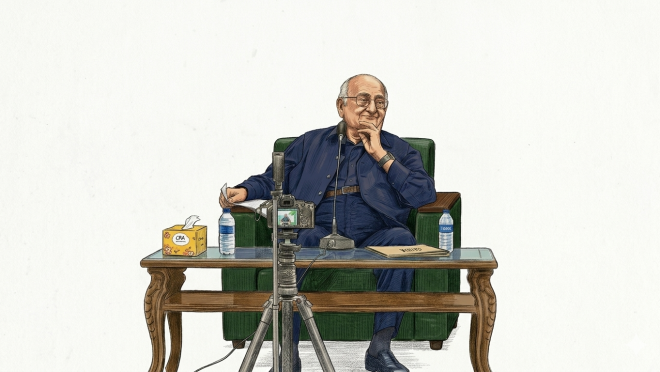
For those who are not nerds like me, Rehman Sobhan is a researcher and strategic policymaker whose work has shaped the very foundation of modern Bangladesh.
He is one of the most consequential figures, alongside Prof. Nurul Islam and Anisur Rahman, who were part of the first Planning Commission of independent Bangladesh.
Rehman Sobhan also founded the Centre for Policy Dialogue (CPD), which hosts public discussions on policy issues, particularly in governance, and he currently serves as its chairman.
For Professor Sobhan, it was a homecoming. He is a veteran of the Economics Department of the University of Dhaka. Throughout his lifetime, he has monitored the economy of Bangladesh from the Pakistan era to the present day. The topic of his discussion was “Blackmail Economics: The Emergence of a New International Economic Order.”
Prof. Sobhan shared his observations on the shift in the global order from Pax Americana to a multipolar world with multiple centres of power and varied supply chains.
For most people, and even myself, this shift seemed obvious. But for Professor Sobhan, it follows a pattern. The pattern begins with the violation and misuse of rules-based orders, organisations, and systems by the Americans themselves, alongside the shift of manufacturing and supply chains to China.
According to him, this trend started with the Iraq War, the war in Afghanistan, NATO intervention in Libya, and continues through the Iran War. The weaponisation of the dollar and the hypocrisy in applying different rules for American allies have exposed the double standard.
The discussion was jargon-heavy, and I dozed off several times, I must admit. However, one thing I noted throughout the lecture was Professor Sobhan’s humility and sense of humour.
He jokingly referred to himself as an unemployed man with a lot of spare time. He is hopeful about the new Bangladesh, seeing the students’ eagerness to learn, question, and debate policy, decisions, and governance. One major complaint he had was the short seating capacity in the lecture hall.
Moving forward, he explained how the Western world has become increasingly transnational. Countries once forged stable, multi-decade-long partnerships. Today, following Donald Trump’s rise, the concept of global connectivity and free markets has become less prominent.
The West, which lectures the Global South on morals and values, has only enforced them when convenient and ignored them during profitable transitions. This period has seen the decline of Western support for vaccination, refugee rehabilitation, renewable energy, and reproductive health. Today, countries are forced towards self-sufficiency due to the unreliability of international trade.
One thing to understand is that this lecture is not for those new to economics, international relations, or administration. I, as a student who has just filled out my admission paperwork at Jahangirnagar University, felt this lack of background knowledge acutely.
I do not consider myself an optimist, yet one thing that surprised me was Professor Sobhan’s optimism regarding Bangladesh’s integration into the Chinese supply chain. Bangladesh could benefit from a comprehensive relationship with China, but policymakers must create an environment that attracts capital and investment. He also praised China’s advancements in renewable energy.
The most consequential part of the lecture was his thoughts on the decline of the American empire. He stated that the American order is weakening because it uses its own systems for blackmail.
America does this via the SWIFT system for financial coercion, threatening military intervention for regime change, and allowing certain allies, like Israel, to commit war crimes. The latest example being the conflict in Iran.
Iran has faced American coercion since the Islamic Revolution. Despite this, the Iranian regime has survived, exposing cracks in the American order.
A faculty member from DU asked Professor Sobhan about the impact on women’s rights and reproductive health amid a declining American order. He noted that countries must build alternatives to reliance on the US, as these areas will be underserved in the coming years.
Professor Sobhan warned that Bangladesh will face the challenge of integrating into the new supply chains of China, India, or the EU to support its industries. This, he suggested, will be the greatest challenge the nation faces.
Overall, I thoroughly enjoyed interacting with Professor Rehman Sobhan. I plan to read more books by him and his associates, as they have much to offer the next generation of Bangladeshi students.
The environment was friendly, and the audience was full of enthusiastic learners, among whom, I was no exception.