Meta launches Muse Spark, first model in major AI overhaul
Meta has unveiled Muse Spark, an artificial intelligence model representing the first major release from its newly formed Meta Superintelligence Labs. The announcement on 8 April, 2026 marks what the company describes as a ground-up overhaul of its AI strategy and a renewed effort to compete with leading AI developers.
Meta launches Muse Spark, first model in major AI overhaul
Meta has unveiled Muse Spark, an artificial intelligence model representing the first major release from its newly formed Meta Superintelligence Labs. The announcement on 8 April, 2026 marks what the company describes as a ground-up overhaul of its AI strategy and a renewed effort to compete with leading AI developers.
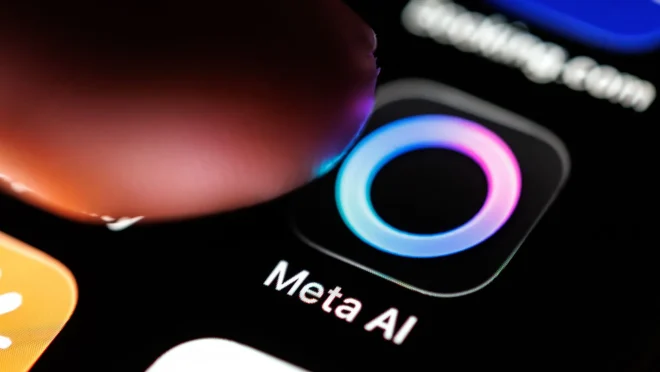
Meta has invested billions of dollars in restructuring its AI efforts, including a reported US$14.3 billion stake in data-labelling firm Scale AI, and recruited former Scale AI co-founder Alexandr Wang to lead the Superintelligence Labs division. Muse Spark is the first model to emerge from that initiative, signalling a shift away from Meta’s earlier Llama series of open-source models.
The company says the new model has been designed to balance speed and reasoning capabilities, with built-in multimodal features that allow it to process text and images natively. Early deployments are already live on the Meta AI app and the company’s Meta.ai website. Wider integration across Facebook, Instagram, WhatsApp, Messenger and Meta’s AI-driven smart glasses is planned in the coming weeks.
One of the headline features of Muse Spark is what Meta calls Contemplating mode. This mode uses multiple AI agents in parallel to tackle more complex questions, a design intended to improve performance on tasks requiring deeper reasoning. The model also supports additional capabilities, including tools for shopping recommendations and enhanced responses in areas such as science, health and mathematics.
The launch highlights Meta’s attempt to regain competitiveness with industry peers such as Google and OpenAI, whose frontier AI models have set high benchmarks in recent years. While Meta has said Muse Spark performs well on many standard tests, independent assessments will be key to determining how it compares with rivals.
Meta has indicated that it may make the model available via a private API to select partners and could open-source future versions. For now, however, Muse Spark remains proprietary, representing the company’s latest phase in its evolving AI strategy.