From Fuller Road to Oxford: Navigating DU, Oxford, and the space between
On certain afternoons at the University of Dhaka, the light falls in a particular way. It filters through the trees, lands softly on cracked pavements, and makes the campus feel like something halfway between a memory and a promise.
From Fuller Road to Oxford: Navigating DU, Oxford, and the space between
On certain afternoons at the University of Dhaka, the light falls in a particular way. It filters through the trees, lands softly on cracked pavements, and makes the campus feel like something halfway between a memory and a promise.
For generations, students have walked those roads believing that just getting in was the victory, that admission itself was an arrival.
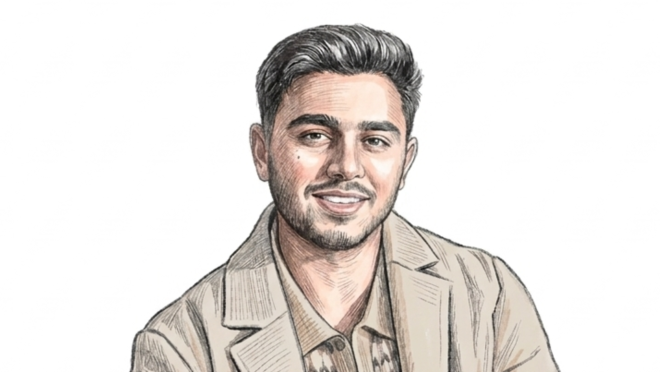
Nafees Chowdhury once believed that too.
“I held a very utopian projection of the University of Dhaka in my mind,” he says. “The harder something is to attain, the more symbolic it becomes. But when so much energy is invested in getting in, entry begins to feel like the destination rather than the beginning of a journey.”
Today, Nafees is an MSc graduate in Global Health Science and Epidemiology at the University of Oxford—one of the most competitive academic environments in the world. Before that, he studied Pharmacy at the University of Dhaka, a place that shaped not only his intellect but his resilience.
This is not a story about a straight line. It is about doubt, detours, quiet ambition, and the slow realisation that you are allowed to want more, even if no one around you has done it before.
The weight of prestige, and the space after it
Pharmacy at Dhaka University is not an easy path. It is the longest undergraduate programme at DU; demanding and multidimensional. There is also a built-in safety net—one that can be both comforting and limiting.
“We pharmacy students live with a safety net,” Nafees reflects. “If all else fails, the corporate will take us in.”
But safety can dull curiosity. And Nafees was curious.
By his own admission, even late into his undergraduate years, he did not have a neatly planned career trajectory. What he did have was an instinctive pull toward ideas that sat between disciplines; biology and society, medicine and people.
“I like to think that this interdisciplinarity, combined with the informal teaching in life and philosophy that seems to drift through DU’s corridors, pushed me to look beyond the conventional academic routes in pharmacy,” he says.
That pull eventually found a name: epidemiology.
It was not a rejection of pharmacy, but a reframing of it.
“I never quite found myself in a wet lab,” he admits with humour. “While most of my friends felt like Walter White after wearing a lab coat, I felt closer to a reluctant Jesse Pinkman.”
What interested him was not what a drug does in ideal conditions—but what it does to real people, over time, in messy, uncontrolled reality.
Nafees’ confidence did not arrive dramatically. It arrived slowly, and then all at once.
“Securing the top spot in my finals in both fourth and fifth year was a huge morale boost,” Nafees says. “It was the first time in my academic life that I had ranked first in anything.”
That shift mattered. But what followed was even more revealing.
Out of curiosity, he once compiled an Excel sheet of alumni from his department who had gone abroad for higher studies over two decades.
“When I finished, one detail stood out,” he says. “None had completed a master’s degree at Oxford. I can tell you I had a quiet ambition right there.”
Quiet ambition is often the most dangerous kind. It doesn’t announce itself; it just waits and lingers till it’s ready to be used as a weapon.
Learning self-reliance the hard way
Applying abroad is often romanticised. The reality is administrative, exhausting, and lonely.
“Any university application abroad requires planning, patience, communication, proactiveness, and motivation,” Nafees says. “It is very easy to run out of one of these qualities.”
Even after acceptance, the struggle continues—visas, finances, and logistics. Doing it all independently, he says, is “one of the most profound life lessons on self-reliance one can experience.”
When the Oxford offer finally arrived, disbelief came first. Meaning came later.
“It began to feel real in quieter moments,” he recalls, “when my thoughts drifted to my father.”
His father’s words stayed with him, spoken long before Oxford was even imaginable.
“Son, I was the child of a smallholder and still made it to the University of Dhaka, the best in the country. As my child, your sights should be set on Harvards and Oxfords—the best in the world.”
He chuckles now, remembering it. “In a way,” he says, “he manifested it.”
Being the only one and learning that everyone feels it
At Oxford, Nafees was the only Bangladeshi in his course. More specifically, the only South Asian who had graduated from a South Asian university.
“Most of my peers were graduates of globally renowned institutions,” he says. “Naturally, I felt an unfamiliar pressure.”
But something unexpected happened.
“I soon realised that nearly everyone else in the room felt the same way,” he says. “Imposter syndrome is largely a phenomenon of the opening weeks.”
Oxford, unlike many South Asian classrooms, de-emphasises competitive comparison. Grades are private. The system is coarse, not granular.
“That shifts the emphasis away from competition and toward genuine learning,” he explains. “And once you adopt that mindset, there is little space left for imposter syndrome.”
Research, responsibility, and coming from Bangladesh
Studying global health at Oxford does not erase where you come from. If anything, it sharpens it.
“I was genuinely surprised by the positive image Bangladesh holds in the global health arena,” Nafees says.
He speaks with pride about Bangladesh’s success in immunisation, maternal health, and low-cost interventions—often cited as global case studies.
But pride, for him, comes with responsibility.
“As a country that has been a frontrunner in health indicators within the Global South, I feel a growing responsibility to build expertise in non-communicable disease epidemiology,” he says.
He is currently researching whether long-term use of certain medications may increase breast cancer risk, a reminder that drugs, once approved, continue to reveal truths we did not anticipate.
“Drugs are complex and, in many ways, mysterious,” he says. “The true test begins after they enter widespread use.”
Belonging is not given, it is built
Oxford changed Nafees’ exposure, not his values.
“There has certainly been some shift in the way I view the world,” he says. “But I would not say my core definition of success has fundamentally changed.”
Perhaps the most revealing moment comes when he talks about the future. He wants a PhD. Then a postdoc. Then academia or industry.
And then, he jokes: “I will pull a Rabindranath.”
It is a reference to Rabindranath Tagore, how he was sent to England to become a barrister, only to return and root his intellectual life in Bengal.
“Beneath the humour,” Nafees says, “the sentiment is sincere.”
No matter where his training takes him, he hopes what he gains will find its way back home.
Perhaps the most powerful thing Nafees says is also the simplest.
“I believe that world-class education is not out of reach for us,” he says. “But world-class research opportunities are.”
The difference, he insists, is not intelligence—but access.
Those who make it are not lucky. They are persistent. They go beyond what is offered. They build paths where none exist.
From Fuller Road to Oxford’s dreaming spires, Nafees Chowdhury’s journey is not a miracle story. It is something quieter—and more replicable.
It is the story of someone who learned, slowly, that it is okay to want more.
And then did the work to earn it.