The unseen inequality in Bangladesh’s medical education system
Medical education in Bangladesh is highly competitive and demanding, and the challenges faced by students vary depending on whether they study in Dhaka or not.
The unseen inequality in Bangladesh’s medical education system
Medical education in Bangladesh is highly competitive and demanding, and the challenges faced by students vary depending on whether they study in Dhaka or not.
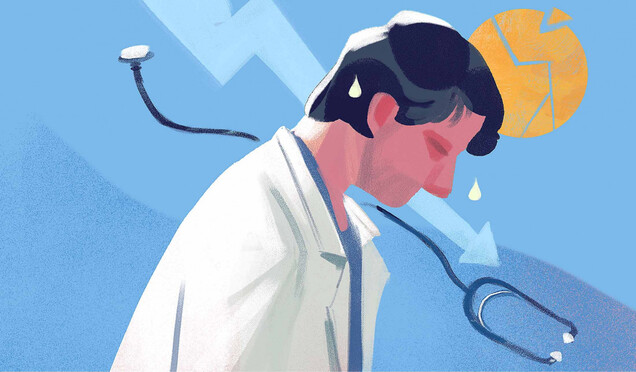
Although the core curriculum remains the same in all medical colleges across Bangladesh, the differences lie in infrastructure, exposure, lifestyle, atmosphere and opportunities that create distinct experiences for these two groups of students.
Students studying in medical colleges in Dhaka get the benefit of being in the country’s central hub of healthcare. It hosts some of the largest and most advanced hospitals, offering students great clinical exposure. They encounter a wide variety of cases, including rare and complex conditions, which enhances their practical learning. The situation is to some extent similar with the medical colleges under Armed Forces division, no matter whether it is in Dhaka or not.
On the other hand, students studying in medical colleges outside Dhaka face a different set of challenges. One of the most significant is limited clinical exposure. Hospitals in smaller cities or rural areas often have fewer specialised departments and may not handle as many complex cases.
As a result, students might not gain the same breadth of practical experience as their counterparts in Dhaka.
To know more, I talked to Tasmia Rawza from Armed Forces Medical College, Bogra, and Imtiaz Hossain from Dinajpur Medical College.
Upon inquiring about the major academic challenges, Tasmia said, “Any issue faced by medical students can be easily resolved in Dhaka as there is a wide network. Also, the study materials are easily available, while there is scarcity in cities outside Dhaka.”
Imtiaz also echoed similar sentiments. As they buy books from Sonia Publications, it first comes to Dhaka. Then students outside Dhaka have only two options: either go physically to Nilkhet or buy online, which is time-consuming.
Tasmia said, “I personally face one major problem, that is when I need a textbook, I have to order it from Dhaka. And it takes days to arrive from Dhaka, and the price also becomes two or three times the original. I seriously wish I could teleport to Nilkhet whenever I needed a book.”
Despite all this, there are also many challenges that students face such as homesickness, adjustment issues, lack of privacy in hostels or halls, ragging, appetite issues, hygiene issues etc., as said by Imtiaz.
Medical colleges in Dhaka have modern equipment. These are easily accessible, and people handling this equipment are also more professional and expert in Dhaka compared to other cities.
More diverse patient cases are mostly found in Dhaka. Due to modernisation, severe health problems are faced in Dhaka compared to outside, where people live a more eco-friendly life.
Upon asking whether students outside Dhaka receive the same level of clinical exposure and diverse patient cases as students in the capital, they said that as Dhaka is the capital, people suffering from chronic diseases tend to go there with the expectation of better treatment rather than visiting nearby hospitals in their hometowns.
Moreover, Dhaka Medical College and Sir Salimullah Medical College are the oldest medical colleges. They have already established their brand and trust among people. So people expect to visit here first. It can be compared with Aarong.
Most problems lie in remote medical colleges such as medical colleges in Rangamati, Nilphamari, and Satkhira. There is no proper authority, teachers, or orderly classes. Even a fan in a class can hardly be seen. Lack of resources and continuous corruption is a must there.
The government allocates money for these medical colleges, but there is no transparency or accountability in its usage.
The availability of experienced faculty members and specialist doctors when compared between medical colleges inside and outside Dhaka is not that different, according to Tasmia and Imtiaz. Every doctor is a BCS cadre or at least holds a recognised degree.
They think it does not differ that much. Though it is true that specialist doctors prioritise living in Dhaka for personal benefit, safety and other facilities. But experienced faculty members and specialist doctors available in medical colleges outside Dhaka are more friendly and accessible compared to remote areas.
Students living in hostels outside feel a gap in care. When a student falls ill, both physically or mentally, there is no one to care for their mental well-being, especially the way a family member would. So they eagerly wait to go home and often feel hopeless and helpless.
Although there is no scarcity of patients in medical colleges outside Dhaka and inside Dhaka, almost every medical college is filled with patients beyond its bed capacity.
Research opportunities and participation in medical conferences are more accessible to students in Dhaka. Due to wide networking, alumni support and guidance, students in Dhaka are more likely to participate in medical conferences and fests. These activities are less common in medical colleges outside Dhaka due to several reasons. Two of the core reasons are political barriers and societal norms.
Although the difference is negligible, the difficulties students outside Dhaka face in preparing for postgraduate medical exams compared to students in Dhaka depend mostly on self-effort. Anyone preparing from any corner of the country has the capability to clear postgraduate entrance exams. It is about proper guidance and, to some extent, alumni support.
Both Tasmia and Imtiaz think what they might lack is proper guidance or a mentor, i.e. strong alumni support, with whom they can discuss how to continue with the entire process.
Accommodation is a major issue faced by the majority of students outside Dhaka. Although the culture of halls is different from that of Dhaka, in Dhaka students need to do politics or engineering to get a seat. These kinds of things are more flexible outside Dhaka. Ragging is another issue students in Dhaka face, whereas outside they do not face it as much.
When it comes to financial challenges, Dhaka is far more expensive. But when it comes to earning, students fall victim to depression.
“Tuition can hardly be found outside Dhaka. If found, the amount is 2,000–3,000 Taka, which is quite depressing for medical students,” says Imtiaz.
Networking opportunities with senior doctors, policymakers, and healthcare organisations differ between Dhaka and outside Dhaka.
Tasmia termed Dhaka as a small village. Students in Dhaka are more likely to know nationally renowned professors personally, work with them, join seminars of prestigious organisations and what not. But outside Dhaka, although the circle is smaller, the bond is stronger and more genuine.
“You often get more repeated access to the same faculty and clinicians. That can create a stronger relationship with your mentor,” said Tasmia.
These differences impact the overall career prospects of future doctors studying outside Dhaka compared to those inside Dhaka. When it comes to technology, study materials and networking, students outside Dhaka are lagging behind. But at the end of the day, both become professional physicians. Outside Dhaka, the facilities are a little less compared to Dhaka.
“We cherish every opportunity we get and we celebrate even the smallest accomplishments. But in Dhaka they are really used to everything and they don’t even realise what facilities they are getting. I think being a medical student outside Dhaka is so fun when it comes to social perspective. They treat you like you’re one of a kind.”
Studying medicine in Dhaka indeed gives you a promising career, but outside Dhaka you are also practising medicine and becoming a physician who knows the exact same details. The ultimate differences are made in postgraduate degrees. So whether the college is inside Dhaka or outside Dhaka does not matter at the end of the day.
Infrastructure is another concern in many institutions outside Dhaka.
Some colleges, especially medical colleges outside the division, lack modern equipment, updated laboratories, or access to advanced diagnostic tools. This can hinder students’ ability to learn certain procedures or stay updated with current medical practices.
In conclusion, while medical students in Dhaka and outside Dhaka face distinct challenges shaped by their environments, both groups must navigate significant academic and personal pressures. Addressing these issues requires improvements in infrastructure, better resource distribution, and stronger support systems, especially alumni support in medical colleges outside Dhaka, to ensure that all medical students receive equal quality of education and training, regardless of their location.