A love letter to Leonardo da Vinci
What if one mind refused to stay inside a single discipline and ended up reshaping art, science, and engineering at the same time?
A love letter to Leonardo da Vinci
What if one mind refused to stay inside a single discipline and ended up reshaping art, science, and engineering at the same time?
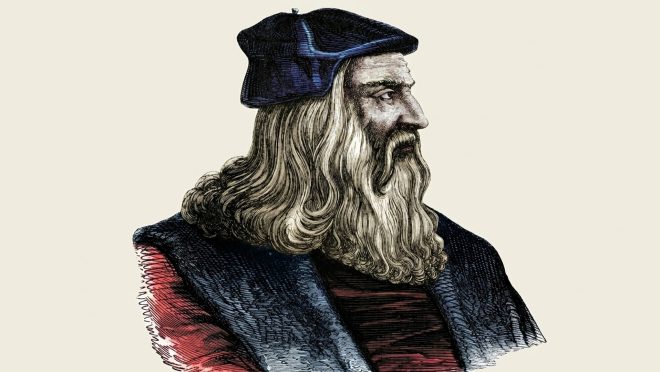
Leonardo da Vinci is often remembered as a painter.
But that label feels too small. He was an artist who dissected bodies, an engineer who studied birds, a scientist who drew like a poet, and a thinker who refused to stay inside any one field. Everything he touched became a way of understanding how things work beneath the surface.
This is the story of Leonardo di ser Piero da Vinci, arguably one of the most extraordinary minds in human history, on his 574th birthday.
Born on 15 April 1452 in Anchiano, near Vinci, to a notary father and a peasant mother, Leonardo was illegitimate. That meant no formal classical education and no traditional scholarly path. Instead, he learned practical mathematics in an abacus school and grew up slightly outside the system he would eventually transcend.
That distance mattered. It trained him to observe rather than memorise.
At fourteen, he entered the workshop of Andrea del Verrocchio in Florence. There, he learned that art was inseparable from science, built on measurement, observation and correction. In The Baptism of Christ, Leonardo’s angel was so refined and lifelike that it is said Verrocchio stopped painting altogether.
Whether myth or fact, the point stands. Leonardo was already thinking differently.
He is best known for iconic works such as The Mona Lisa, The Last Supper, and Vitruvian Man, among the most recognised images in history. Yet calling him only a painter misses the point. He was a polymath in the fullest sense: a painter, engineer, anatomist and observer of nature. Some even argue he should be seen as a scientist first.
His notebooks, more than 7,000 pages, show the full range of his curiosity. They contain engineering sketches, anatomical studies, studies of water flow, flight designs and sudden questions like “describe the tongue of the woodpecker”. They do not read like structured textbooks. They feel like a mind constantly testing the world from every angle at once. He wrote in mirror script, likely because he was left-handed, not because he wanted secrecy.
Leonardo worked for powerful patrons in Florence, Milan and later France, often moving between roles as artist, engineer and designer of military or theatrical projects. Many of his ideas, including flying machines, armoured vehicles and mechanical systems, were never built or properly tested. They remained ideas on paper, often far ahead of the technology of his time.
He also dissected human bodies, often in secret and at night, studying muscles, bones and organs with extraordinary precision. His anatomical drawings are still studied today for their accuracy. He did not treat the body as symbolic or purely religious. He treated it as a system, something mechanical that could be understood.
That same approach extended into everything else he observed.
He studied water like a living system, drawing rivers, floods and whirlpools to understand motion itself. He observed how light behaves on surfaces, how reflections change on stone, metal and water. These were not casual sketches. They were attempts to understand the rules behind what we see every day.
He studied birds obsessively, sketching wings in motion and writing detailed notes about airflow and resistance. From this came designs like the ornithopter and the aerial screw, early concepts of human flight. They did not work in practice, but they show a shift in thinking. Flight was no longer a myth. It was something that could be analysed.
One of his most famous engineering projects was a mechanical lion built for a royal ceremony in France. It could reportedly walk a few steps and open its chest to reveal lilies. It was part invention, part performance, showing how Leonardo merged engineering with spectacle.
Today, when we use Google Maps, we rarely think about the engineering behind it. We expect instant accuracy, zoom, terrain and perspective. Leonardo was already thinking in that direction centuries earlier. He created some of the most advanced maps of his time. Unlike earlier symbolic maps, his work used perspective, shading and aerial viewpoints to produce something close to modern cartography.
Despite his genius, he often struggled to finish projects. Many works were left incomplete, and many ideas remained sketches. His scientific insights were ahead of his time but rarely shared in a way that influenced contemporary science directly.
Even his way of working feels modern. It is similar to how we switch between tabs today. One moment you are watching a video, the next you are reading, then suddenly you are sketching an idea or opening a map. Leonardo lived in that kind of mental switching constantly, without tools, software or structure.
Leonardo once wrote, “Learning never exhausts the mind.” That idea explains his life better than any label.
Centuries before specialisation became the norm, Leonardo moved freely between worlds, asking questions others did not think to ask.
And perhaps that is his greatest legacy, not the Mona Lisa, not his flying machines, but the quiet invitation he leaves behind:
To look closer.
To question more.
And to leave the world different than you found it.