I thought Manga was childish until Tokyo Ghoul broke me
Sui Ishida’s dark masterpiece is not a story about monsters. It is a story about what it costs to remain human and whether that cost is even worth paying
I thought Manga was childish until Tokyo Ghoul broke me
Sui Ishida’s dark masterpiece is not a story about monsters. It is a story about what it costs to remain human and whether that cost is even worth paying
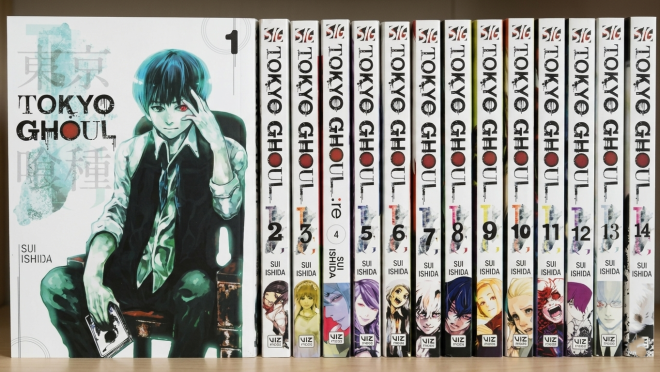
I’ll be honest. For the longest time, I was the person who brushed manga off as “just comics”, or worse, “cartoons in book form”.
The idea of reading pages of illustrated panels felt like a step down from a proper novel, or even a film. That was until my best friend introduced me to the world of manga and sat me down in front of Tokyo Ghoul.
What followed was one of the most unexpectedly intense reading experiences of my life.
A world that looks just like ours, until it doesn’t:
Tokyo Ghoul is set in an alternate version of Tokyo where ghouls, beings indistinguishable from humans in appearance, but who can only survive by consuming human flesh, live hidden among ordinary people. The story begins with Ken Kaneki, a shy, bookish college student who, after a chance encounter goes catastrophically wrong, finds himself transformed into a half-ghoul. He is suddenly caught between two worlds, belonging fully to neither, and the manga follows what happens to a person, to a self, when the ground beneath their identity completely collapses.
That premise alone could have made for a decent horror series. What Sui Ishida does with it, however, is something far more ambitious. Tokyo Ghoul is more about identity, trauma, the psychology of survival, and the deeply uncomfortable question of whether the distinction between monster and human is as clear as we would like to believe. And I believe they are the actual engine of the story.
The art, where emotion becomes architecture:
If you come into Tokyo Ghoul expecting the clean, expressive art style of mainstream shonen manga, you will be pleasantly disoriented. Ishida’s work, particularly in the original series, is bold and gritty, with heavy inking and a visual density that feels almost oppressive in the best possible way. It suits the story’s atmosphere perfectly: this is not a world that is supposed to feel comfortable or inviting.
“If you were to write a story with me in the lead role, it would certainly be… a tragedy.” – Sui Ishida, Tokyo Ghoul
Terror, grief, resignation, the specific hollow look of someone who has lost something they can never name, Ishida draws all of it with a precision that genuinely catches you off guard. His panelling, too, rewards attention. Beginners to manga may find it demanding at first. Persist. It is worth every moment of adjustment.
The characters, the actual reason to read this:
The protagonist of Tokyo Ghoul, Kaneki, is definitely one of the most well-curated characters I’ve read so far. Watching him change, both physically and mentally, is heartbreaking. He starts as someone driven by a desperate need to protect people, but you watch that need curdle into something darker and more self-destructive. He isn’t an archetypal hero; he’s a warning.
Around Kaneki, Ishida populates his world with characters who could each anchor their own separate manga. No one in Tokyo Ghoul is purely good or purely evil, and the series never lets you forget it. The antagonists are given the same interiority as the protagonists. The people who do terrible things have reasons for them that the manga takes seriously, without excusing them. It is a remarkably mature approach to morality for any work of fiction, let alone one that involves masked monsters fighting government-sanctioned hunters in the streets of Tokyo.
The themes, what the story is actually doing:
Tokyo Ghoul carries an unusually heavy philosophical and psychological load. The series draws on questions of identity, what you are when everything that defines you is stripped away, with an honesty that can feel uncomfortably personal. The portrayal of trauma, in particular, is handled with a care and specificity that is rare. Characters do not simply experience terrible things and move on. They carry what happened to them in ways that warp their perceptions, their relationships, and their sense of self. Ishida understands, clearly, that damage accumulates.
The series also has things to say about the nature of systemic violence, about what institutions do to the people inside them, and about the moral cost of survival in a world that has already decided what you are. One of the great pleasures of re-reading sections of Tokyo Ghoul is discovering how thoroughly Ishida has layered foreshadowing, symbolism, and thematic callback into panels that seemed, on first read, to be purely about action.
What this manga taught me about manga:
As someone who once looked down on manga, this series taught me why the medium is irreplaceable. The bridge between sequential art and psychological narrative creates a reading pace entirely controlled by the viewer, fostering an intimacy with a character’s inner world that prose or film rarely matches.
Inner monologues, placed over stark full-page spreads or tucked into chaotic fight panels, land with a visceral weight that plain text could never replicate. The numbers back up its cultural footprint: by early 2021, the franchise had over 47 million copies in circulation worldwide, and its English release topped the New York Times Best Seller list in 2015.
And if you’ve only seen the anime? You’ve only seen a shadow of it. The adaptation fails to capture the manga’s deliberate pacing, thematic layering, and emotional precision. The source material is in a league of its own.
Tokyo Ghoul is not a perfect series. Nothing this ambitious over this many chapters ever is. But at its best, it is extraordinary; the kind of fiction that makes you look at yourself a little differently by the time you are done with it. That, ultimately, is the highest thing you can say about any story.